In the modern cultural landscape, the observance of Easter has become a complex syncretism—a "melting pot" of activities that frequently obscure the profound religious significance they ostensibly celebrate. For many, the season is defined by the superficial veneers of vibrant egg hunts, baskets overflowing with confections, and the ubiquitous presence of the Easter bunny. However, as a cultural historian must observe, these traditions are not merely whimsical additions to the liturgical calendar; they possess deep-rooted associations with ancient pagan rituals and idolatry. If we were to peer beneath the pastel colors and scrutinize the altar of modern tradition through the lens of historical truth, would it alter our celebration of this sacred day?
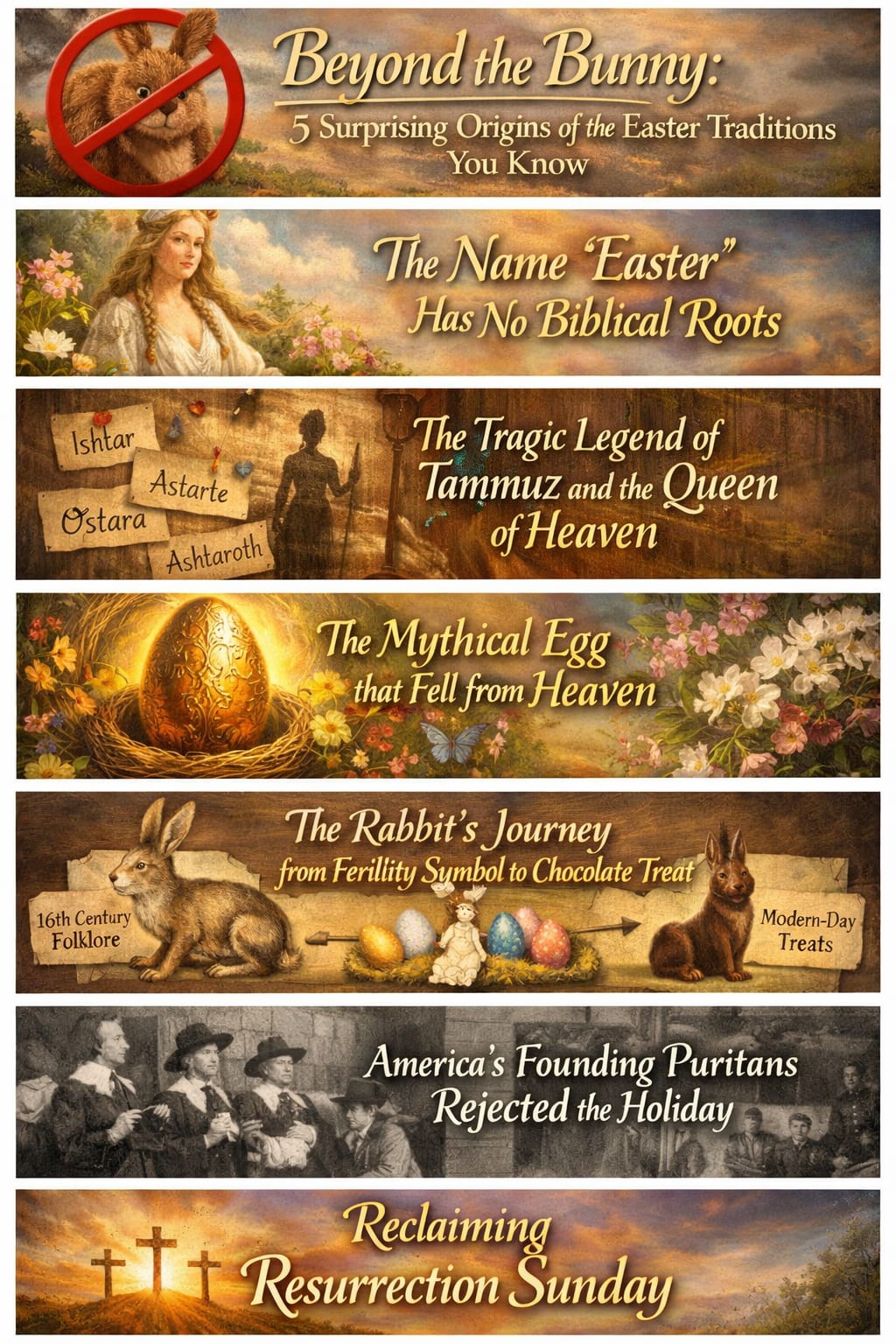
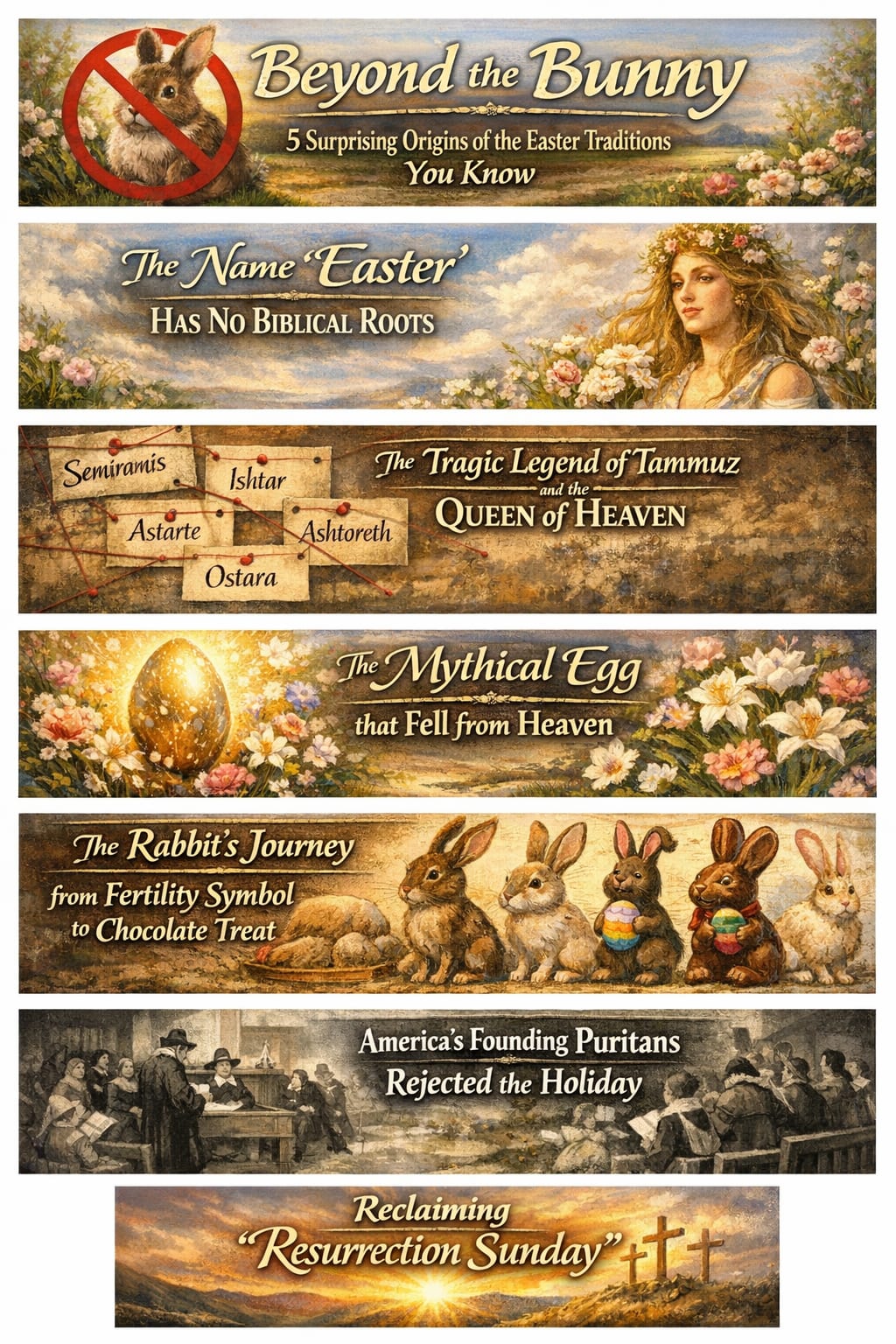
The Name 'Easter' Has No Biblical Roots
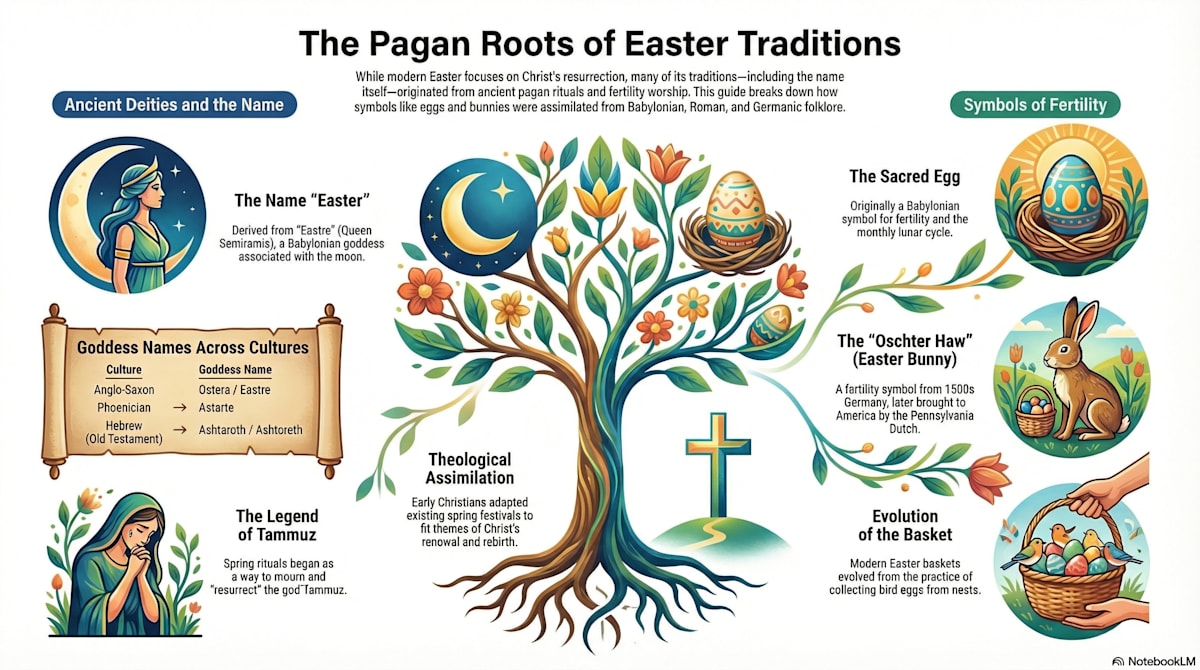
It is a striking, perhaps even providential, fact that the word "Easter" is entirely absent from the original Scriptures in association with the resurrection of Jesus Christ. Far from having a biblical foundation, the etymology of the name is traced back to "Eostre," a figure of ancient myth.
Historically, Eostre is identified as Queen Semiramis, the wife of Nimrod. As the "evil but enterprising" great-grandson of Noah, Nimrod was the architect of Babel and other cities synonymous with ancient perversion and occultic worship. There exists a profound and tragic irony in a holiday intended to commemorate the ultimate triumph of Christian truth bearing the name of a figure so inextricably tied to the foundations of Babylonian paganism.
The Tragic Legend of Tammuz and the "Queen of Heaven"
The historical trajectory of these customs is bound to the saga of Queen Semiramis, Nimrod, and their son, Tammuz. Following the death of Nimrod—who was known by such ominous titles as Baal, Molech, and the god of fire—Semiramis maintained her hegemony by deifying her late husband as the sun god. She later bore an illegitimate son, Tammuz, and orchestrated a theological deception, claiming he was supernaturally conceived and was the promised "seed" of Genesis 3:15.
This manufactured mythology birthed a cult of worship where Tammuz was revered as the reincarnation of Nimrod, and Semiramis was elevated as the "mother goddess." Following the divine intervention at the Tower of Babel, these pagan practices were dispersed globally, leading the goddess to be known by a variety of apocryphal titles across cultures: Ostera, the Anglo-Saxon goddess of spring; Astarte, the Phoenician moon goddess; and Ashtaroth, the "queen of heaven" mentioned in the Old Testament. The biblical record reveals the divine grief and indignation regarding the infiltration of this Tammuz-worship into the very gates of the Lord's house:
"Then he brought me to the door of the gate of the Lord's house which was toward the north; and, behold, there sat women weeping for Tammuz." — Ezekiel 8:14
The Mythical Egg that Fell from Heaven
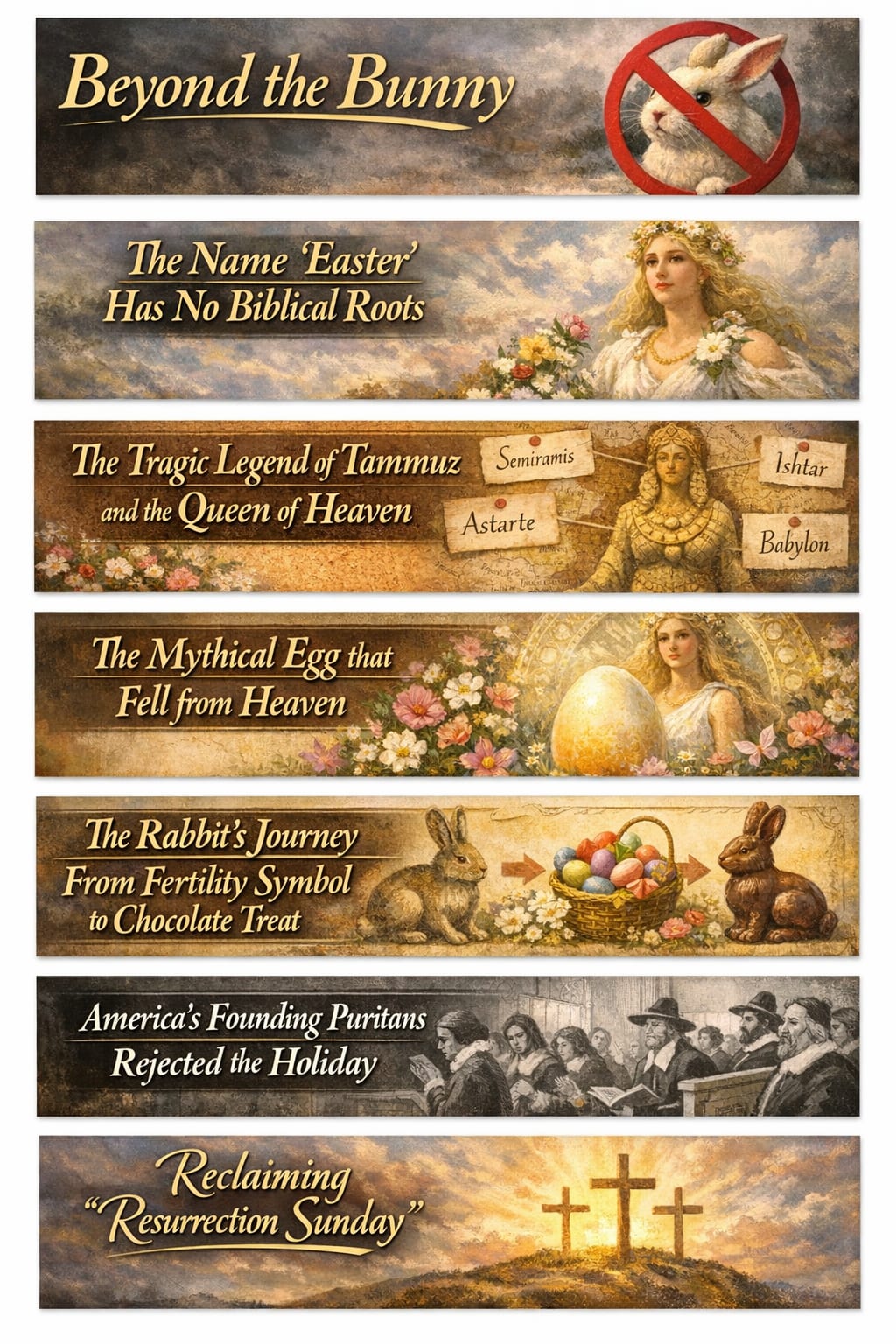
The symbolism of the egg, far from being a Christian invention, finds its genesis in ancient Babylonian fables. Legend suggested that a massive egg fell from heaven into the Euphrates River, from which Queen Semiramis was hatched. Consequently, the egg became a "sacred emblem" representing fertility, explicitly tied to the 28-day cycle of the moon and the biological cycles of women.
This symbol was near-universal in antiquity:
- The Egyptians and Romans integrated decorated eggs into their religious processions honoring the mother goddess.
- The Druids adopted the egg as a sacred talisman.
- The Gauls, Chinese, and Persians utilized colored eggs in spring festivals to herald rebirth.
In the Middle Ages, Europeans collected eggs from nests to use as "charms against evil" to secure good fortune. Over time, the Church sought to "baptize" these pagan dates, assimilating existing festivals into Christian theology to facilitate easier conversions. Because Eostre represented spring and renewal, the theme of the egg provided an easy, though non-scriptural, point of entry. Even the "Easter basket" is a remnant of this history, designed to resemble the birds' nests from which the original charms were gathered.
The Rabbit's Journey from Fertility Symbol to Chocolate Treat
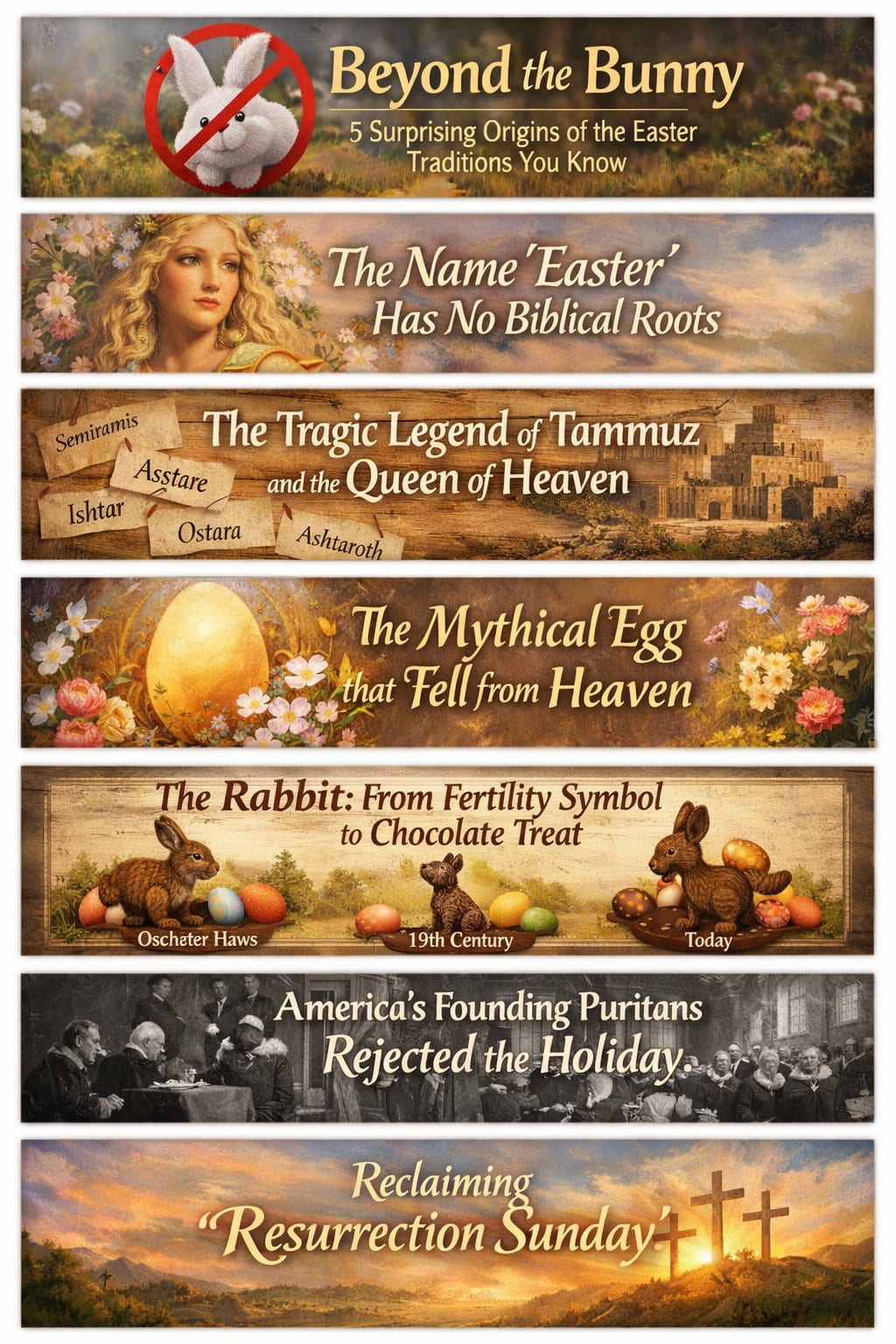
The rabbit’s presence in the resurrection narrative is equally tenuous. Recognized since antiquity as a symbol of prolific fertility, the rabbit was closely associated with the fertility rites established by Semiramis.
The transition into modern folklore began in 16th-century Germany with the "Oschter haw," a mythical bunny believed to lay red eggs on Holy Thursday and multi-colored eggs on the eve of Easter Sunday. This custom crossed the Atlantic in the 1700s with the Pennsylvania Dutch. Historically, these traditions evolved from sugared pastries into the commercialized chocolate bunnies we recognize today, a shift that took firm root during the American Civil War.
America’s Founding Puritans Rejected the Holiday
While Easter is now perceived as an ancient pillar of American life, the nation’s founding Puritans—the architects of the American moral landscape—would be utterly aghast at its modern observation. Recognizing its pagan lineage, they dismissed the holiday entirely.
Historical records indicate that Easter was not widely observed in the United States until the mid-19th century. This highlights a remarkable "historical amnesia": a culture that has, in a mere 150 years, adopted and canonized traditions that were rejected for the previous sixteen centuries. What we now consider "timeless" was once recognized as a compromise of the faith.
Reclaiming "Resurrection Sunday"
The historical evidence is clear: the modern iconography of Easter has nothing to do with the sacrificial death and triumphant resurrection of Jesus Christ. When we peel back the layers of Babylonian myth and Germanic folklore, we find that the true essence of the season is found only in the simplicity of the Gospel:
"...Christ died for our sins according to the scriptures; And that he was buried, and that he rose again the third day according to the scriptures." — 1 Corinthians 15:3b-4
Recognizing the pagan origins of these symbols offers us an opportunity for theological realignment. Perhaps it is time to move beyond the myths of Eostre and return our focus to "Resurrection Sunday," offering our heartfelt praises for the singular victory over sin and death. Hallelujah, He has risen!