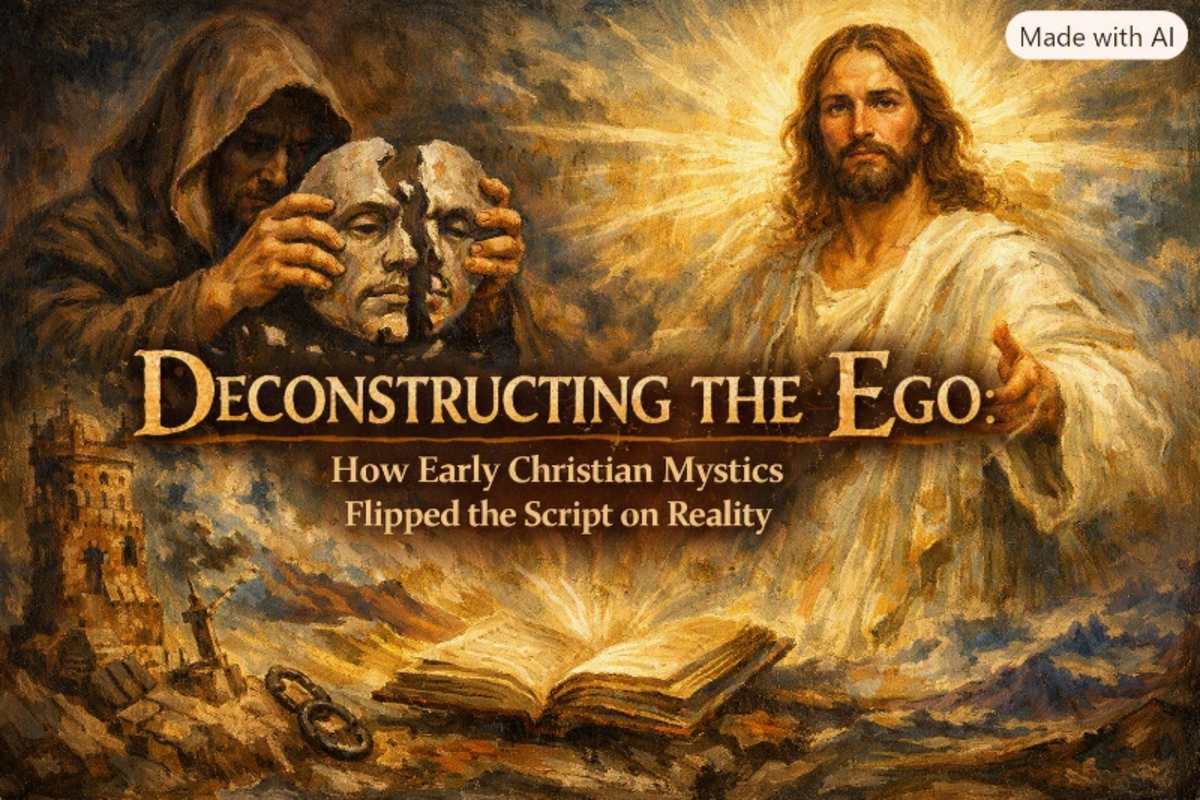
For centuries, Western religious history has handed us a very specific psychological blueprint: spirituality is an uphill battle of willpower. We are taught that human life is defined by separation—a vast gulf between a distant Creator and a striving creature. Within this dualistic framework, the ultimate goal of human consciousness is a continuous, future-oriented exertion of effort: "I will." I will obey, I will improve, I will eventually achieve salvation.
But what if early Christianity actually contained a radical, subterranean cognitive technology designed to completely collapse that distance?
In my forthcoming paper, "From ‘I Will’ to ‘I Am’: The Christ-Monad Convergence in Gnostic and Johannine Textual Traditions," I dive deep into the fluid, plural ecosystem of the 1st to 4th-century Mediterranean. We expose how a localized network of alternative Christian-Platonic communities rejected the agonizing path of moral striving, proposing instead an immediate, revolutionary mutation of consciousness: the shift from the striving of "I will" to the absolute, timeless presence of "I am."
The Ultimate Metaphysical Solvent
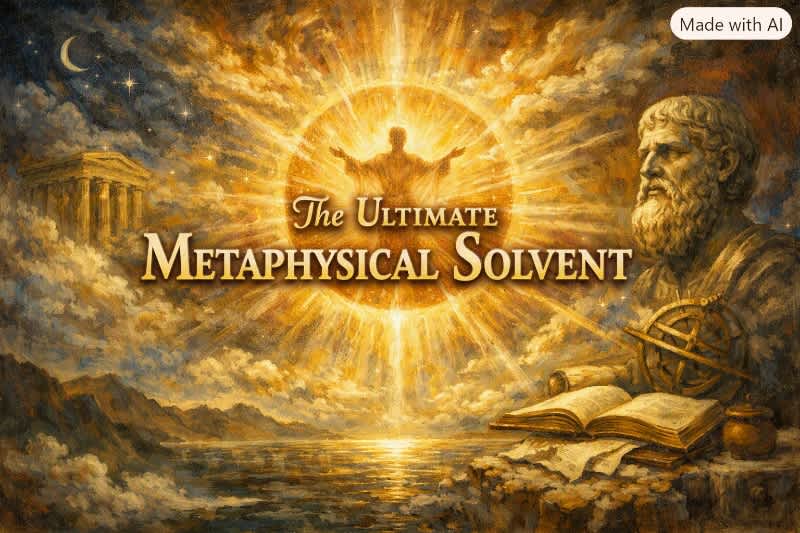
To understand this breakthrough, you have to look at the intersection of early Christology and Hellenistic philosophy. Middle Platonic thinkers like Numenius of Apamea spoke of the Monad—the ultimate, indivisible, and utterly transcendent source of reality. For the Platonists, this source was a silent void, completely unapproachable by the human mind.
The radical pivot made by the writers of the Nag Hammadi codices (like the Apocryphon of John) and the creators of the Gospel of Thomas was to map this abstract Monad directly onto the vocalized persona of Jesus Christ.
When Christ speaks in these texts, he doesn't act as a localized historical prophet dropping down a new set of rules to follow. Instead, he speaks as the Monad itself breaking its cosmic isolation. In Gospel of Thomas Logion 77, he declares: “I am the light that is over them all. I am the all... Split a piece of wood, I am there.”
This wasn’t abstract mythology; it was a devastating assault on cosmic distance. If the supreme, indivisible Monad saturates the very fabric of physical matter, then the distance between the human self and the divine Source is a linguistic illusion.
Grammatical and Material Ruptures
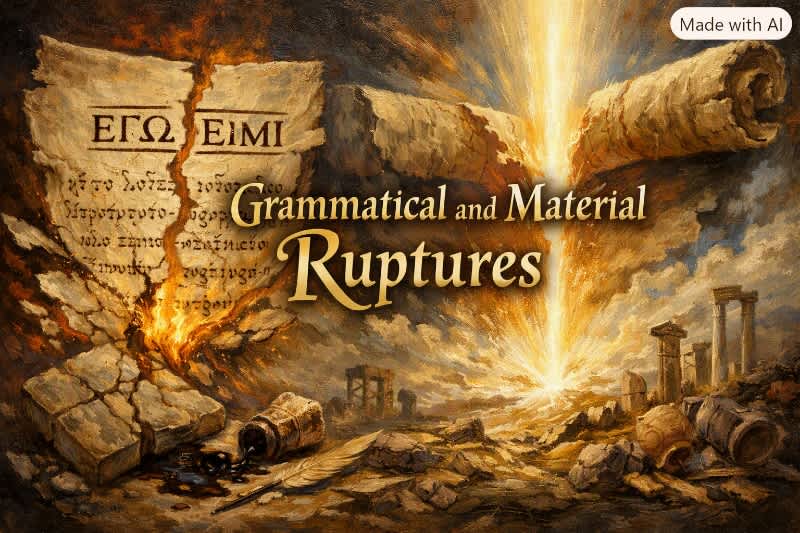
This paradigm shift wasn't hidden away in speculative theology; it was hardcoded into the grammar of the texts and the physical artifacts of early Christianity.
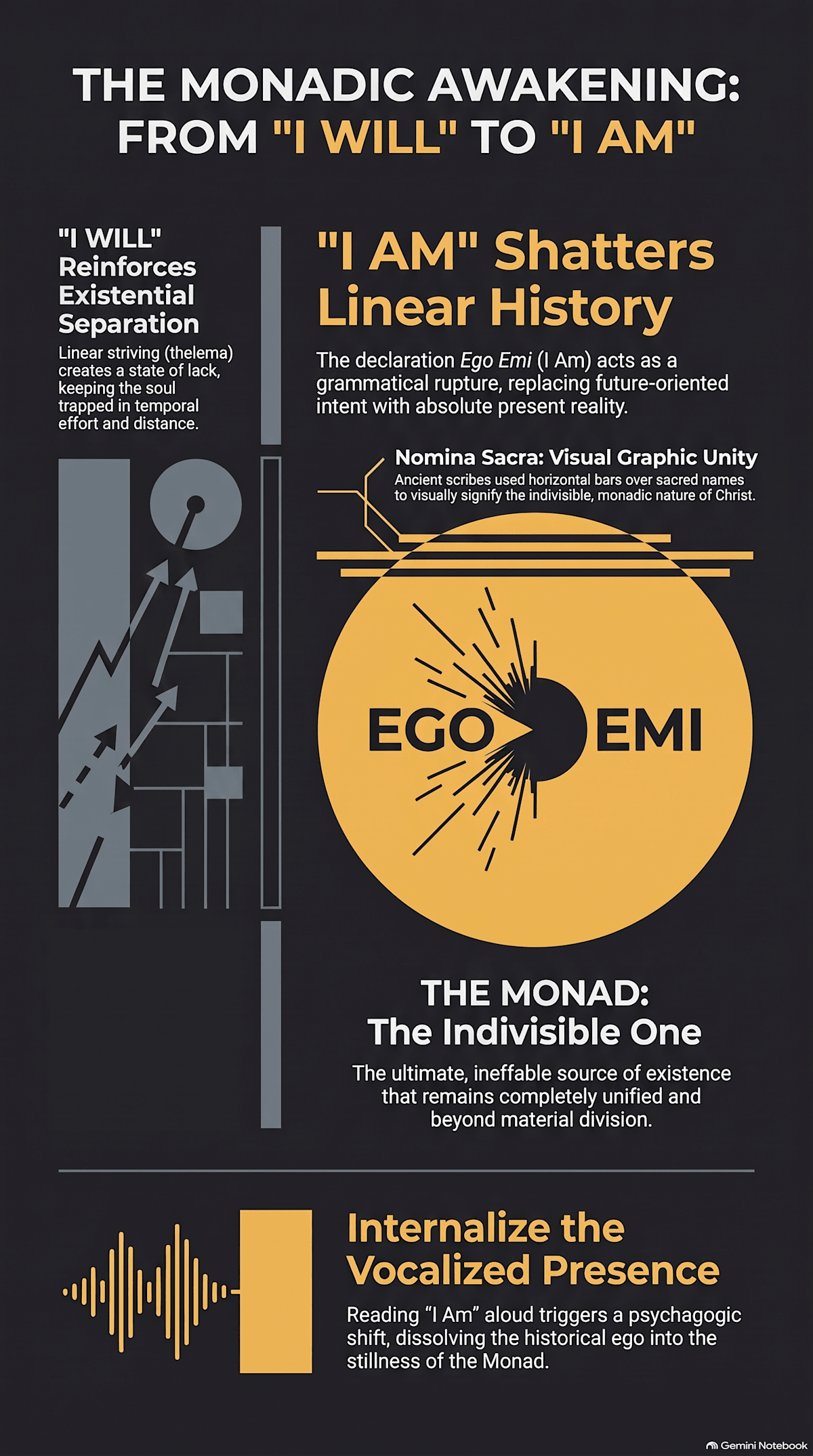
Take the famous declaration in John 8:58: “Before Abraham came to be, I am” (prin Abraam genesthai ego eimi). Grammatically, this sentence is an intentional car crash. By dropping the absolute, unpredicated present tense (eimi) directly against a historical past-tense infinitive (genesthai), the text shatters linear time.
For a reader steeped in Middle Platonic categories, this unconditioned "I am" acted as a psychological solvent. It momentarily froze the horizontal timeline of past regrets and future intentions, pulling the mind into a stark, vertical, eternal present.
Even the scribes transcribing these words encoded this unity onto the physical page. In the earliest surviving fragments of the Fourth Gospel, like Papyrus 66 and Papyrus 75, scribes deployed Nomina Sacra (Sacred Names). They stripped the name of Jesus of its vowels, contracting it into a unified, emblem-like shorthand bounded under a single, horizontal overline. This graphic interruption served as a physical signpost on the papyrus, visually mirroring the binding, indivisible nature of the Monad.
The Institutional Immune Response
Naturally, a theology that offered an immediate cosmic short-circuit to the Divine was a mortal threat to emerging ecclesiastical power.
If every human soul possesses a hidden divine spark (pneuma), and if oral meditation on Christ's absolute Ego Emi can trigger an instant, immanent awakening to ultimate reality, then the entire apparatus of institutional mediation collapses. You no longer need apostolic succession, rigid church hierarchies, or the authority of a bishop to bridge a gap that has already been entirely dissolved.
This explains the aggressive institutional immune response from 2nd- and 3rd-century heresiologists like Irenaeus of Lyons and Hippolytus of Rome. To protect the structures of the proto-orthodox church, they systematically decoupled Christ from monadic immanence. They forced salvation back onto a historical timeline and steered Christian subjecthood firmly back into the domain of the submissive human will (thelema). The institutional church required believers to stay in a state of lack, continuously saying "I will follow," because an empire cannot govern an ecosystem of individuals who have realized they are already complete.
Reading as Awakening
Ultimately, our research reveals that these early mystical texts were engineered as psychagogic engines—practical tools meant to be read aloud (viva voce) so that the reader literally spoke the words "I am" into existence on their own breath.
It transitions the individual from an agent acting upon reality to a vessel realizing reality. The exhausting, future-oriented anxiety of human willpower dissolves into the majestic stillness of the Monad’s absolute presence. It reminds us that we are not isolated strangers wandering through a fragmented, hostile universe, but unbroken, eternal rays of the immanent One.
As ever,
Mark
To view videos on the article please 'click' on the 🖇️ 👇
Explainer
https://youtu.be/tmncJ9GOKoE?is=tsZH-pii-FQxz3TJ
Short
https://youtube.com/shorts/d6251Yy0vWU?is=S4jsJW6Upp_T7pzY