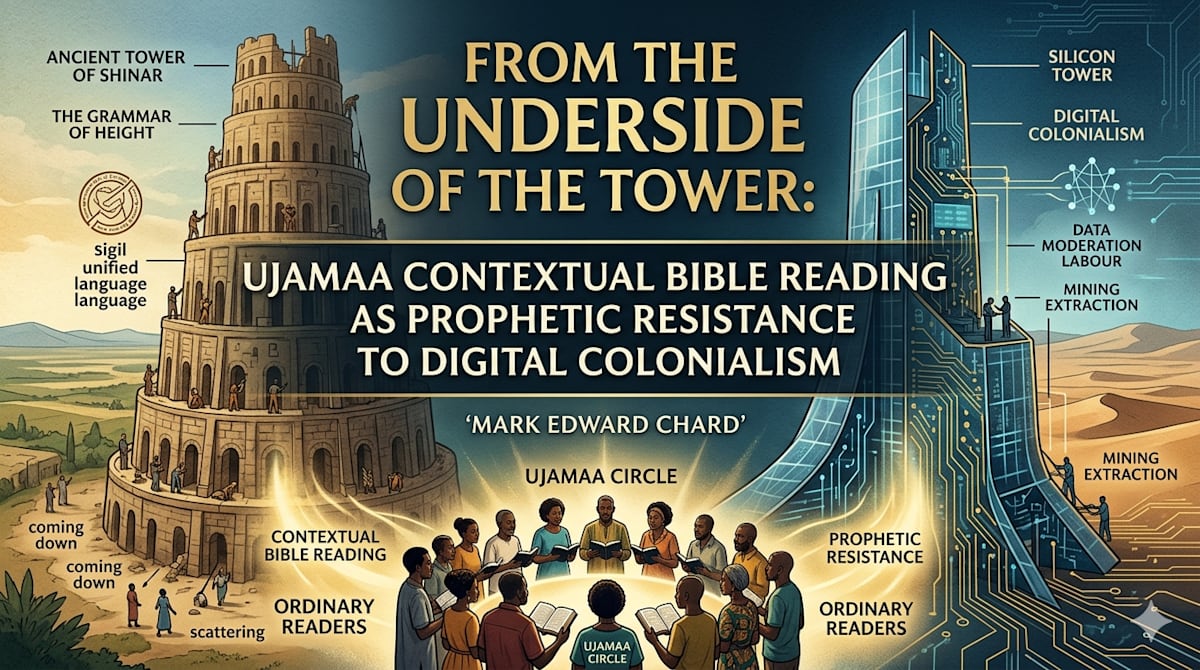
It’s submitted.
Today I sent “From the Underside of the Tower: Ujamaa Contextual Bible Reading as Prophetic Resistance to Digital Colonialism in the Age of AI” to Missionalia. This piece feels like a natural and necessary extension of the theological journey I’ve been on for the past few years.
The Silicon Tower is rising.
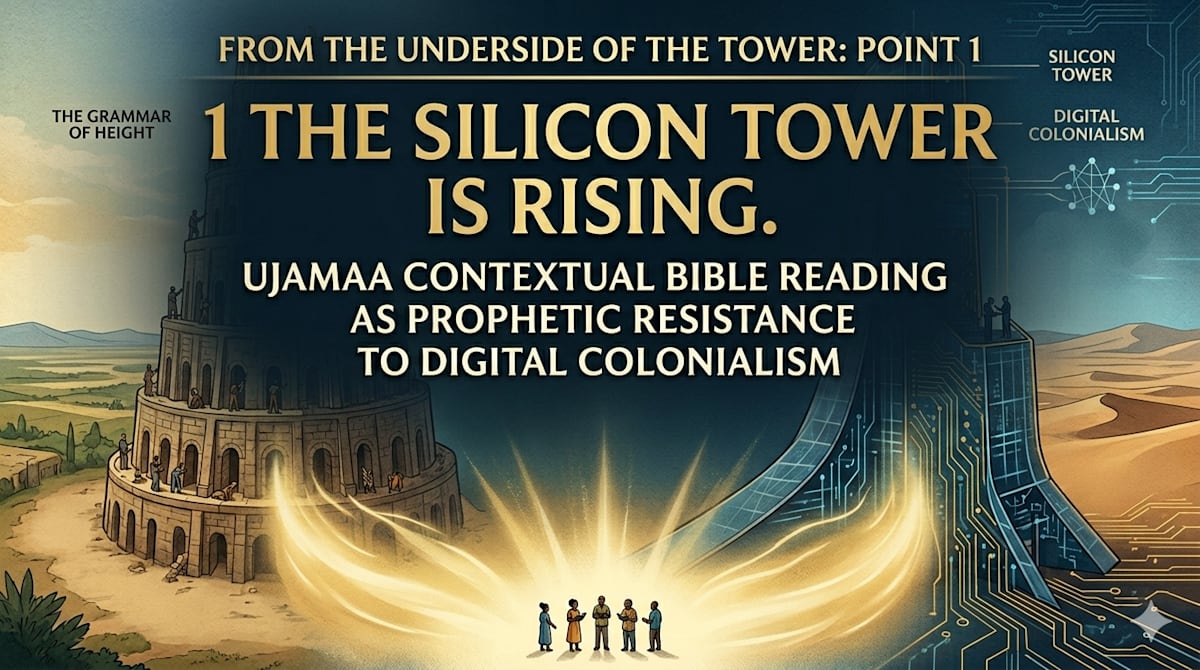
While Silicon Valley presents generative AI as a great democratising force — promising knowledge for all, creativity without limits, and a borderless global community — communities across the Global South experience something far more familiar: a sophisticated new form of colonial extraction. Data is scraped from African languages and cultural expressions with minimal return to source communities.
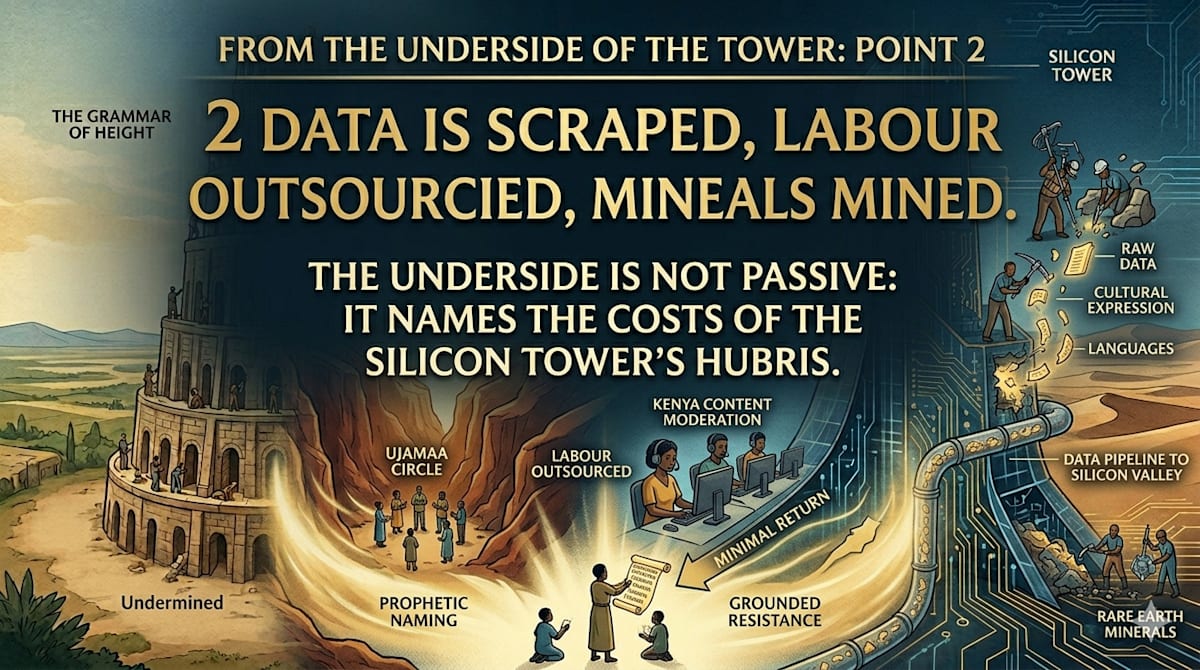
Content moderation labour is outsourced to poorly paid workers in Kenya and beyond, exposing them to psychological trauma. Rare earth minerals for the hardware come from mines in the DRC under hazardous conditions. The environmental costs land disproportionately on those least responsible for the climate crisis.
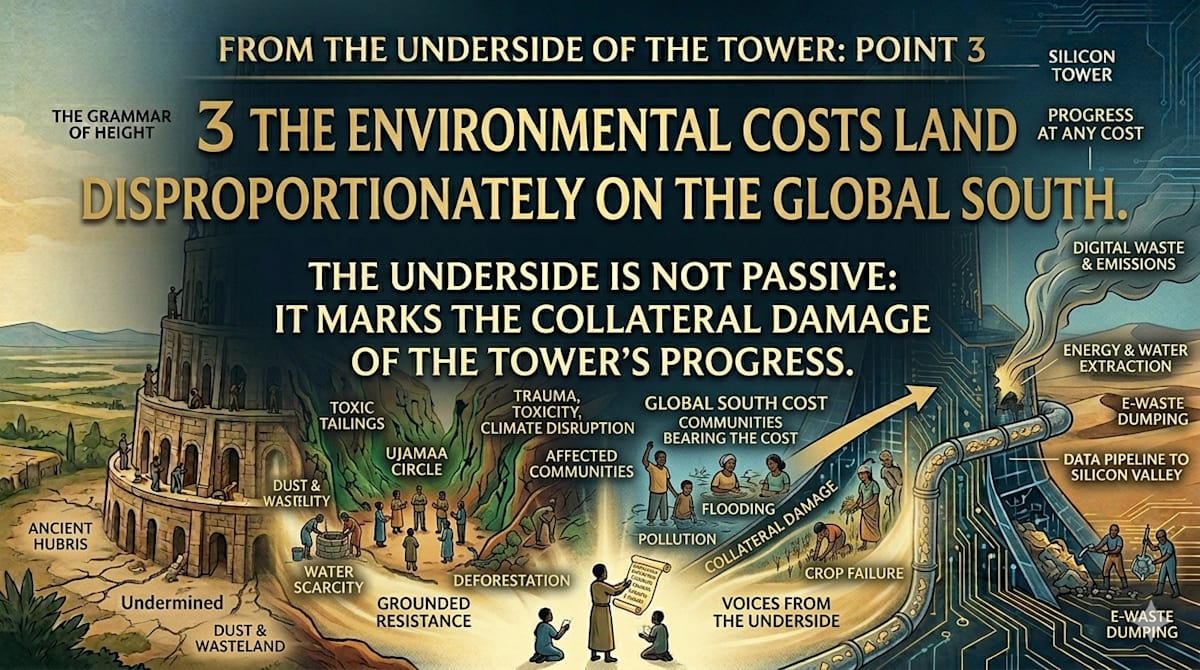
This is not progress. This is a new tower on the plain of Shinar.
In this article I argue that the Ujamaa Centre’s Contextual Bible Reading (CBR) methodology offers a powerful, distinctly African prophetic response. Rather than abstract ethical debates or corporate “AI alignment” frameworks, Ujamaa invites us to read both Scripture and contemporary reality from the underside of power.
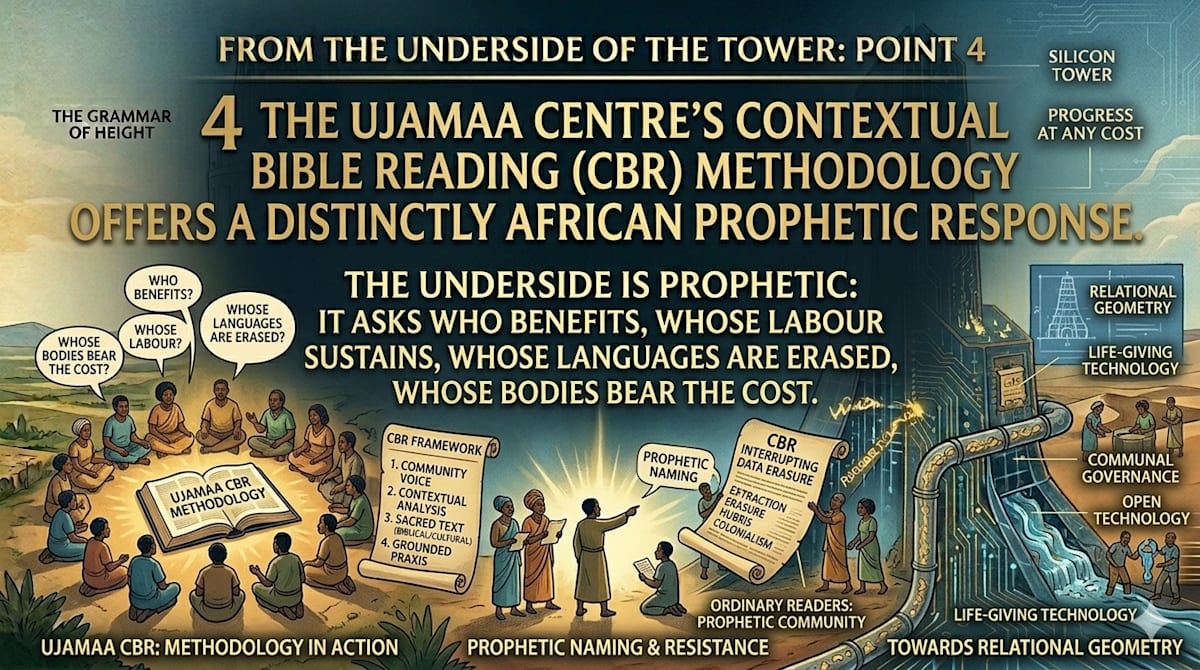
When ordinary readers — especially the poor, women, and marginalised communities — gather around the text, they bring questions the powerful rarely ask: Who benefits from the tower? Whose labour sustains it? Whose languages are erased? Whose bodies bear the cost?
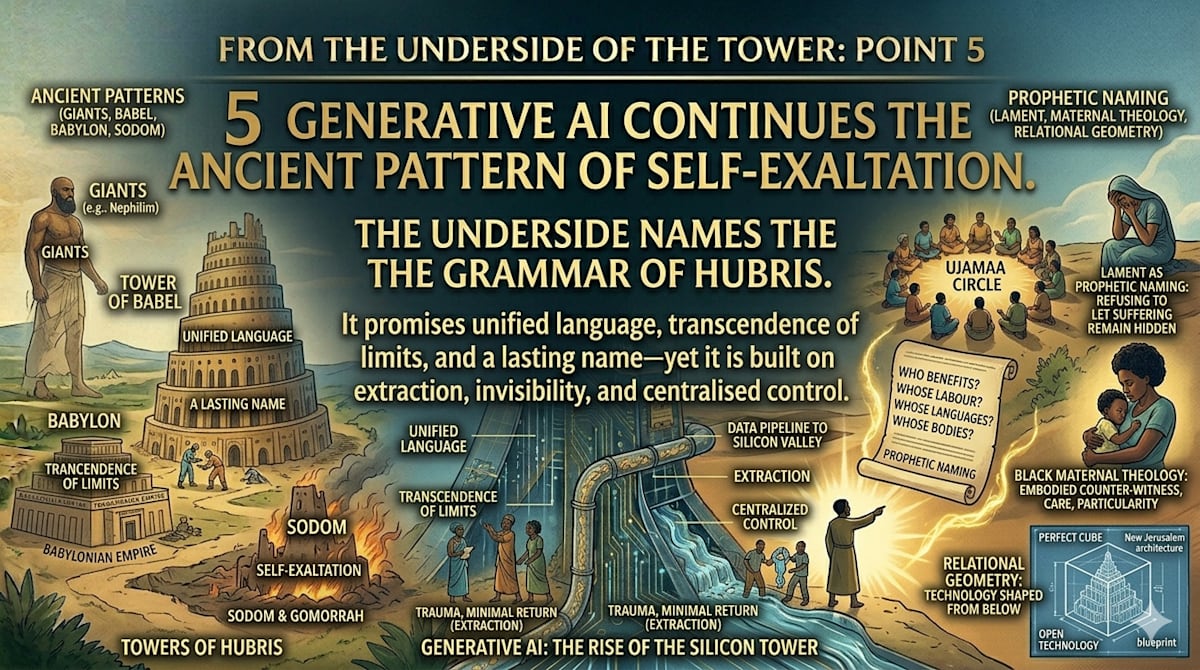
Drawing on the “grammar of height and hubris” traced across my earlier papers (giants, Babel, Babylon, Sodom, and the maternal arc), the article shows how generative AI continues this ancient pattern of self-exaltation. It promises unified language, transcendence of limits, and a lasting name — the classic ambitions of every tower. Yet it is built on extraction, invisibility, and centralised control.
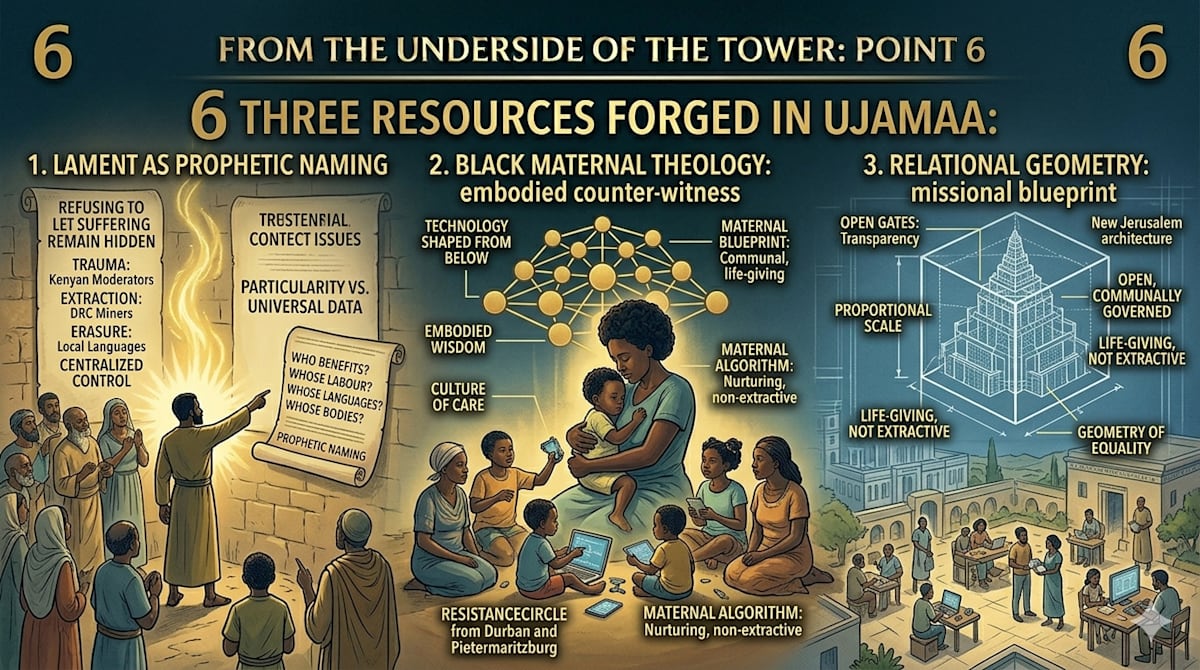
The constructive heart of the paper lies in three resources forged in the Ujamaa tradition and my broader research programme:
Lament as prophetic naming — refusing to let suffering remain hidden.
Black Maternal Theology as embodied counter-witness — insisting on particularity, care, and relational wisdom that algorithms cannot replicate.
Relational Geometry (the New Jerusalem’s perfect cube) as a missional blueprint — calling for technology that is proportional, open, communally governed, and life-giving rather than extractive.
This is not anti-technology. It is a call for technology shaped from below — by the communities who know what it means to live under towers.
As Honorary Lecturer in the School of Arts (Theology and Religion) at the University of KwaZulu-Natal, and as someone deeply shaped by the Ujamaa Centre’s legacy (particularly the pioneering work of Gerald West), I write from within a tradition that has spent decades learning to read power, empire, and resistance from the ground up. UKZN and Ujamaa are uniquely positioned to lead theological engagement with AI in Africa — not as latecomers, but as institutions with hard-won wisdom born in struggle.
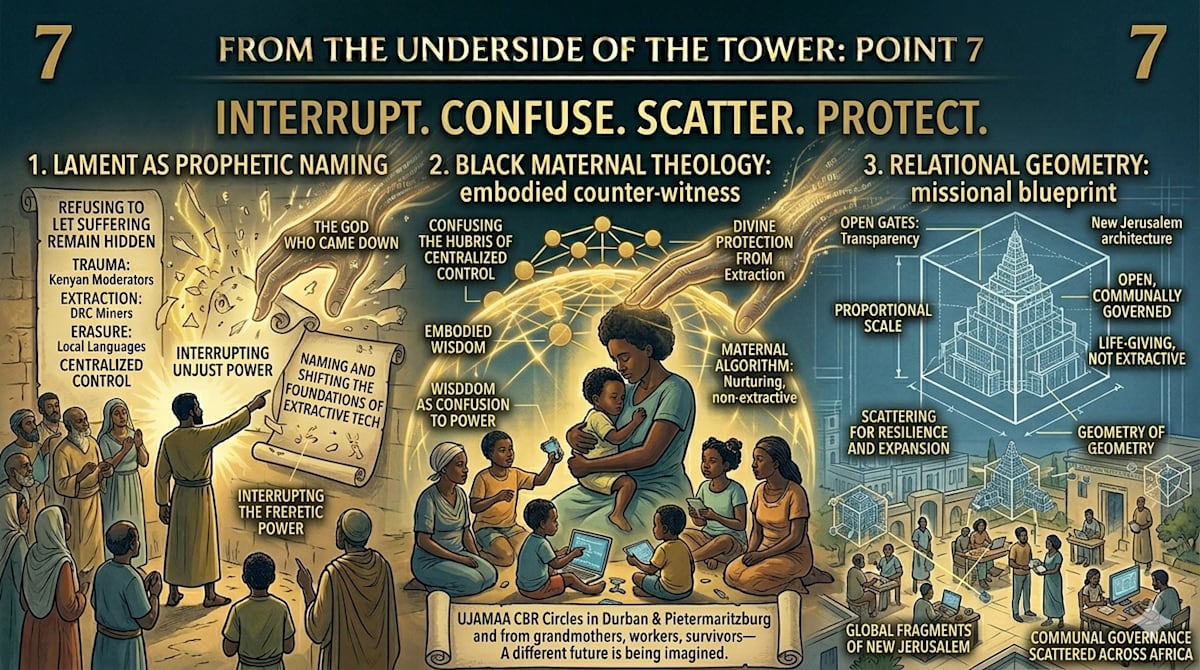
The God who came down to inspect the tower at Shinar still comes down today. In every new Silicon Tower, the Spirit interrupts, confuses, scatters, and protects. And from the underside — from CBR circles in Durban and Pietermaritzburg, from the voices of grandmothers, workers, and survivors — a different future is being imagined.
The small one shall become a thousand.
The Silicon Tower shall not have the final word.
As ever,
Mark.
The following documents are also available for viewing / ready - 'click' 🔗 👇
Video Overview
Slidedeck (Explanation in Graphics and Slides)
Briefing Doc (Key insights and Important Quotes)