New article now published in Biblical Interpretation (Brill)
DOI: 10.1163/15685152-bja10079
In the antebellum South, white pulpits rarely opened the book of Hosea. Its central image — a God who buys back an unfaithful wife from the marketplace and clothes her again in covenant love — sat too close to the bone in a society built on selling human beings and breaking up their families. But in the hush harbours and brush-arbor clearings beyond the overseer's reach, enslaved communities turned to Hosea again and again. My new article, published this week in Biblical Interpretation, traces what they found there — and where that reading travelled over the next three and a half centuries.
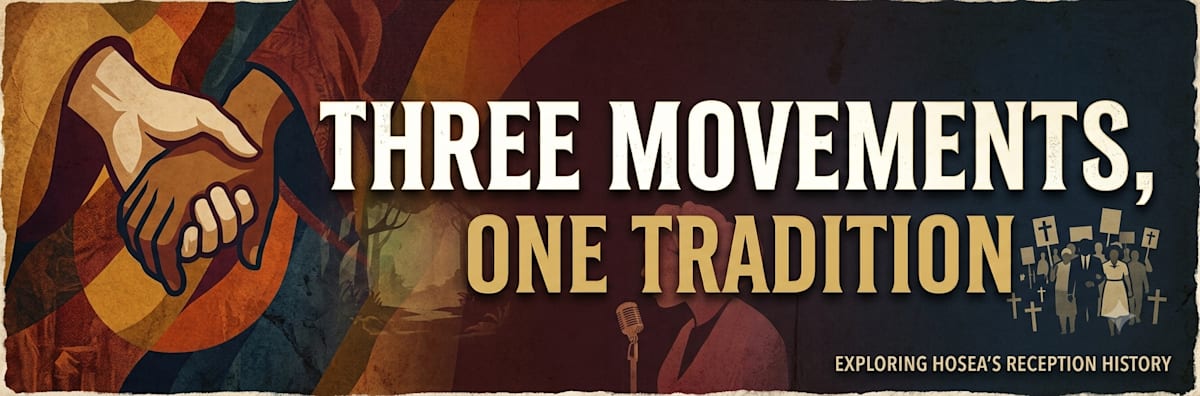
Three Movements, One Tradition
The article follows Hosea's reception across three historical arcs, arguing that African American communities didn't simply receive this text — they transformed it into something the original audience could scarcely have imagined.
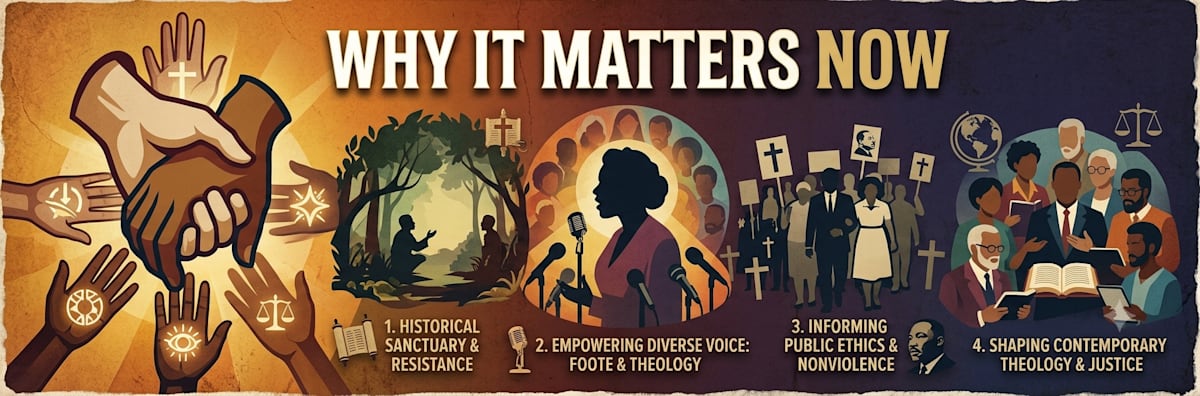
The wilderness as sanctuary (1619–1865). Hosea's promise that God would "allure her into the wilderness, and speak tenderly to her" became, for the enslaved, a description of the very ground they stood on. The wilderness wasn't a future hope — it was the clearing where clandestine worship happened, the one place the patrollers couldn't follow. Slave narratives preserve preachers citing this verse directly over hush-harbour gatherings, and the covenant language of Hosea 2 was spoken over clandestine marriages as a deliberate act of theological defiance against a system that treated Black unions as legally meaningless.
Gomer reclaimed (1865–1940). As formerly enslaved communities moved into the Reconstruction era and the holiness movement took root, the shamed wife of Hosea's opening chapters became something else in Black women's hands: a witness rather than a warning. Julia A. J. Foote, denied the right to preach by her own church, found in Hosea 11 — "How shall I give thee up, Ephraim?" — the exact shape of her own vocation. If God would not give up on a faithless nation, she reasoned, God would not give up on "a poor coloured woman plucked from the burning." That reading rippled outward through the holiness and early Pentecostal movements, into gospel recordings, and into sermons broadcast on race records across the urban North.
The grammar of nonviolence (1954–1968). Martin Luther King Jr. returned to Hosea 11 more than any other Old Testament text in his public ministry — not by accident, but because its emotional logic (divine heartbreak rather than divine wrath, even under sustained provocation) gave nonviolent resistance a theology it could actually sustain over years of brutality. The article also recovers a connection historians have underexamined: SNCC organiser Prathia Hall's 1962 prayer on the ashes of a firebombed Georgia church, delivered a full year before King's "I Have a Dream" speech, wove the same wilderness and Ephraim imagery King would later make famous. Fannie Lou Hamer carried it too, telling the 1964 Democratic National Convention: if God hadn't given up on her, she wasn't giving up on Mississippi.
Why It Matters Now
The article closes by turning to the womanist reclamation of Gomer in the work of Renita Weems and Wil Gafney — a hermeneutical correction to decades of pulpits using Hosea to shame Black women rather than liberate them. Read across four centuries, the throughline is consistent: a text about a God who will not let go, taken up again and again by people the world kept trying to let go of.
This is my first published output under my Research Associate appointment at the Wits Centre for Diversity Studies (WiCDS), University of the Witwatersrand.
Full citation: Chard, Mark Edward. "'How Can I Give You Up?': Hosea in the Spiritual Imagination of African Americans, 1619–1968." Biblical Interpretation (2026): 1–14. https://doi.org/10.1163/15685152-bja10079
The full published is available here: