1. The Hand That Reaches Back
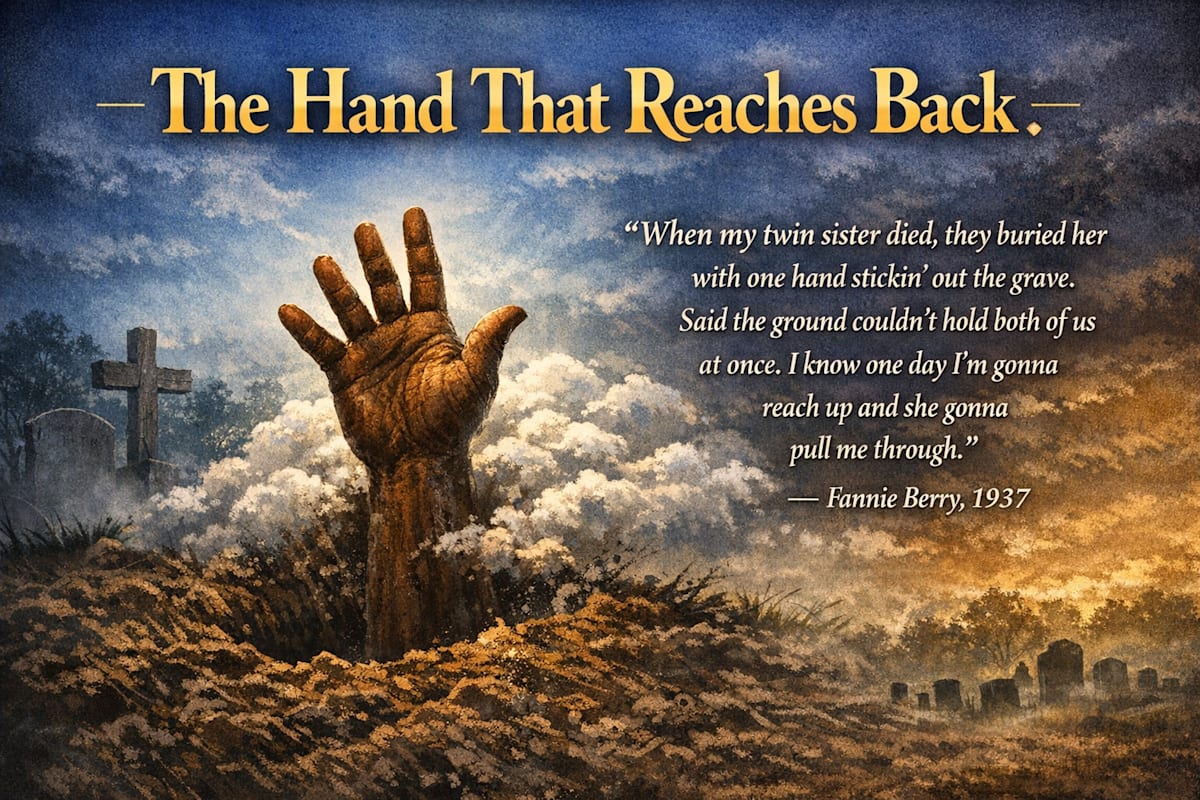
In 1937, in the red clay of rural Virginia, a ninety-three-year-old woman named Fannie Berry stood as a living bridge to an era of profound sorrow and even deeper hope. She recounted a burial ritual that shatters our modern, sanitized conceptions of the "final journey." When a twin died, Berry explained, they were sometimes laid to rest with a single hand left protruding from the earth. The community believed the ground simply could not hold both twins at once; to bury one completely was to risk losing the other to the same shadows.
For the cultural historian, this image is a haunting artifact of the "archival ache" of Black life. For the spiritual essayist, it is a liturgy of the landscape. It suggests that death is not a solo ascent into a distant, individualistic heaven, but a relational pause. Since the first recorded arrivals in 1619, Black Christianity has wrestled with the trauma of forced separation—on the auction block, in the cotton field, and at the graveside. Out of this struggle emerged a "twin theology" that views resurrection not as a solitary "upgrade" of the soul, but as a radical restoration of kinship. Based on the research of scholar Mark Edward Chard, we find that in this tradition, twins do not travel alone; they are the "other half" of a story that God refuses to let end in a period.
2. Lesson 1: The Grave is an Open Door
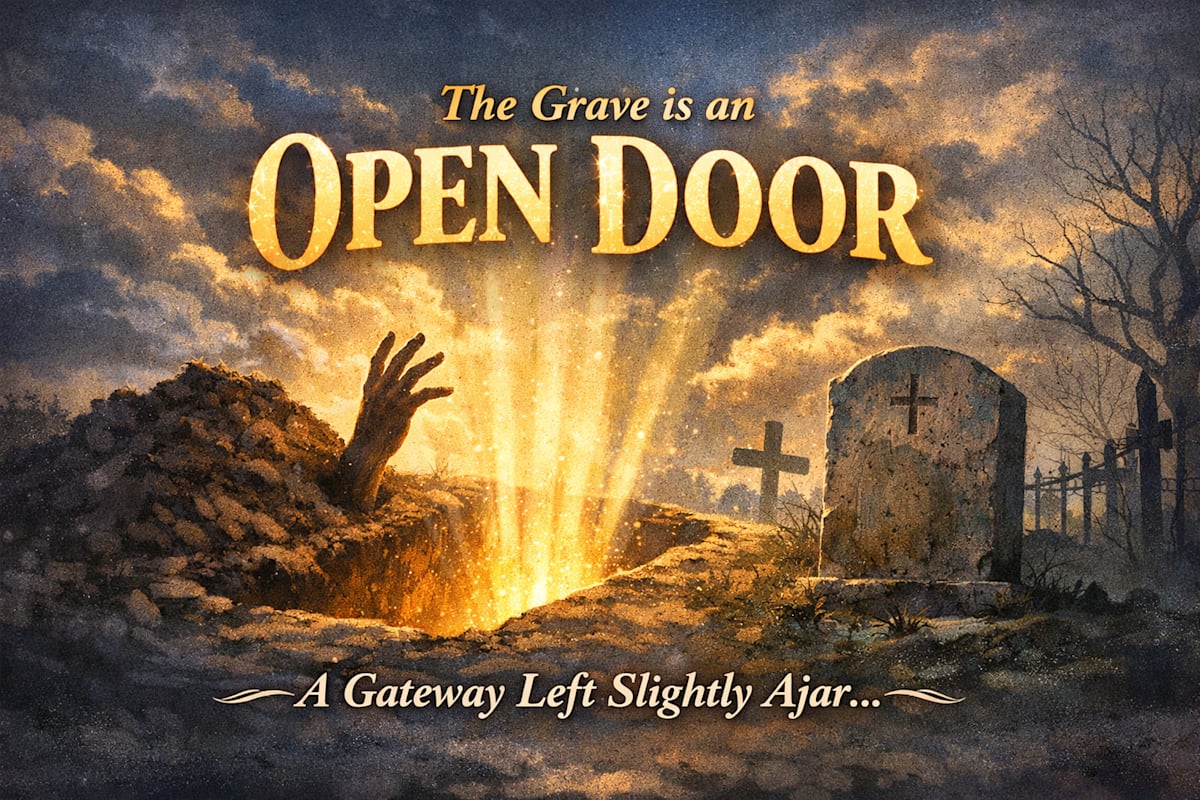
The ritual Fannie Berry described was more than a folk custom; it was "embodied proclamation." In a society that sought to commodify Black bodies and tear families apart, leaving a hand exposed was a physical refusal to let death have the final word. It was a ritualized "no" to the finality of the shroud.
Theologically, this act suggests a "tactile grammar" of hope. The grave was not a dead end but a gateway left slightly ajar—a threshold where the survivor and the deceased remained in a state of active, expectant reaching. It transformed the cemetery from a place of static memory into a site of ongoing dialogue.
“When my twin sister died, they buried her with one hand stickin’ out the grave. Said the ground couldn’t hold both of us at once. I know one day I’m gonna reach up and she gonna pull me through.” — Fannie Berry, 1937
3. Lesson 2: Salvation is Relational, Not Solitary
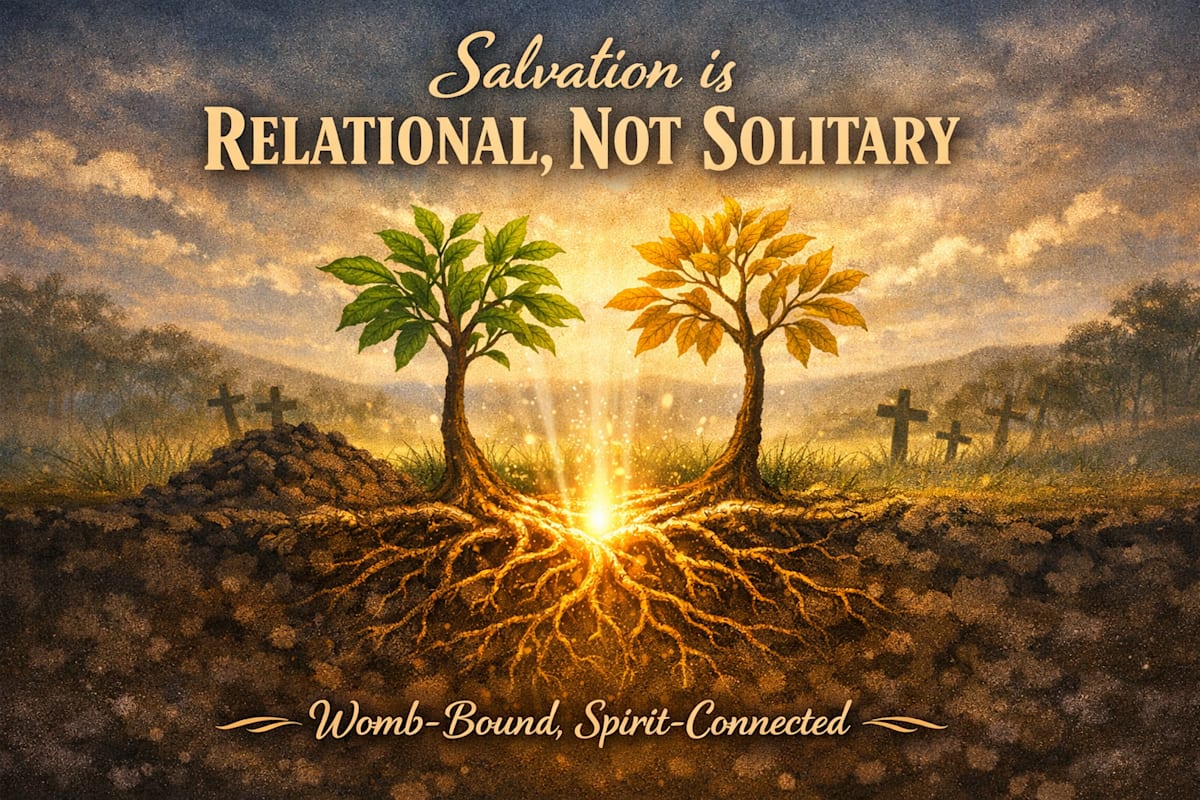
While much of Western theology focuses on the "solitary soul" meeting its Maker, Black twin theology operates on a "relational grammar." Here, the loss of a twin is described as an "ontological loss"—a rupture of the very self. Because twins are understood to be knit together in the womb, their identities are not parallel; they are integrated. To lose the twin is to lose the mirror of one's own existence.
This tradition asserts three interlocking claims that redefine the "communion of saints" for a broad, intelligent audience:
- Womb-Bound Bonds: Twinship is narrated as a divine joining rather than a biological fluke. Because God authored the union in utero, no earthly force—neither the slave trader nor the Reaper—is permitted final sovereignty over the bond.
- The Sensory Communion: This is a "Theology of Touch." Borrowing from the biblical Thomas, who needed to feel the wounds to believe the glory, this tradition treats "felt presence" as lived data. Whether it is a hand on a shoulder during prayer or a familiar warmth in a dream, these sensory impressions are not dismissed as superstition but embraced as the "tactile knowing" of a relationship that persists.
- Recognition over Replacement: Resurrection is not about receiving a generic, "improved" body that forgets its history. It is about recognition—knowing and being known, reaching again for the specific, familiar hand once held in the dark.
4. Lesson 3: The Spirit Remembers What the Ledger Divided
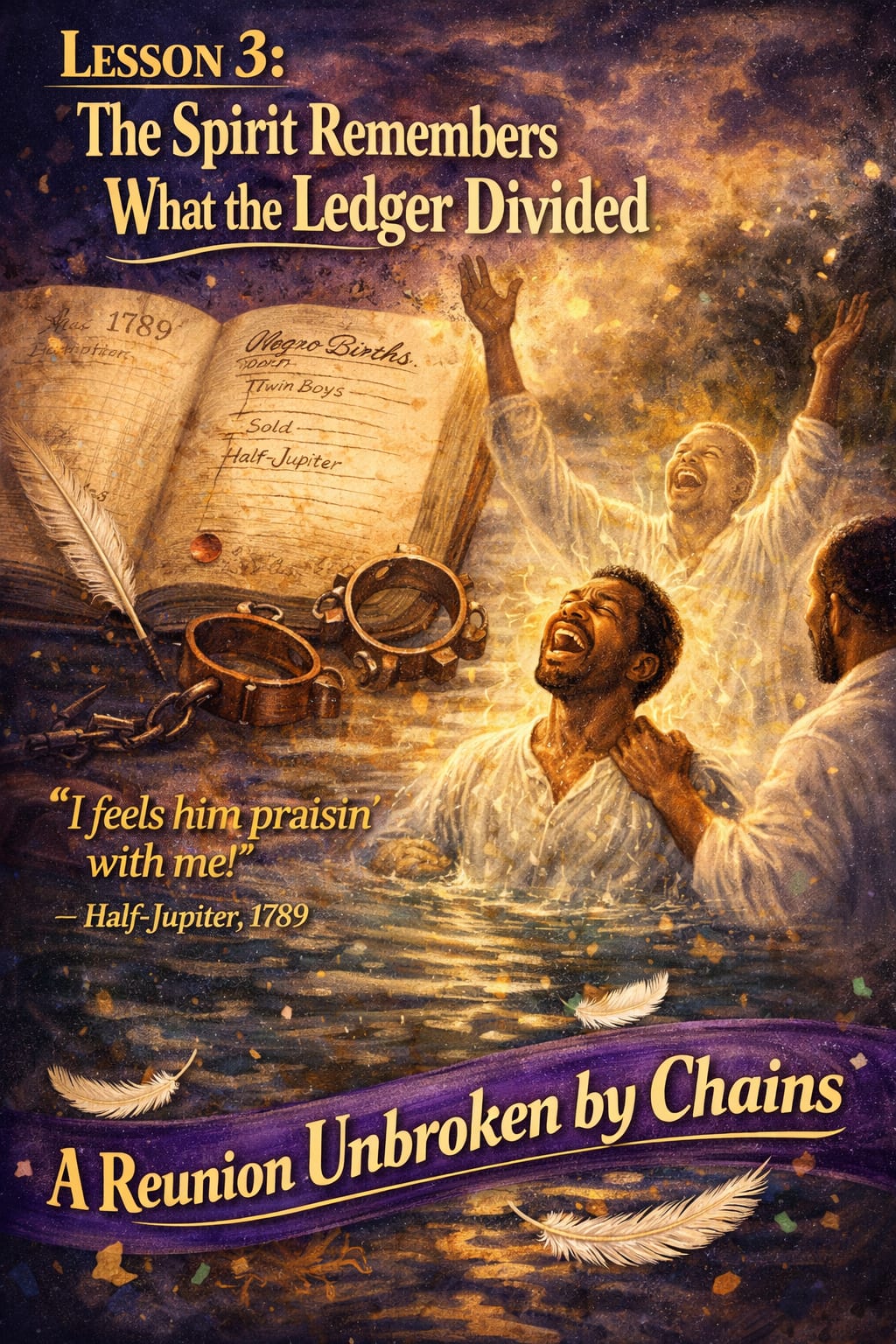
The roots of this theology are anchored in the historical trauma of the 18th century. In a 1789 South Carolina plantation ledger, under the clinical heading "Negro Births," an overseer recorded the arrival of twin boys. One was sold to a Georgia trader that same day. The mother, in an act of linguistic resistance, named the remaining boy "Half-Jupiter."
That name was a living lament, a public testimony that Half-Jupiter was walking through the world with half of his soul missing. Yet, the archival record shows that the spiritual cord remained intact. When Half-Jupiter was baptized at age thirty, the sacrament became a site of reunion. He didn't shout for his own salvation alone; he felt the brother he hadn't seen in three decades rising with him through the water.
“I feels him praisin’ with me!” — Half-Jupiter, 1789

This "felt presence" served as a survival strategy for thousands. Laura Stewart of Alabama, whose twin was sold when they were seven, recalled feeling his hand on her shoulder every time she knelt to pray. For the enslaved, resurrection was the ultimate reversal of the slave trade: the moment the "half" would finally be made whole.
5. Lesson 4: Heaven is a Shared Flight
By the late 19th century, the "twin sermon" emerged as a formal homiletic genre. Preachers would weave together the defiance of Job ("In my flesh I shall see God"), the mystery of 1 Corinthians ("We shall all be changed"), and the promise of John ("I am the resurrection").
The climax of these sermons promised a shared "flying away." In 1926, at Chicago’s Olivet Baptist Church, Rev. Lacey K. Williams stood before a congregation mourning twelve-year-old Ruth, who had died of tuberculosis. Looking at her identical twin, Ruby, Williams abandoned his notes and spoke into the rhythm of the spirit, envisioning Ruth not as "lost," but as a celestial vanguard.
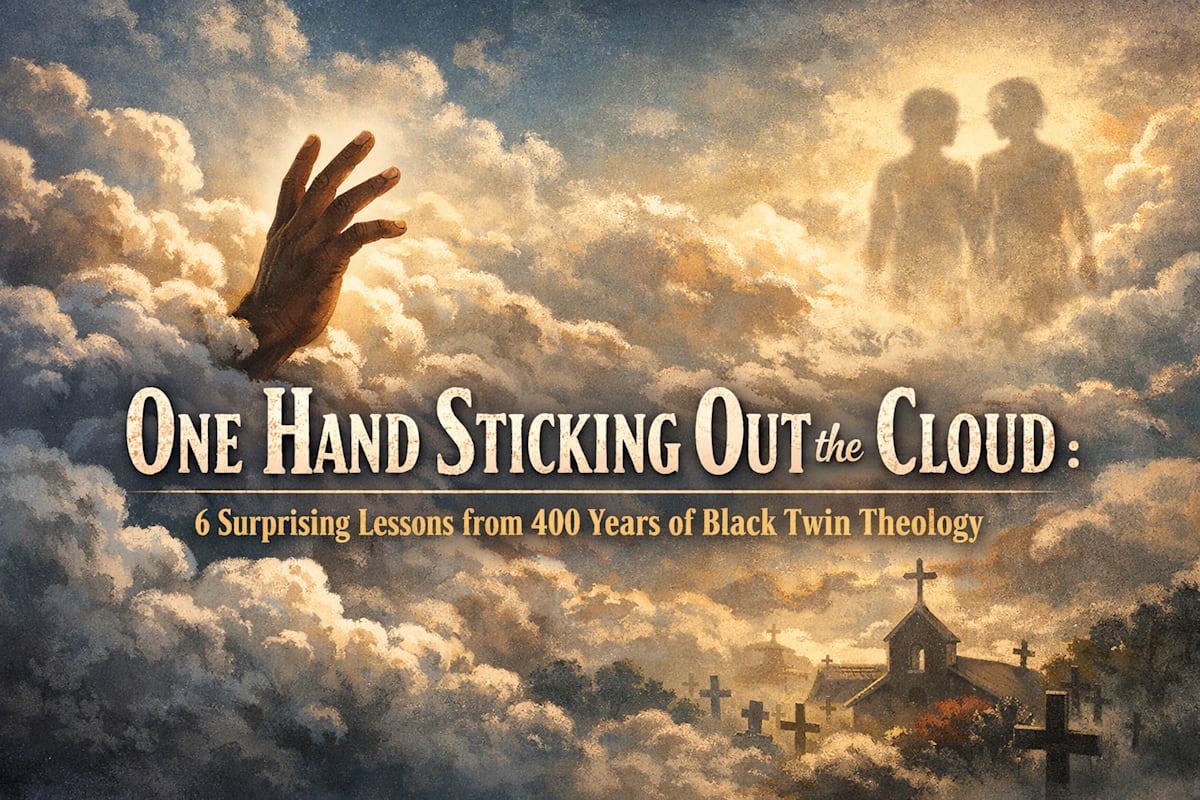
“Don’t cry for Ruth. She just went on ahead to get the house ready.And when Ruby’s time come,Ruth gonna be standing at them pearly gateswith one hand sticking out the cloud, saying,‘Come on, sister.We was twins in the womb,twins in the Spirit,and we gonna be twins in the kingdom!’”
6. Lesson 5: The Survivor is a Living Prophecy
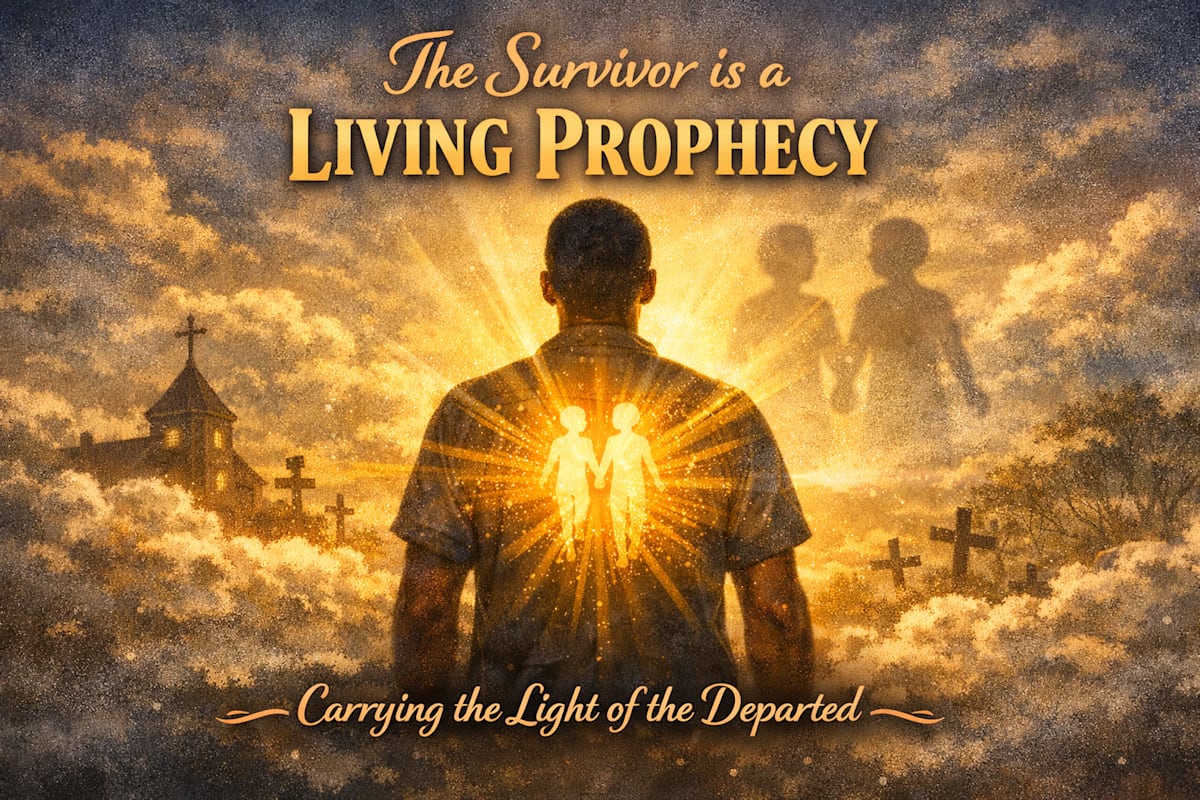
In this tradition, the surviving twin is more than a mourner; they are a "living ark of the covenant," carrying the presence of the departed within their own heartbeat. This "Theology of the Undying Twin" suggests that the survivor’s continued existence is a drumbeat against the finality of death.
As Rev. Dr. Marvin McMickle articulated during a 2019 funeral in Cleveland, Ohio, the twin who stays behind becomes a walking testament. By simply breathing, moving, and existing, the survivor proves that the grave failed to claim the entire bond.
“The one who stays behind becomes the living ark... Every morning he opens his eyes, he is preaching Easter Sunday to the devil.” — Rev. Dr. Marvin McMickle, 2019
7. Lesson 6: Joy is a Defiant Resurrection
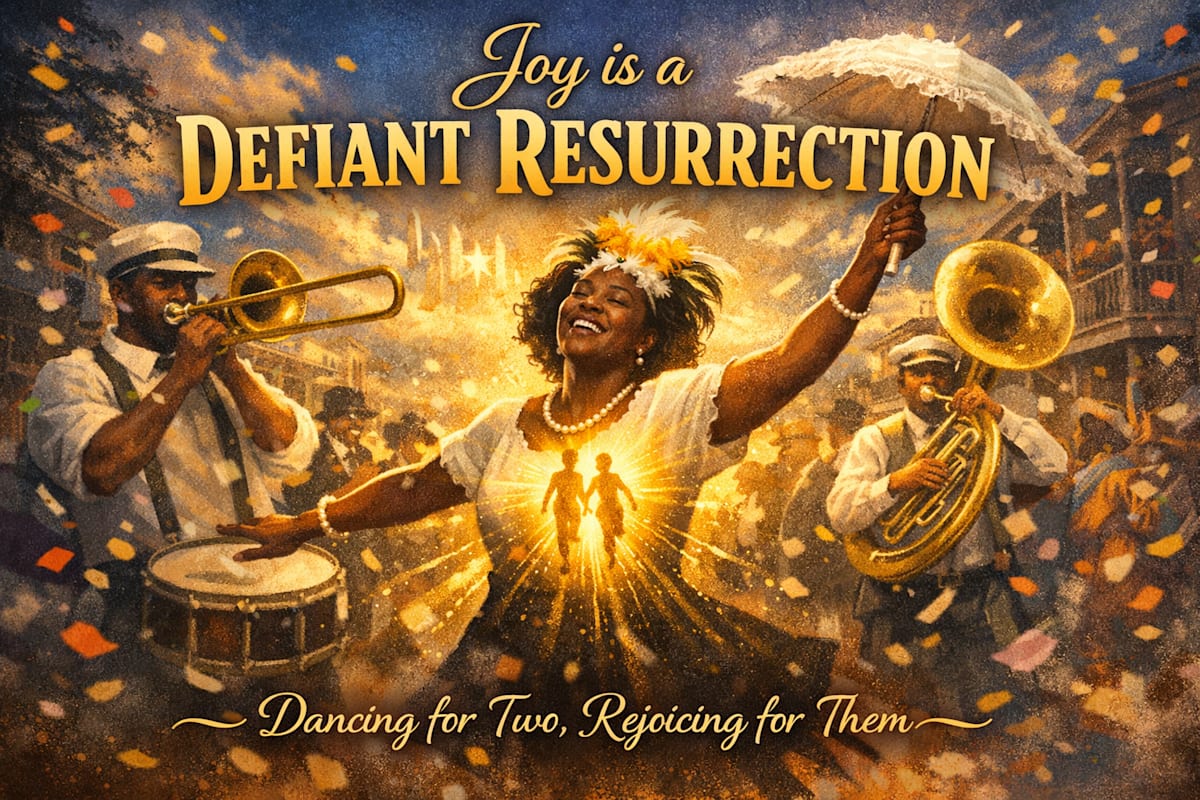
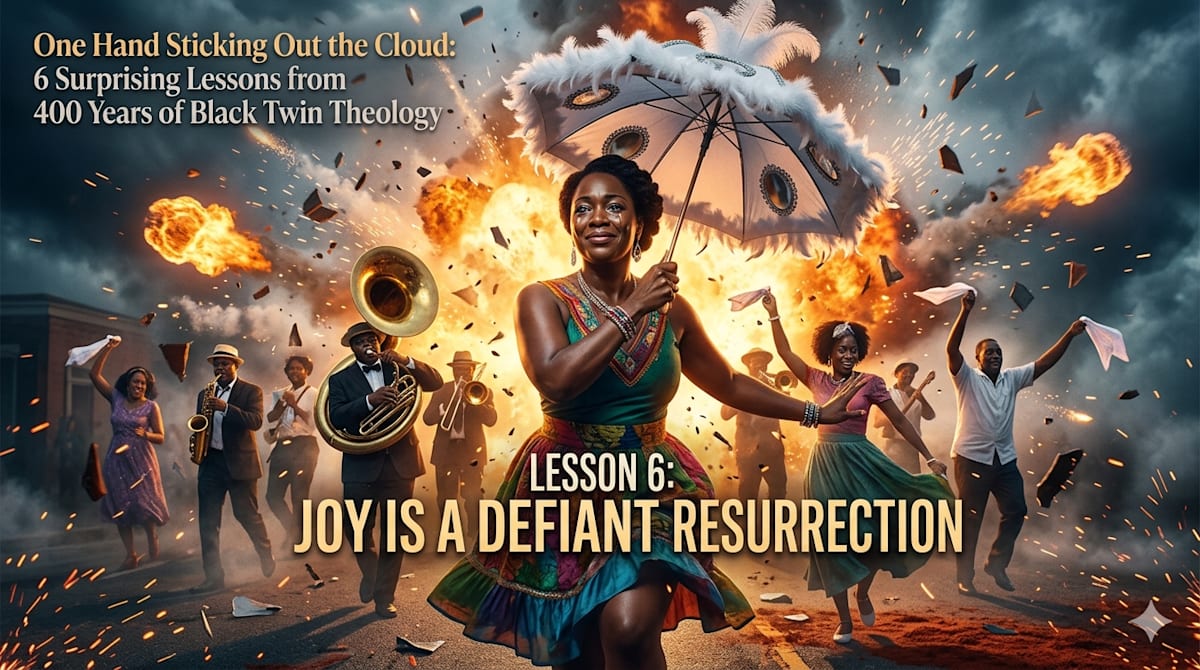
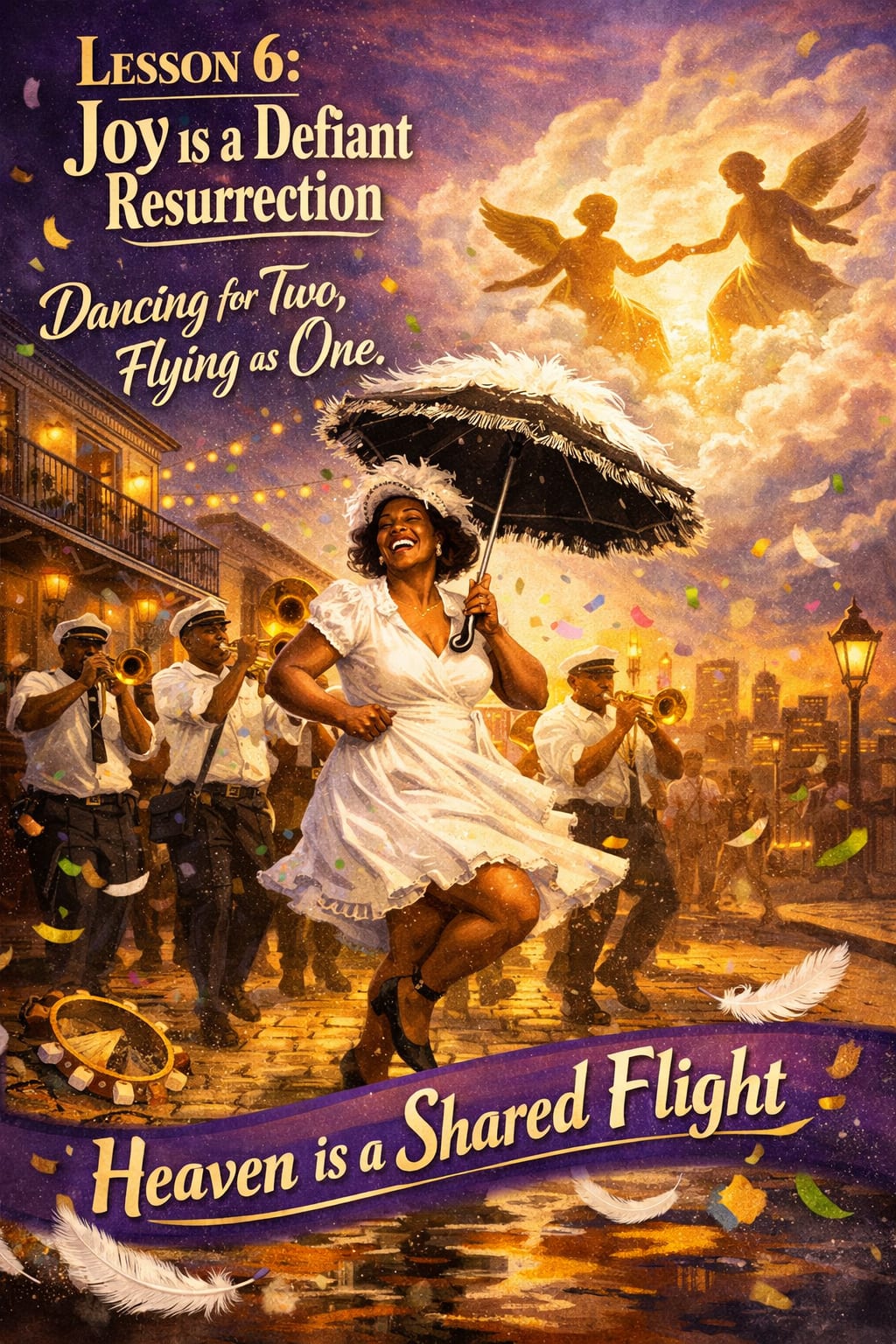
This theology eventually spills out of the church and onto the pavement of New Orleans. In the second-line tradition, the funeral begins with a "minor-key dirge"—a slow, somber crawl toward the cemetery. But the return trip is where the "resurrection with horns" erupts.
The snare drum cracks, the tuba begins to swing, and the atmosphere shifts from mourning to holy defiance. For a surviving twin, this dance is a sacred obligation; they are "dancing for two." In a 2023 second-line, a sister was seen leading the procession, her parasol spinning like a whirlwind, tears streaming while she laughed. This is not denial; it is a rhythmic insistence that the bond is still moving, still grooving, still alive in the cadence of the street.
8. Conclusion: A Two-Part Harmony
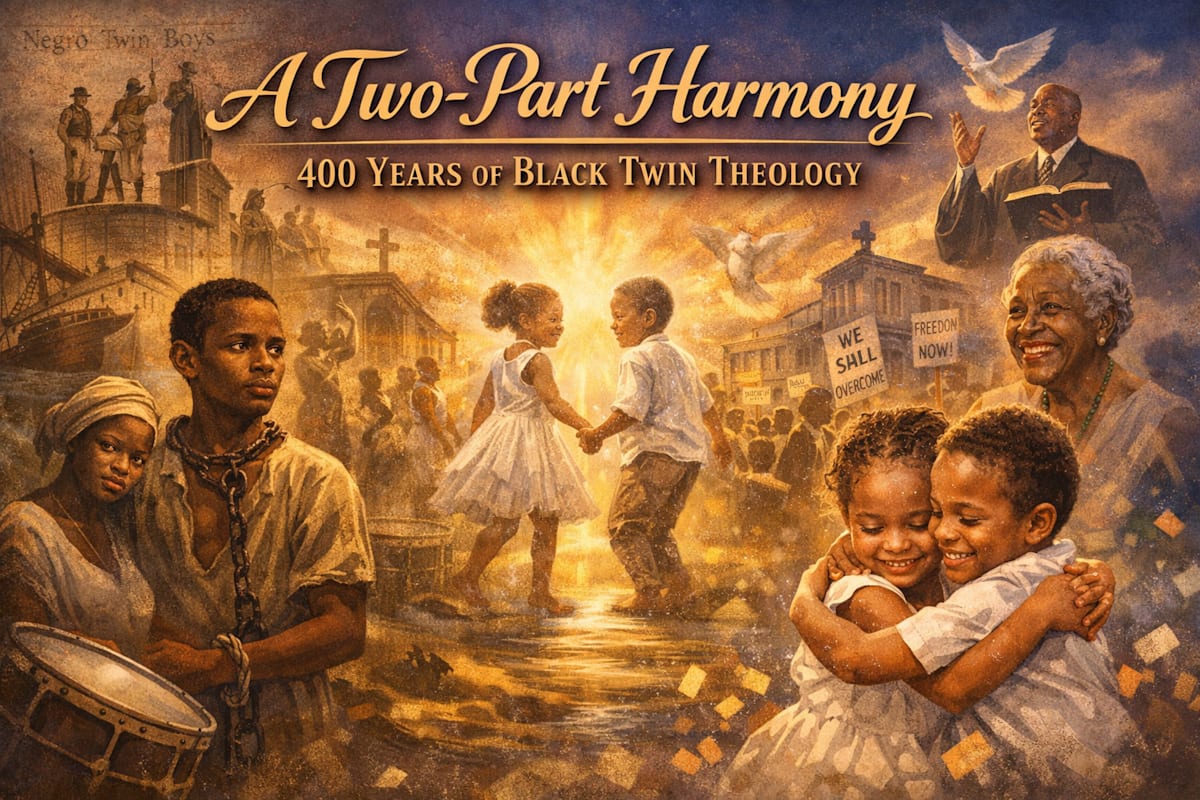
The "historical chain" of Black twin theology remains unbroken, stretching from the first arrivals in 1619 to a 2024 Zoom grief-share where a woman named Keisha testified to seeing her twin brother—a victim of COVID-19—sitting on the edge of her bed, telling her he had simply "beat her home."
This 400-year-old protest against separation teaches us that the end of life is not a departure, but a rejoining. It challenges us to rethink our own views of the "end." If we stop seeing resurrection as a solitary upgrade to our individual selves and instead see it as the restoration of our deepest kinships, the entire landscape of grief changes.
In the key of twinship, the final trumpet isn't a signal of an end, but the beginning of a two-part harmony that was interrupted far too soon. It leaves us with a haunting, hopeful question: If your own resurrection is a reunion rather than a solo flight, who is the first person you will reach for when you see that one hand sticking out the cloud?