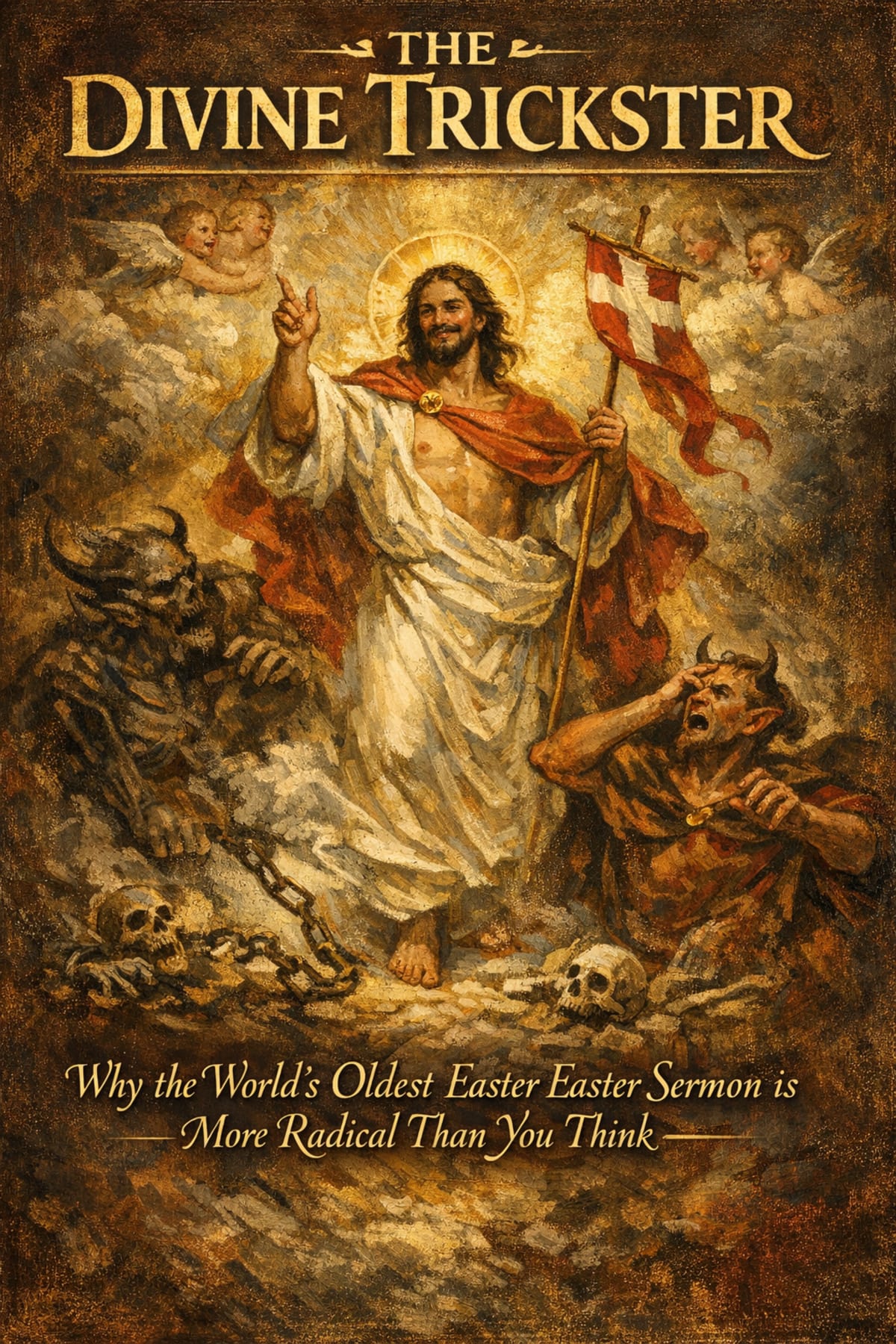
Introduction: Reimagining the Resurrection
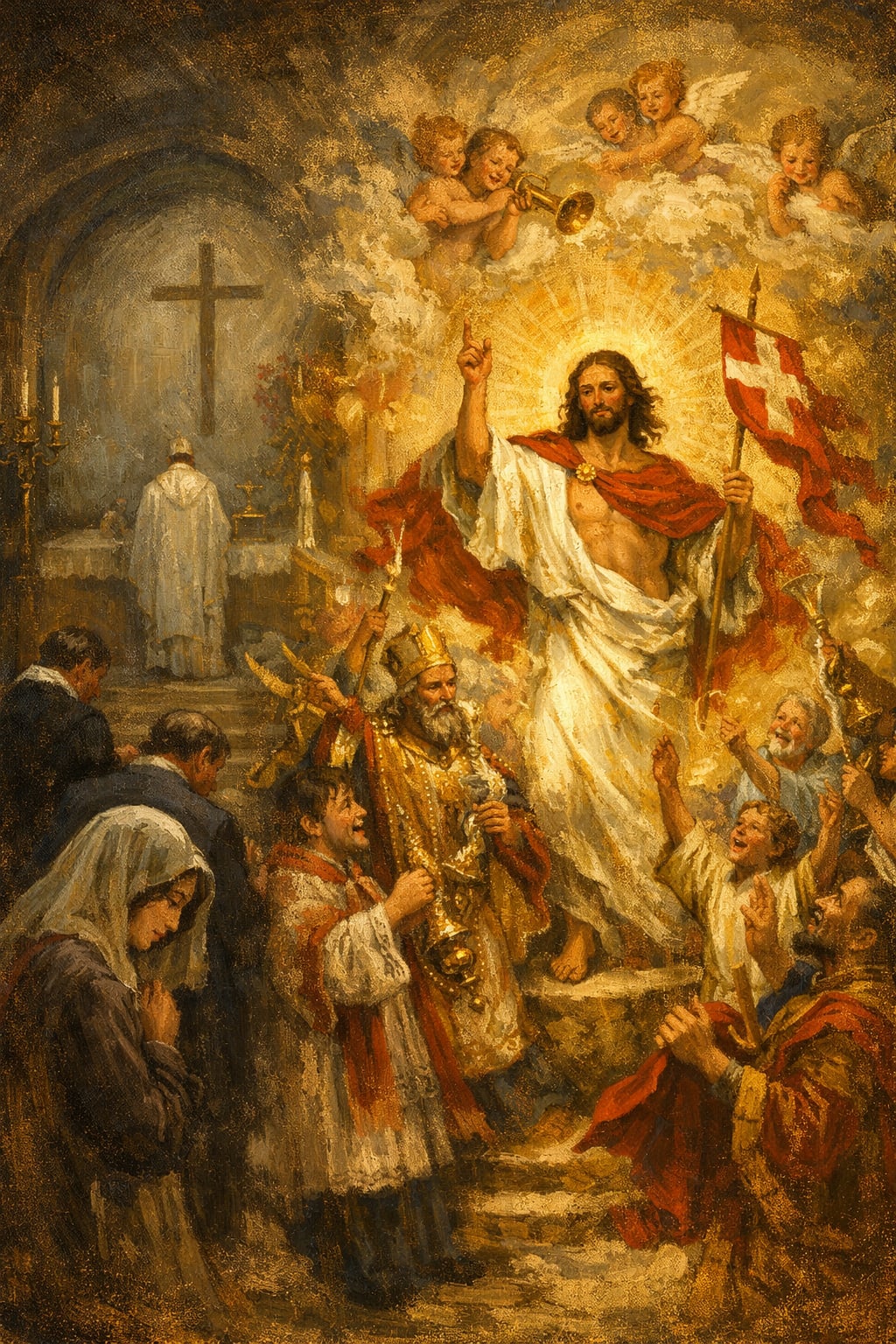
In the contemporary West, Easter is often cloaked in a somber, porcelain reverence—a day of quiet reflection and hushed Alleluias. Yet, if we peer back into the high-energy liturgies of the early Church, we find a celebration that was less like a funeral and more like a riotous victory parade. At the heart of this ancient exuberance stands St. John Chrysostom and his 4th-century Paschal Homily.
Chrysostom, the "Golden-Mouthed" Archbishop of Constantinople, was a pivotal architect of the nascent Church’s doctrine. His most famous sermon, still "performed" globally every Easter, is a startling historical artifact that upends modern religious sensibilities. It suggests that the resurrection was not a cold legal transaction, but a daring cosmic subversion—a divine joke played at the expense of death itself.
Takeaway 1: Forget the "Blood Sacrifice"—It’s a Sting Operation
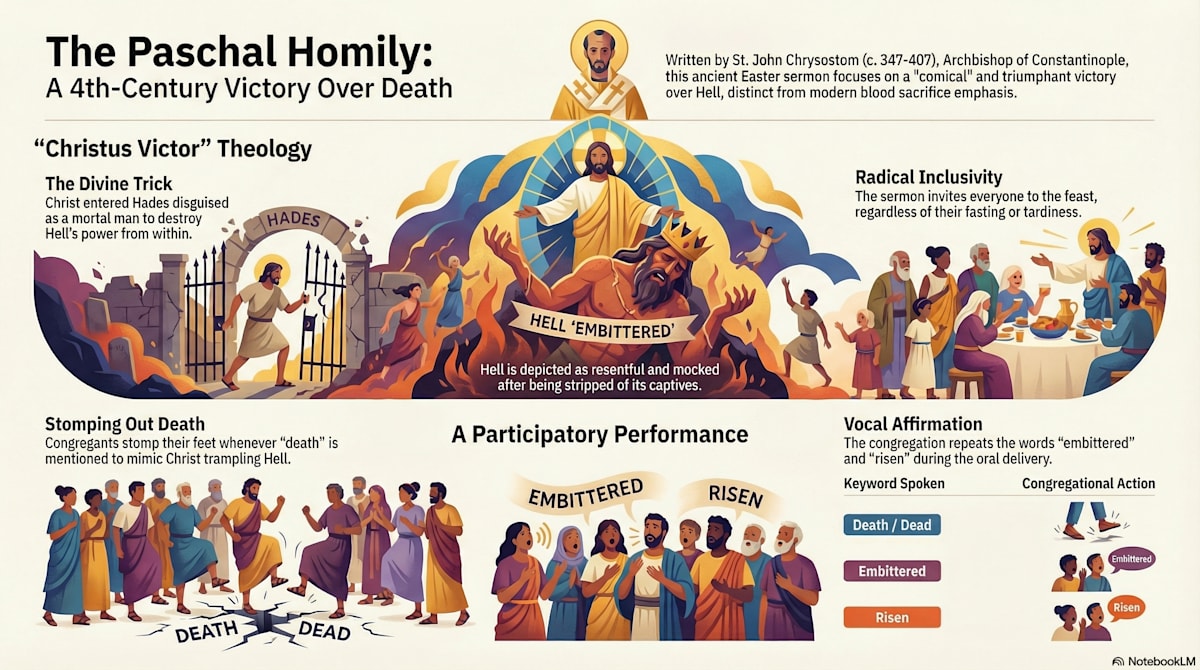
Modern Western soteriology—the study of salvation—is dominated by "Penal Substitution," the idea that Jesus died as a blood sacrifice to satisfy a legal debt of sin. However, Chrysostom’s ancient perspective bypasses this judicial framework entirely, leaning instead into the Christus Victor theory of atonement.
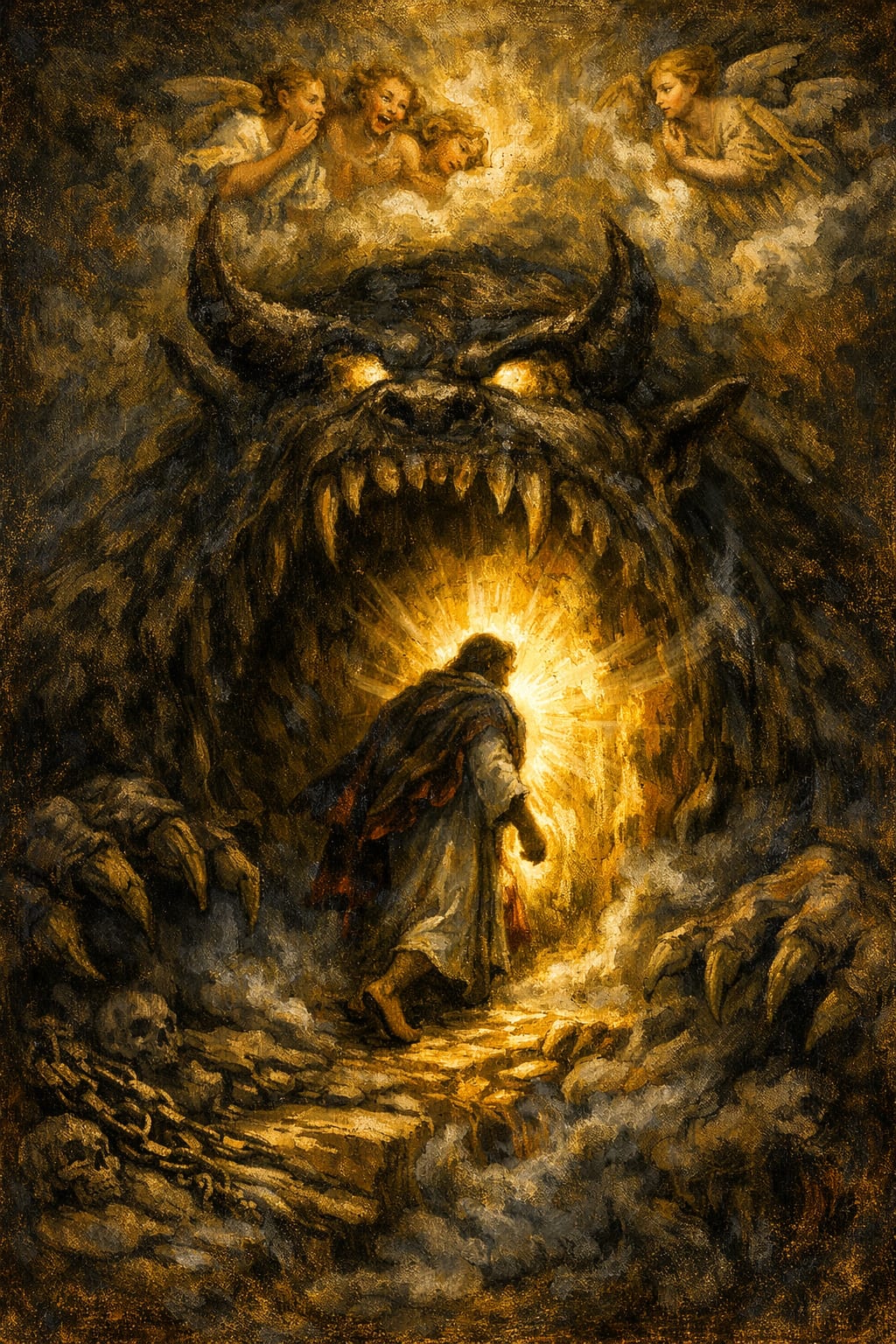
In this narrative, the resurrection is framed as a theological "sting operation." Jesus enters the fray as a "Divine Trickster," posing as a mortal man and, therefore, appearing to be a sinner. In the ancient worldview, Hades held a legal right to claim the souls of all sinners. By appearing as a flawed human, Christ baited the trap. When Hades attempted to "swallow" this apparent sinner, it inadvertently consumed the sinless, eternal God. This was the ultimate ontological bait-and-switch: Hades overstepped its bounds, and the "sting" was sprung from the inside.
"It took a body and came upon God! It took earth and encountered Ηeaven! It took what it saw, but crumbled before what it had not seen!"
The "unseen" element was Christ’s divinity, which shattered the foundations of the afterlife once it was brought within the gates. This "ta-da!" moment of revelation transforms the resurrection into a triumphant, almost cheeky narrative of infiltration and liberation rather than a somber payment of debt.
Takeaway 2: Hell is Not Scary; It’s Just Really Salty
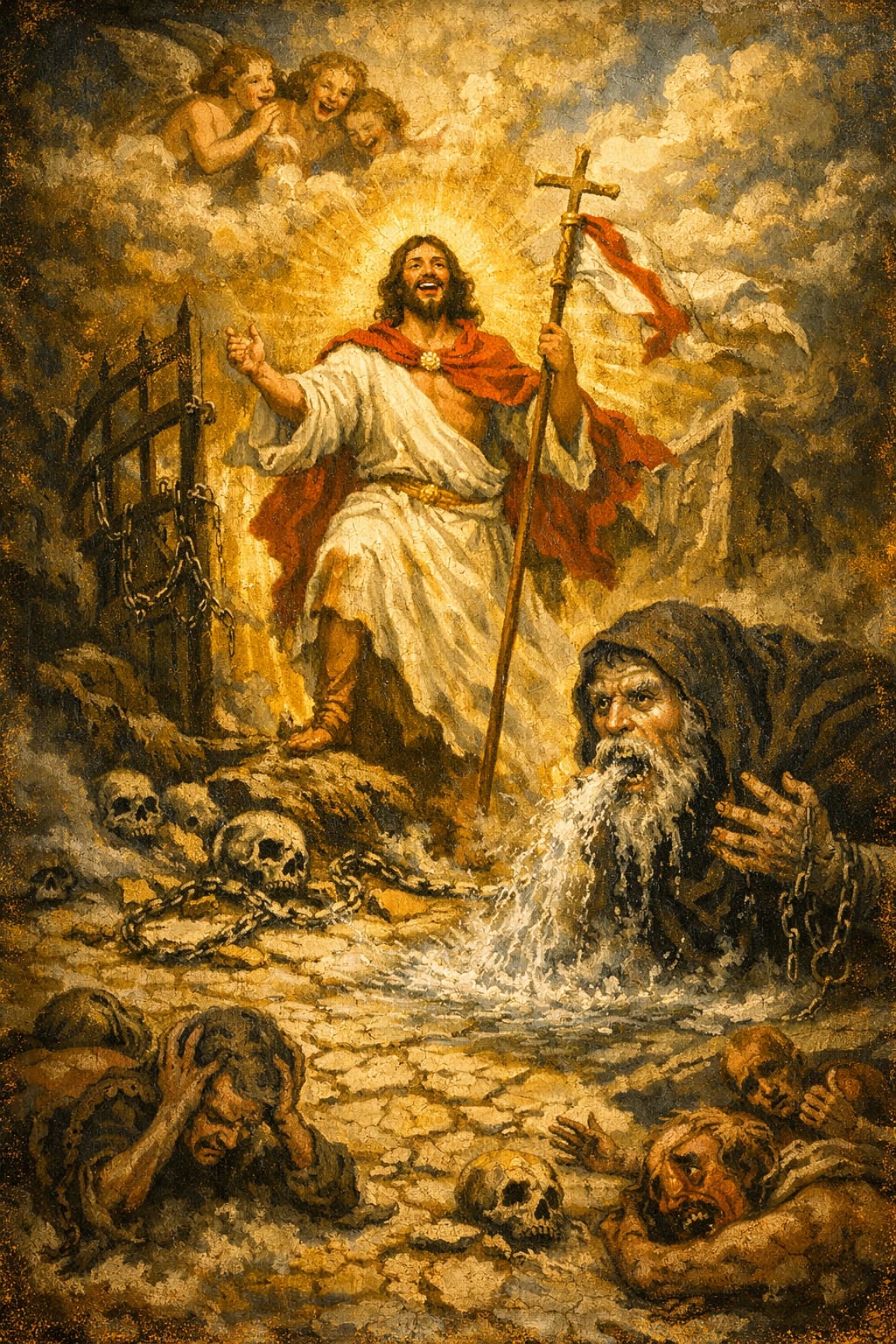
The Paschal Homily personifies Hades (Hell) not as a terrifying, eternal tormentor, but as a victim of a cosmic prank. Chrysostom bolsters this mockery by weaving in the words of the prophet Isaiah, who exclaimed that Hades was "embittered" when it encountered the divine in the lower regions. In this context, "embittered" denotes the resentment of a cheated host who has been thoroughly outwitted.
The sermon subjects Hades to a relentless verbal pummeling, using a five-part litany of defeat that turns the once-feared villain into a laughingstock. This repetition serves a profound psychological purpose: it shifts the believer's stance from one of existential dread to one of theological irony.
"It was embittered, for it was abolished! It was embittered, for it was mocked! It was embittered, for it was purged! It was embittered, for it was despoiled! It was embittered, for it was bound in chains!"
By the end of this sequence, the listener no longer fears a "bound" and "purged" entity. The "salty" resentment of Hades becomes a source of joy for the faithful, signaling that the enemy is not just defeated, but humiliated.
Takeaway 3: The Ultimate "Open Bar" Policy
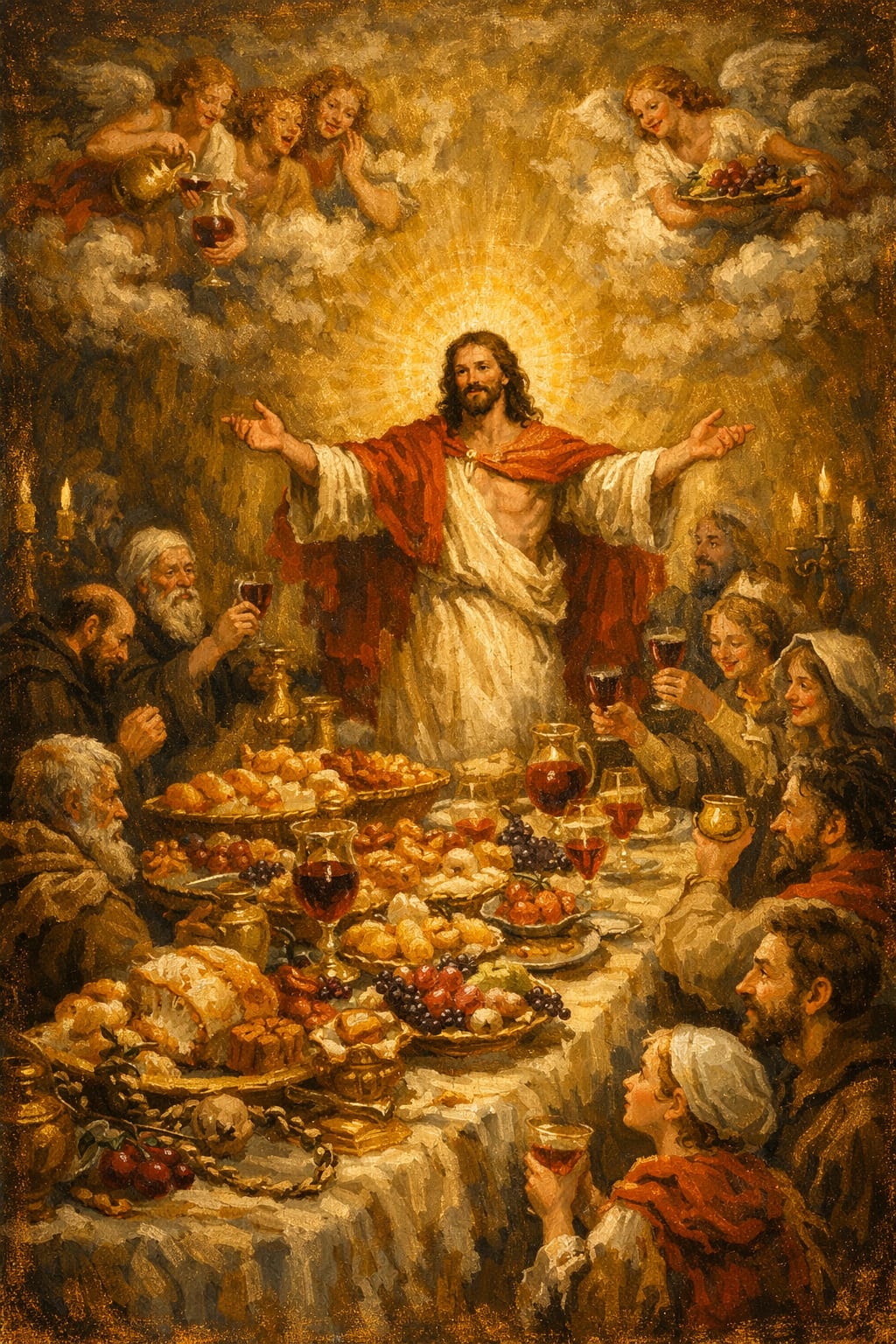
Perhaps the most radical subversion in Chrysostom’s sermon is its total rejection of merit-based religion. The homily issues a sweeping, "open bar" invitation to the resurrection feast, dismantling the barriers between the "holy" and the "unholy."
Chrysostom explicitly addresses two polarizing categories: the "ascetics," who have spent their lives in rigorous devotion, and the "negligent," who have drifted through life with little regard for the divine. He commands both to celebrate as equals. By welcoming those who arrived at the "eleventh hour" with the same fervor as those who labored from the first, Chrysostom eliminates the "reward for effort" model of spirituality.
"For the Master is gracious and receives the last even as the first; He gives rest to him that comes at the eleventh hour, just as to him who has labored from the first. He has mercy upon the last and cares for the first; to the one He gives, and to the other He is gracious."
This is grace in its most unfiltered form. The "table is rich-laden" for everyone, suggesting that the victory of the "Divine Trickster" is a gift available to all, regardless of their religious resume or moral performance.
Takeaway 4: A Sermon You Can Stomp To
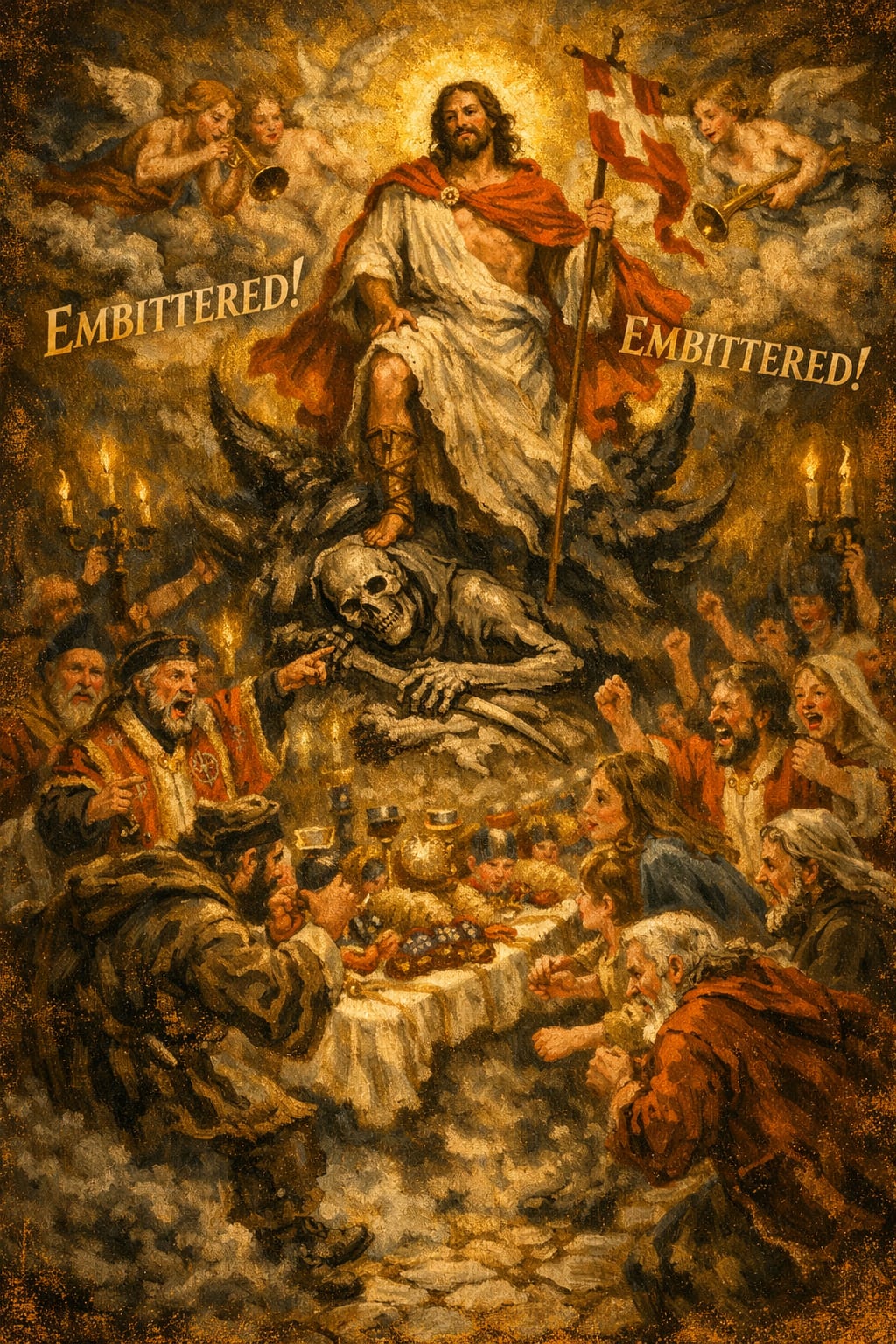
The Paschal Homily was never intended to be a passive lecture; it is a visceral, performed liturgy that moves religion from the "head" to the "feet." Audience participation is baked into the very structure of the event. Whenever the priest chants "embittered" or "risen," the congregation roars the words back in a call-and-response format.
More strikingly, the liturgy calls for physical mimicry. Every time the word "death" or "dead" is spoken, the congregation stomps their feet with rhythmic intensity. This is not merely for noise; the source context explains that the congregation stomps "just like Jesus stomped on Hell."
This physical act of defiance mirrors the Jewish festival of Purim, where the congregation boos and shakes noisemakers to drown out the name of the villain Haman. By stomping, the congregation participates in the divine victory, turning a theological concept into a muscular, lived experience. It is a celebratory "Take THAT!" delivered to the grave.
Conclusion: The Legacy of a Laughing God
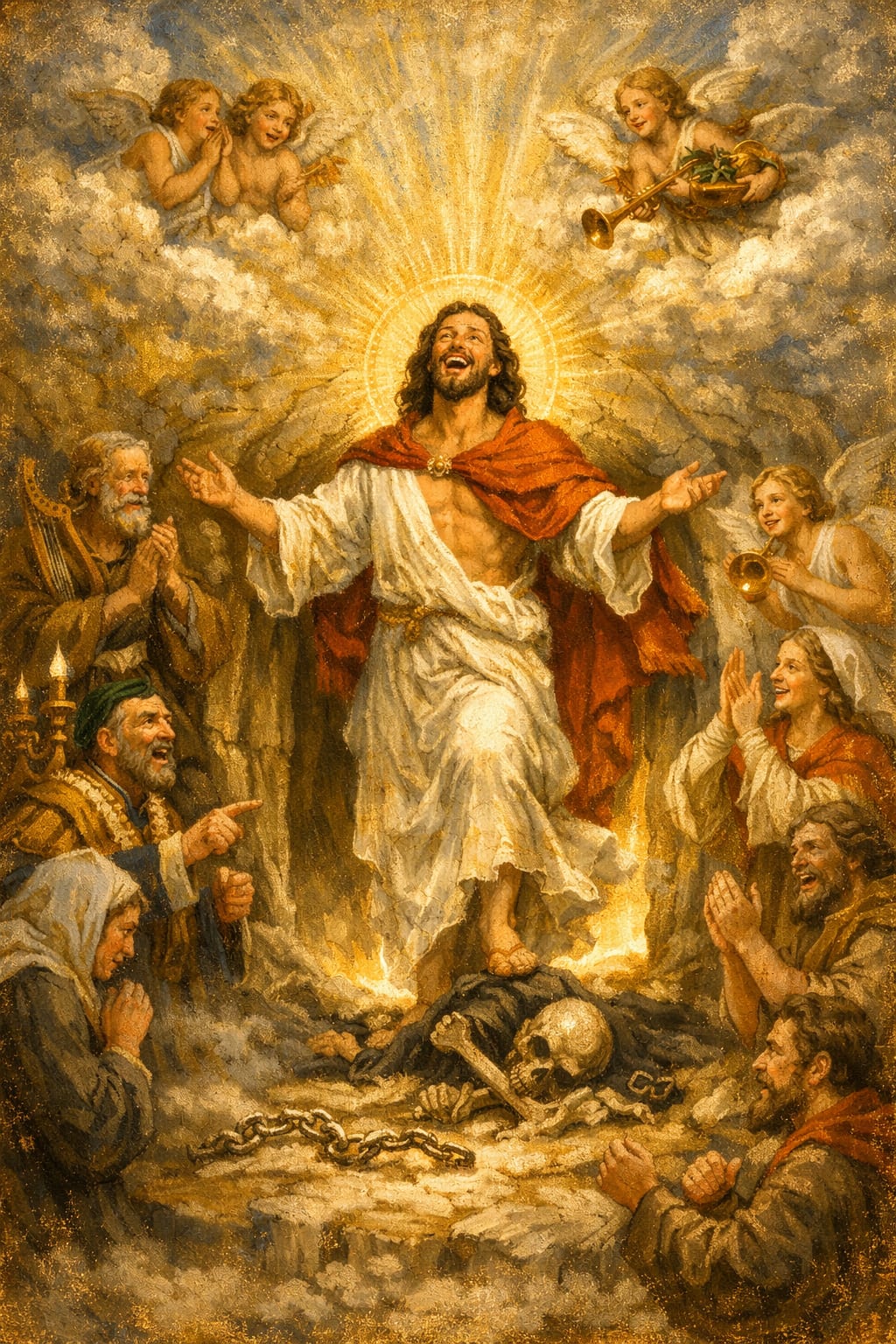
The Paschal Homily remains a cornerstone of global Easter traditions because it refuses to be polite. It replaces the anxiety of the "debtor" with the laughter of the "liberator," and the fear of judgment with the "joy of the Lord." It reminds us that at the heart of the world’s oldest Easter sermon is a God who wins through playfulness and subversion.
As we look back at this 1,600-year-old text, we must ask: has our modern obsession with somber decorum caused us to lose the "victory" found in these ancient, stomping feet? Perhaps it is time to rediscover the "Divine Trickster" and the radical, mocking joy that once defined the empty tomb.
Join in celebration this year, to listen, please click the 🔗 👇
https://youtu.be/cErtpg5hBSw?is=vjxZ2RqlwAOD2NV1
https://youtu.be/u-1fwZtKJSM?is=d1_B7pFMPAPRFuk6
https://youtu.be/VUx9z9jtmac?is=003b6KywNPJ4Yn6e