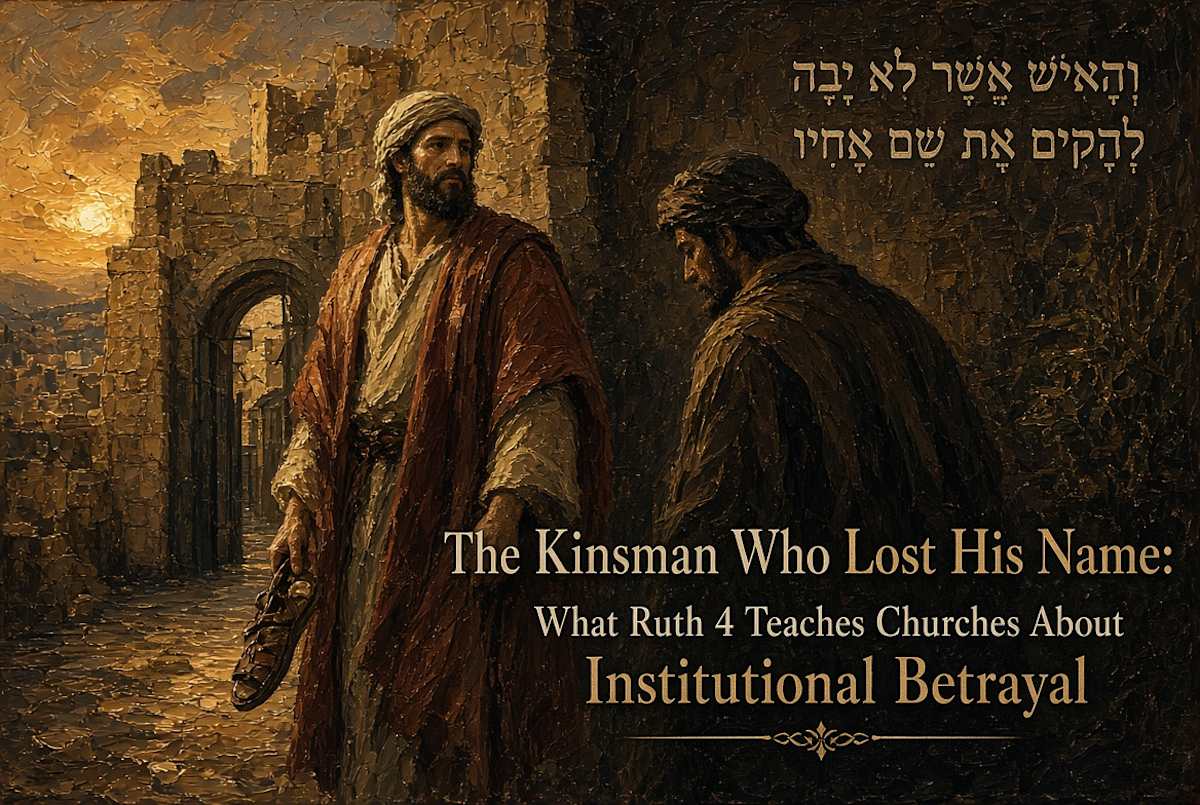
There is a man in the Book of Ruth who is never given a name.
When Boaz calls him forward at the city gate, he does not say, “Come here, so-and-so of the house of Elimelech.” He says, “Turn aside, sit down here, Ploni Almoni.” The Hebrew is deliberate and cutting.
Ploni means the hidden one, the one who conceals himself. Almoni means the muted one, the one who will not speak. Together the phrase functions less like “John Doe” and more like a judgment: the one who has hidden himself in silence.
He is willing to redeem the land. The moment the transaction requires him to take Ruth the Moabite as well—to absorb the social stigma and the economic cost of raising up a son in the name of the dead—he withdraws. “I cannot redeem it for myself, lest I ruin my own inheritance.” He keeps his estate intact. He loses his name forever.

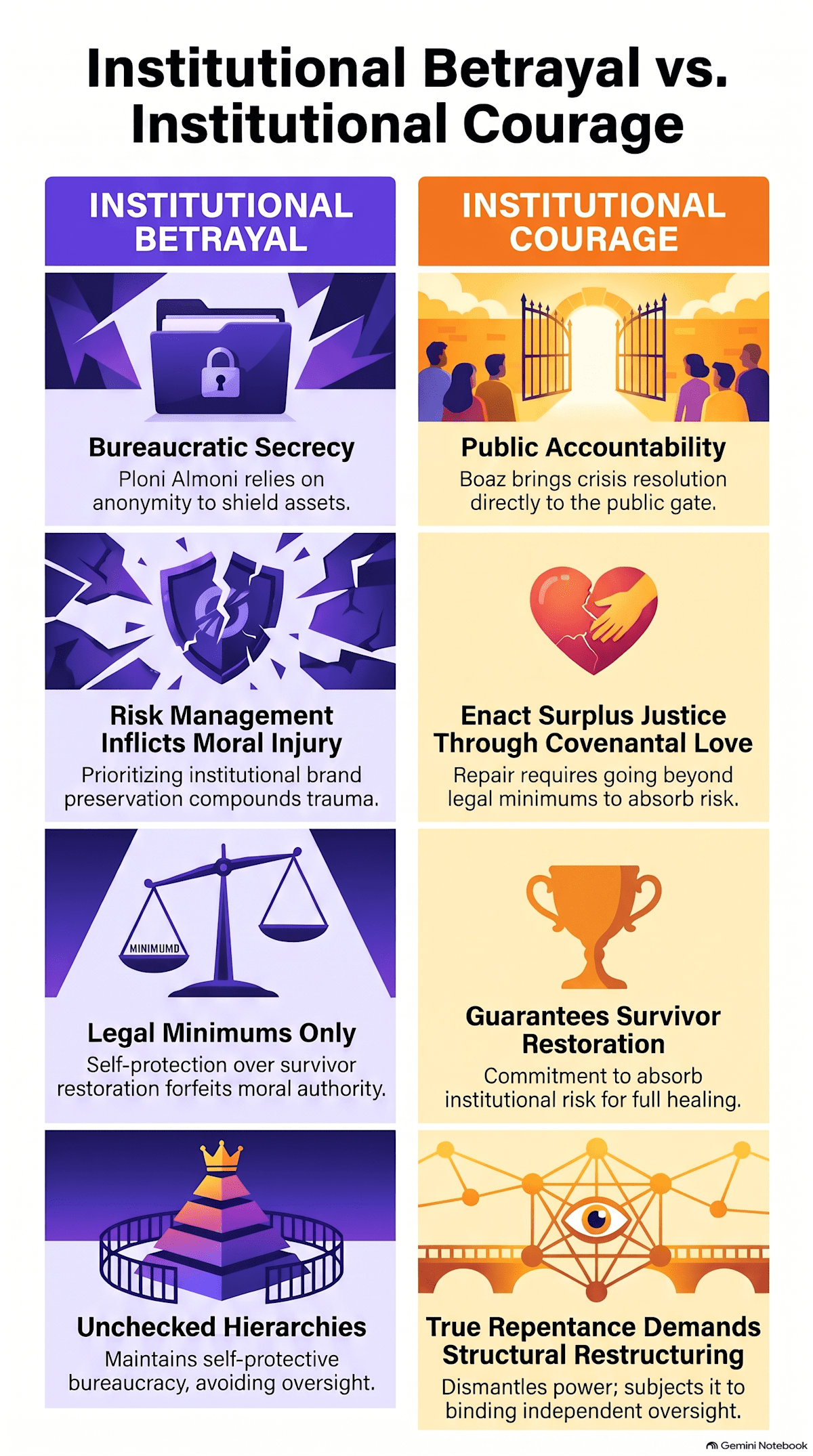
This scene, long treated as a legal curiosity or a romantic foil to Boaz, has become something sharper in a new article now accepted by the International Journal of Practical Theology. “The Kinsman at the Gate: Ploni Almoni, Boaz, and the Pastoral Deconstruction of Institutional Betrayal” argues that Ploni Almoni is not merely an ancient relative who failed a test. He is the archetype of institutional risk management—the pattern by which religious organizations, when confronted with abuse, protect their inheritance at the cost of the vulnerable.
The Gate and the Back Room
Contemporary pastoral theology has grown skilled at accompanying individuals through trauma. It has been slower to name what happens when the institution itself becomes the agent of further harm. Survivors of clergy sexual abuse and spiritual abuse repeatedly describe a second wound that is often more disorienting than the first: the moment the church that once mediated God becomes the place that manages, silences, or erases them.
The article draws on Jennifer Freyd’s work on institutional betrayal and on Len Sperry’s concept of sacred moral injury—the particular devastation that occurs when harm is inflicted by someone who holds religious authority and is then compounded by the institution’s denial or protection of the perpetrator. “Sacred” here does not mean the institution is holy. It means the trust that was violated was trust placed in God and in those who claimed to represent God’s care.
What Ruth 4 supplies is a biblical grammar for the difference between institutional betrayal and institutional courage.
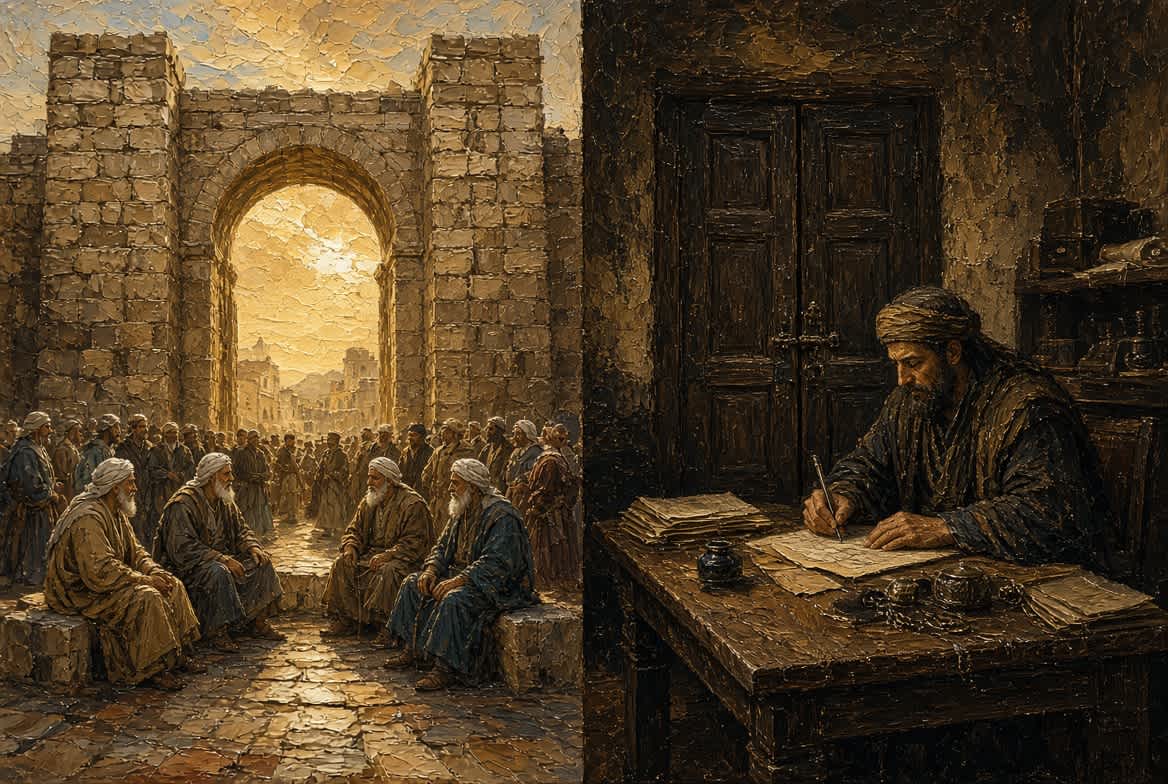
Ploni Almoni operates in the back room. He uses the neutral language of law and procedure to avoid personal and economic disruption. Modern equivalents are familiar: non-disclosure agreements, confidential settlements, “independent” investigations whose full findings are never released, appeals to church autonomy or ecclesial abstention, and the careful management of public narrative so that the brand remains intact.
The Guidepost Solutions report on the Southern Baptist Convention Executive Committee (2022) documented leaders “singularly focused on avoiding liability.” The Pennsylvania grand jury report (2018) described dioceses’ “secret archives.” These are not anomalies; they are variations on the same refusal to speak the costly word at the gate.
Boaz, by contrast, forces the entire transaction into the open. He gathers ten elders and the assembled community. He names the dual obligation—land and the widow—so that no one can later pretend the cost was unforeseen. He accepts both the economic risk and the social stigma. Ellen Davis has called this kind of action surplus justice: the deliberate use of power beyond the minimum the law requires, in order to generate life for the marginalized. In the language of Ruth, it is ḥesed enacted at institutional scale.
What This Means for the Church Now
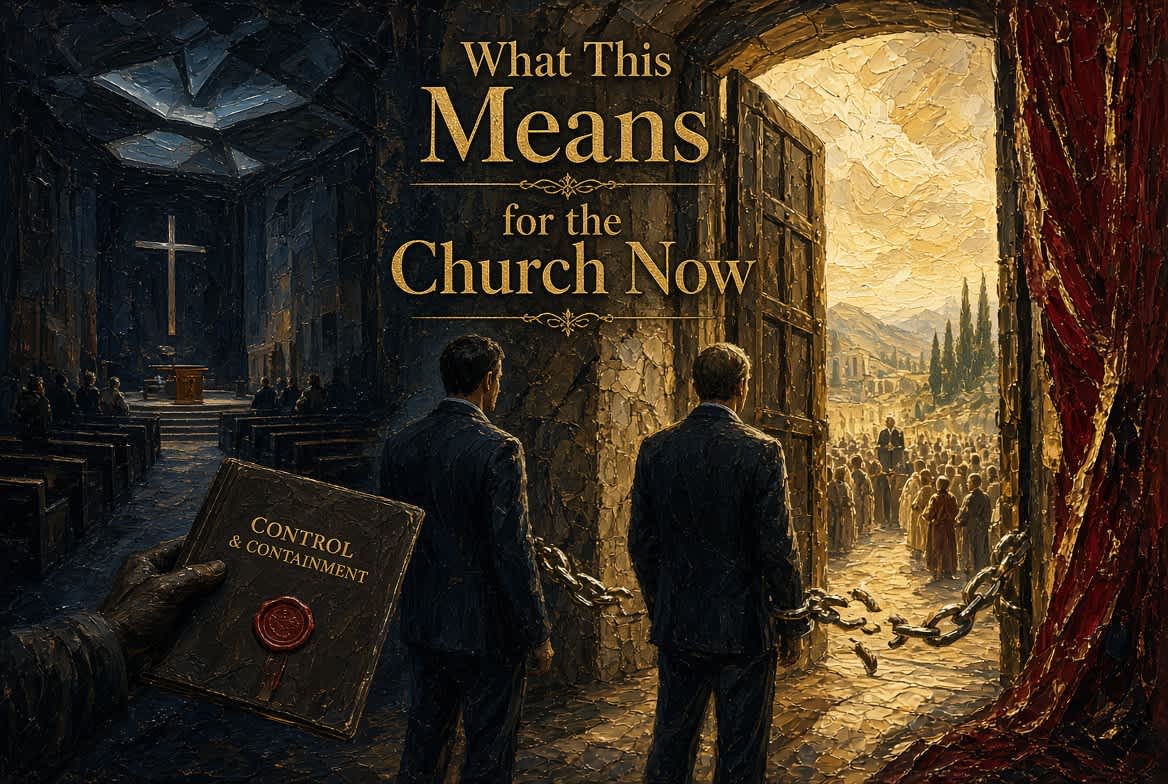
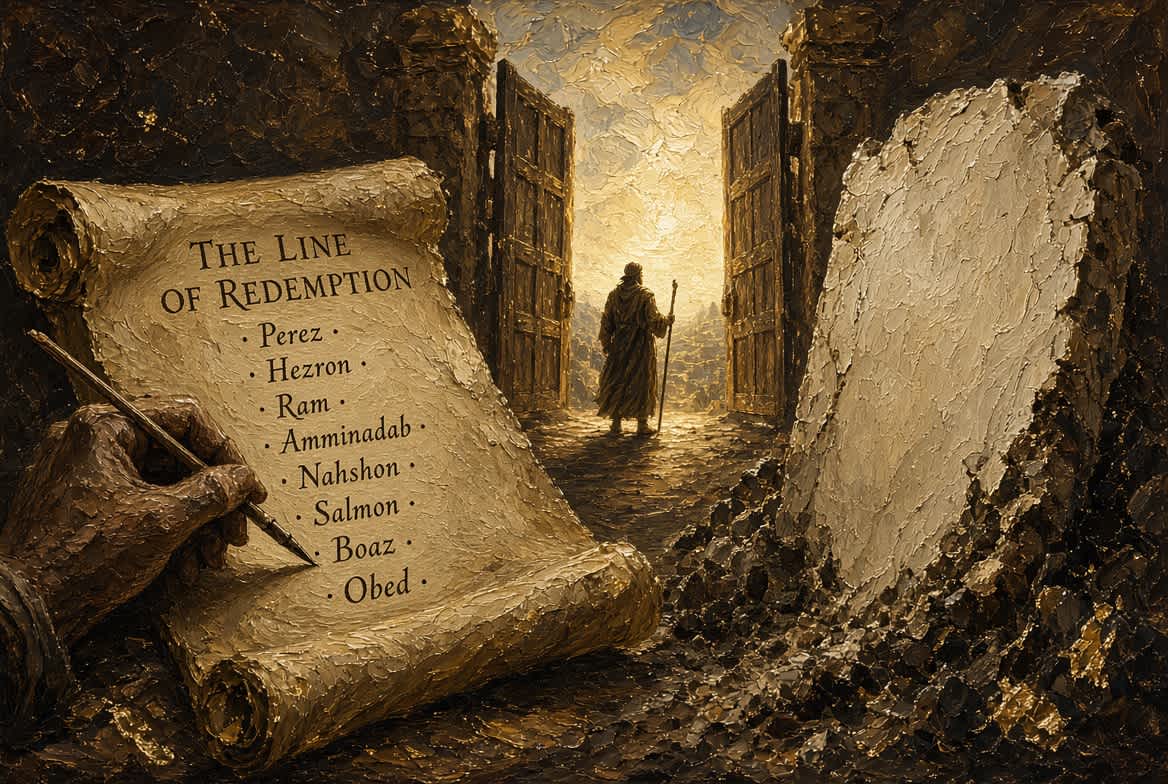
The article does not claim that every church is Ploni Almoni. It claims that the pattern is repeated far too often, and that the biblical text already diagnosed it. When an institution chooses self-protective silence, it may retain its assets, its insurance standing, and its public reputation. What it forfeits is its name in the story of redemption. The genealogy that closes Ruth does not run through the man who protected his inheritance. It runs through the costly, public, boundary-crossing justice of Boaz and the traumatized outsider he refused to leave at the margins.
For pastoral leaders and theologians, the practical implication is stark. Trauma-informed care cannot stop at the individual. It must also confront the civil and canonical mechanisms that make institutional muteness both possible and profitable.
That means:
treating survivor testimony as a diagnostic of the system rather than a liability to be contained;
refusing NDAs and confidential settlements in cases of abuse;
moving from private risk-management to public accountability at the “gate” of the community;
converting institutional resources—reputational, financial, structural—into instruments of repair that go beyond what any court or insurer would require.
Quiet, structural repair is holy work. The gate of Ruth 4 suggests it is also the only path that keeps a church’s name from being written out of the story.
“The Kinsman at the Gate” is forthcoming in the International Journal of Practical Theology. It is the second of two recent essays on the Book of Ruth; the first, “Ruth as Post-Traumatic Covenant: Ḥesed, Kinship Repair, and the Cost of Belonging,” has been accepted by the Journal of Pastoral Theology, editor Dr. Michael Koppel.
As ever,
Mark.
To watch videos on this subject, please 'click' on the links below:
Explainer:
https://youtu.be/adMLQiWz67M?is=_ZmKSazNq7sW6Hv6
Short:
https://youtube.com/shorts/S6gbkbikXKA?is=j3JEKt2dxbmJh3OV