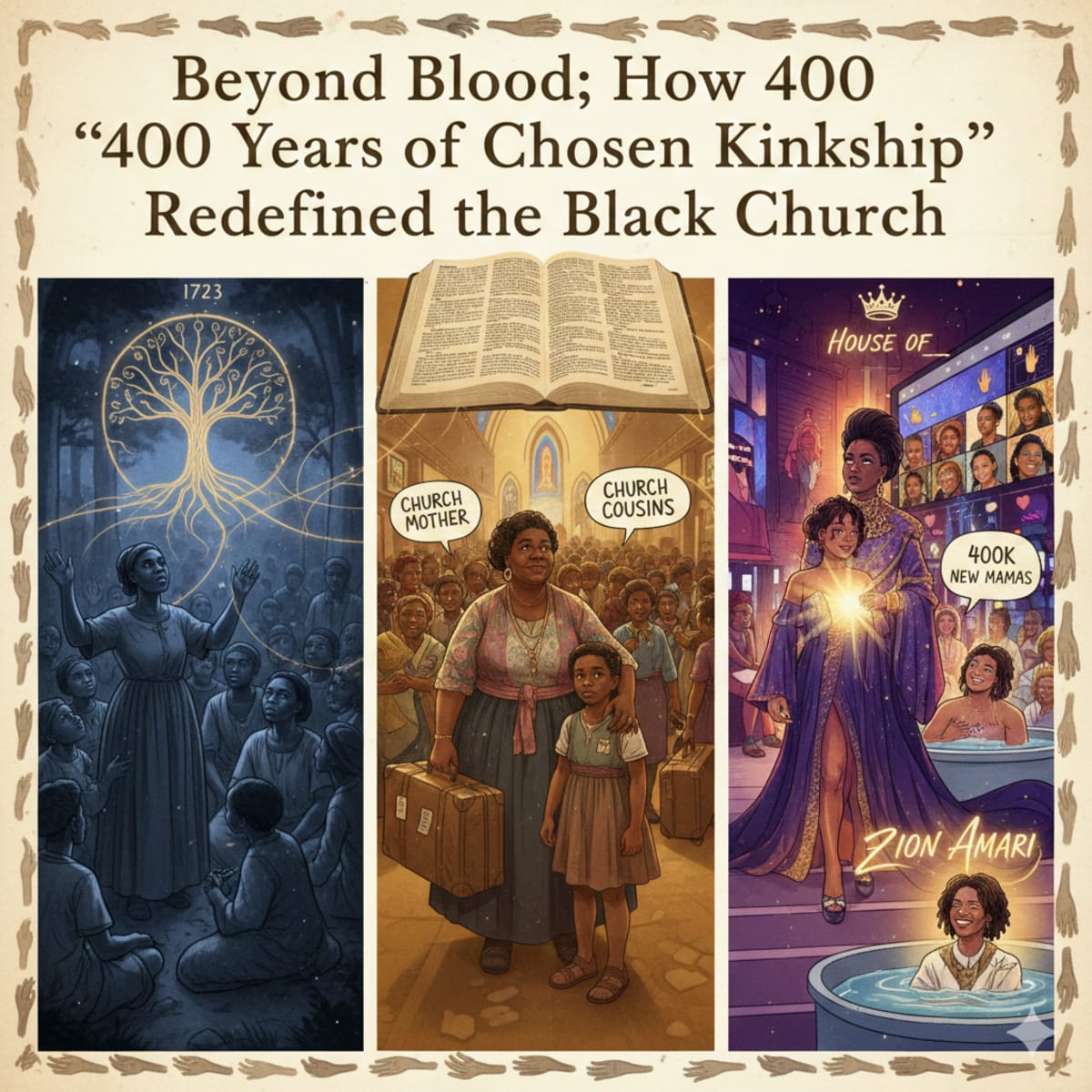
On May 12, 1723, a Virginia plantation ledger recorded a transaction of cold, mathematical cruelty: “Woman Phillis delivered of twins. One sold to Carolina trader. Mother screamed so hard she had to be whipped silent.”
Phillis was a victim of a system designed to weaponize biological kinship—to use the love of a mother for her child as a tool of leverage and, ultimately, a site of destruction. Yet, that very night, the source records Phillis standing in a hush harbor, her back still stinging, to deliver a testimony that defied the auction block. She told the gathered community that Jesus had whispered a secret to her: she had been given a family bigger than the devil could ever break.
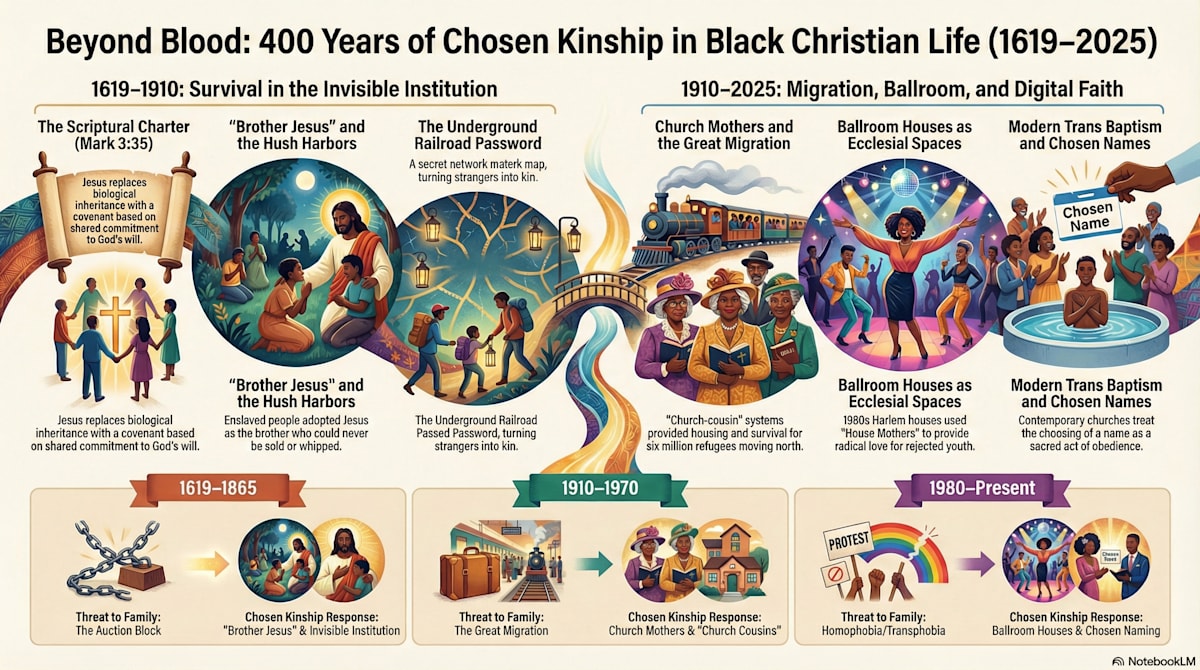
For four centuries, Black Christians have navigated the wreckage of empire, migration, and rejection by leaning into a radical theological truth found in Mark 3:31–35. This is the history of "chosen kinship"—a 400-year-old survival strategy that asserts that when blood fails, the covenant of "enacted obedience" creates a family that is undeniably and unbreakable.
1. The Original Scandal: Jesus’s "Anti-Family" Revolution
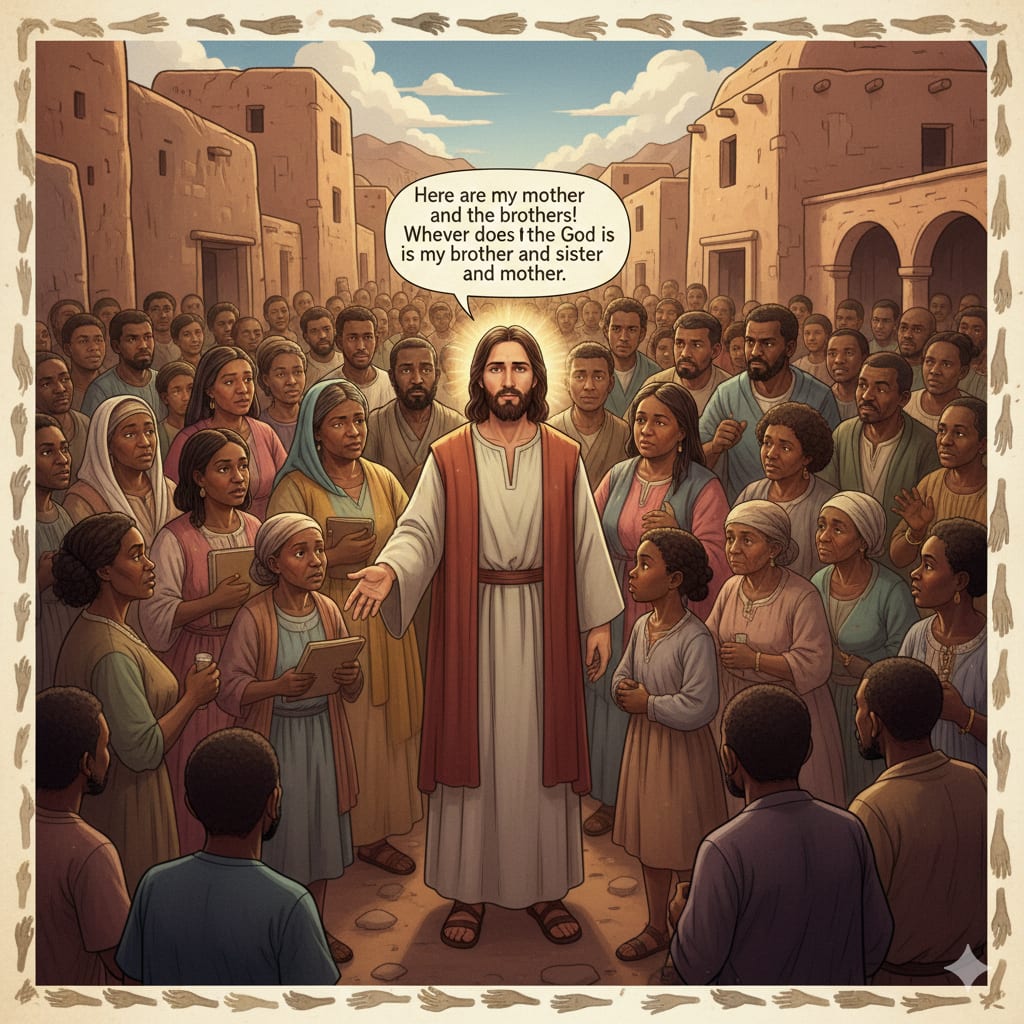
The foundation of this movement is a moment of profound social "scandal" in the ancient Mediterranean world. In Mark 3:21, we learn that Jesus’s biological family did not merely come for a visit; they came kratēsai—to seize, restrain, or legally arrest him—believing he had "gone out of his mind." In a world where the oikos (the patriarchal household) was the sole source of identity and economic survival, Jesus’s response was a terrifying subversion of social order.
As scholar Bruce Malina notes, to be "kinless" in that culture was to be "socially dead." Yet, when told his mother and brothers were outside, Jesus looked at the crowd of tax collectors, the ritually unclean, and the marginalized, and redrew the map of human belonging.
“Who are my mother and my brothers?” And looking at those who sat around him, he said, “Here are my mother and my brothers! Whoever does the will of God is my brother and sister and mother.” (Mark 3:33-35, NRSV)
This was a social revolution because:
- It De-Biologized Identity and Delegitimized Patrilineage: By making "enacted obedience" the sole entrance requirement for his family, Jesus stripped biological descent of its ultimate authority. As womanist scholar Wilda Gafney observes, Jesus prioritizes God’s will over even the Torah-mandated loyalty to one’s parents.
- It Subverted Patriarchal Power: Jesus’s new family structure conspicuously omits the "father," signaling a shift from a hierarchy based on male inheritance to an egalitarian covenant among siblings in the Spirit.
- It Replaced Inheritance with Discipleship: By defining the community as a new oikos, Jesus authorized a structure of redistributive care where the kinless and the "socially dead" gained a radical safety net.
2. "Brother Jesus": The Kinship the Auction Block Couldn’t Sell
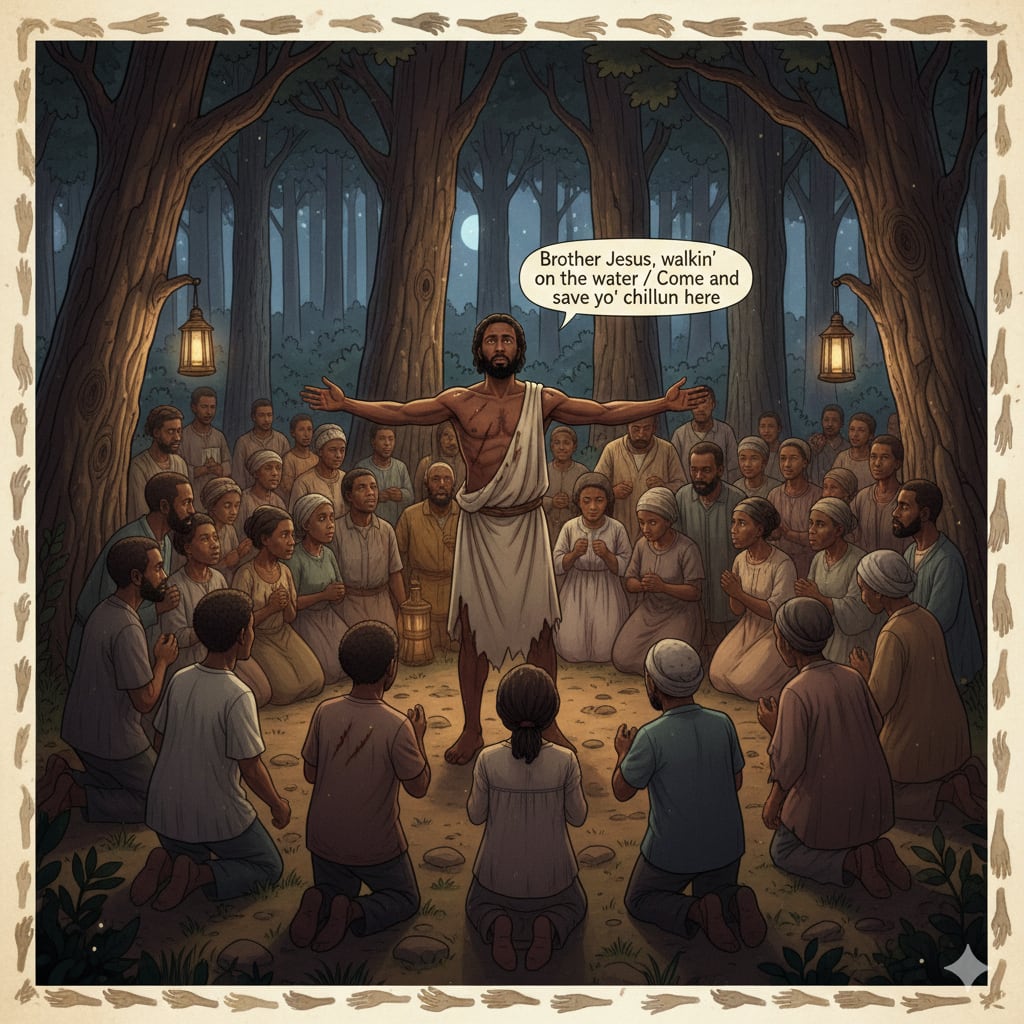
Within the "Invisible Institution" of enslaved Christianity, the shift from calling Jesus "Lord" to "Brother Jesus" was not a casual endearment—it was a deliberate theological strategy for survival.
The slave system targeted brotherhood with particular aggression; brothers were prime field hands, sold first and fastest to prevent the formation of protective male bonds. In the face of this erasure, naming Jesus "Brother" was a radical act of reclamation. Enslaved people claimed a relative who could never be sold, whipped, or bred away from them.
The spirituals carried this rhythm of resistance: “Brother Jesus, walkin’ on the water / Come and save yo’ chillun here.” In the hush harbors, Jesus became the kinsman who shared one’s lash marks. This "survival theology" insisted that even when the biological family was being dismantled, the believer possessed an "epistemic location" of privilege—knowing a truth about family that the master could never understand. Brotherhood became the one bond the chain could not break.
3. The "Church-Cousin" Network: Catching Six Million Refugees
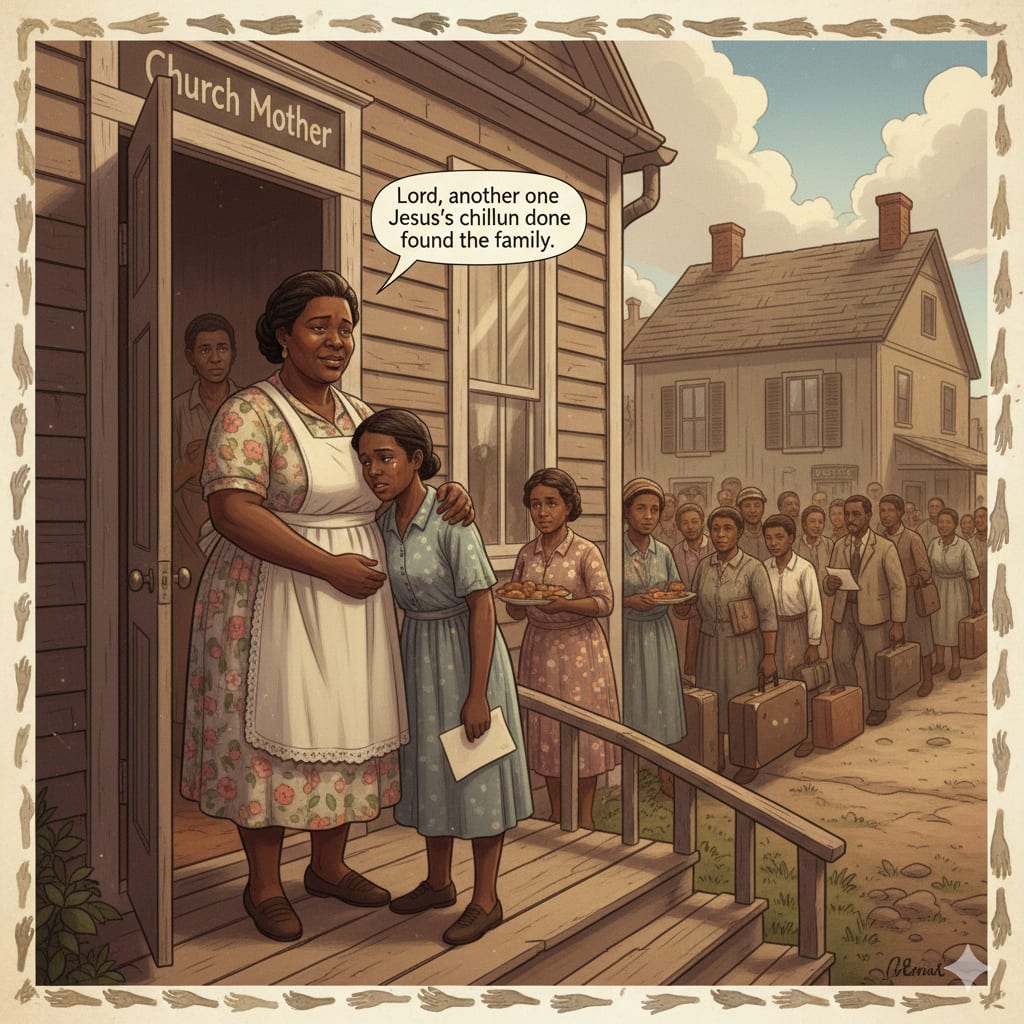
During the Great Migration (1910–1970), as six million Black Southerners fled the Jim Crow South, they arrived in Northern cities with little more than a scrap of paper bearing the name of a "Church Mother." This era formalized "fictive kinship" into a massive social safety net, treating strangers as legal relatives in "the court of the Holy Ghost."
This system operated on a strict distinction:
- Covenant vs. Sentiment: These relationships were not based on mere affection or "liking" someone; they were legal-spiritual obligations. If a "Church Cousin" arrived, you were obligated to provide a mattress and a plate, regardless of personal feeling.
- Functional Reciprocity: Kinship was defined by acts—paying for train tickets, sharing housing, and providing job leads. This was "othermothering" as a form of economic protection.
Mother Johnson famously captured this when she opened her door to an exhausted traveler and declared, “Lord, another one of Jesus’ chillun done found the family.”
4. Runway Salvation: The Ballroom Houses as Modern Ecclesiology
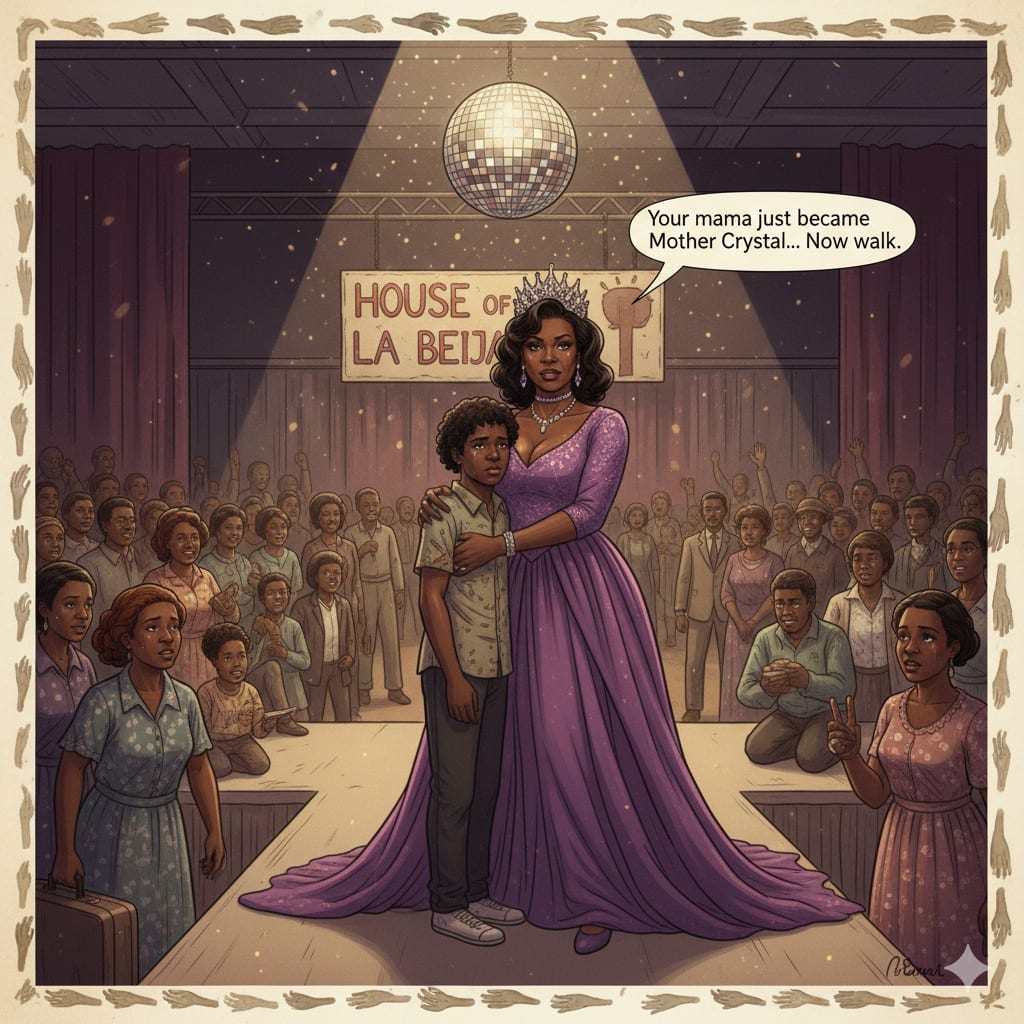
The Harlem Ballroom scene of the 1960s–80s represents a profound relocation of Christianity. When traditional churches rejected queer youth, House Mothers like Crystal LaBeija carried Mark 3:35 out of the sanctuary and onto the runway.
Ballroom "Houses" (LaBeija, Xtravaganza, Ninja) mirror early Christian household codes but invert their patriarchal nature to serve survival. House Mothers performed a literal "runway salvation," providing shelter, discipline, and "naming ceremonies" that functioned as baptismal rebirth. When a House Mother wrapped her arms around a homeless teen and said, “Your mama just became Mother Crystal... Now walk,” she was enacting the gospel. Taking a House name was not a performance; it was a baptism into a family that promised to keep you alive during the AIDS crisis when blood kin had slammed the door.
5. "I Call You Cousin": Gang-Truce Theology
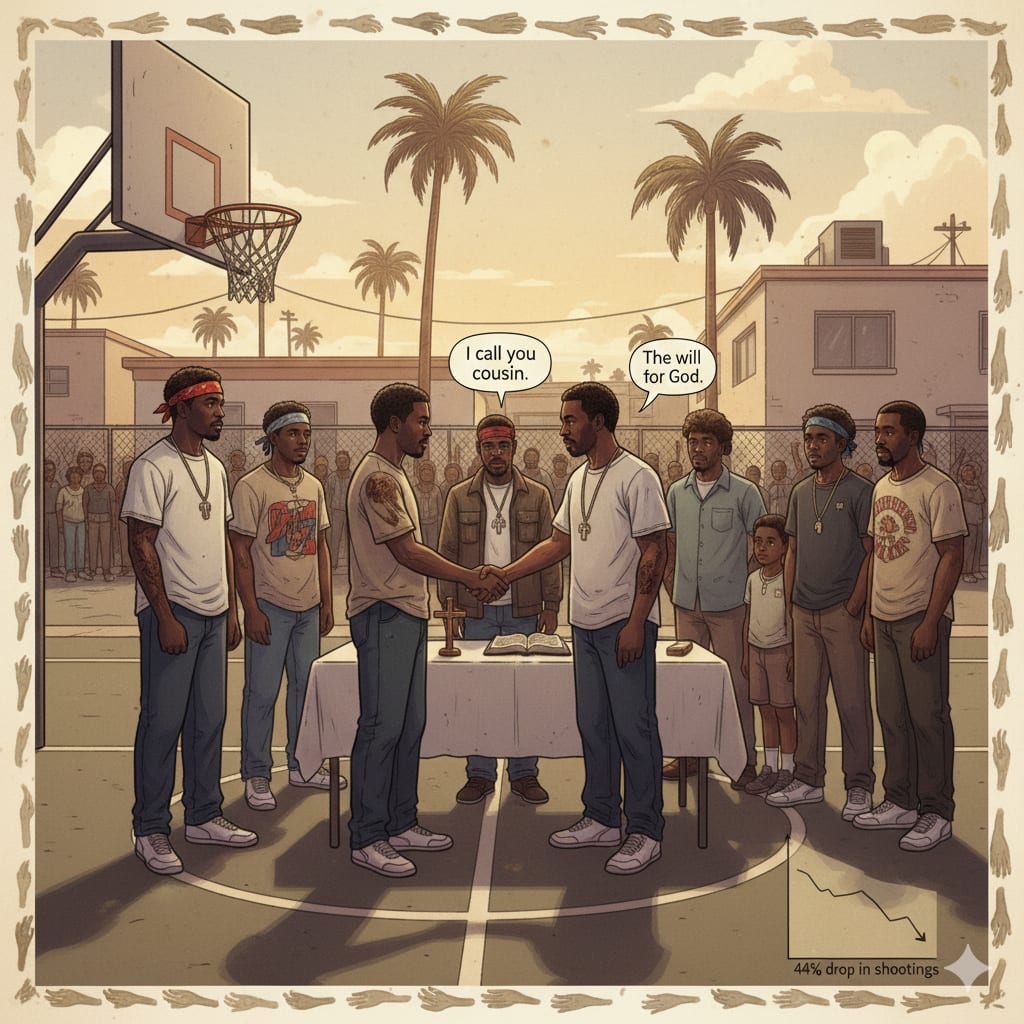
This radical kinship even penetrated the violence of the 1990s. In the wake of the 1992 Rodney King verdict, rivals in Watts met to sign a peace treaty on a table covered in a white church cloth. They utilized "Gang-Truce Theology," based on the premise that stopping the killing was "the will of God." By naming former enemies as "cousins" under the authority of Mark 3:35, they achieved a 44% drop in shootings in a single year. They proved that chosen kinship could perform the resurrection that the state could not.
6. The Sacredness of the Chosen Name: Trans Baptism in the 21st Century
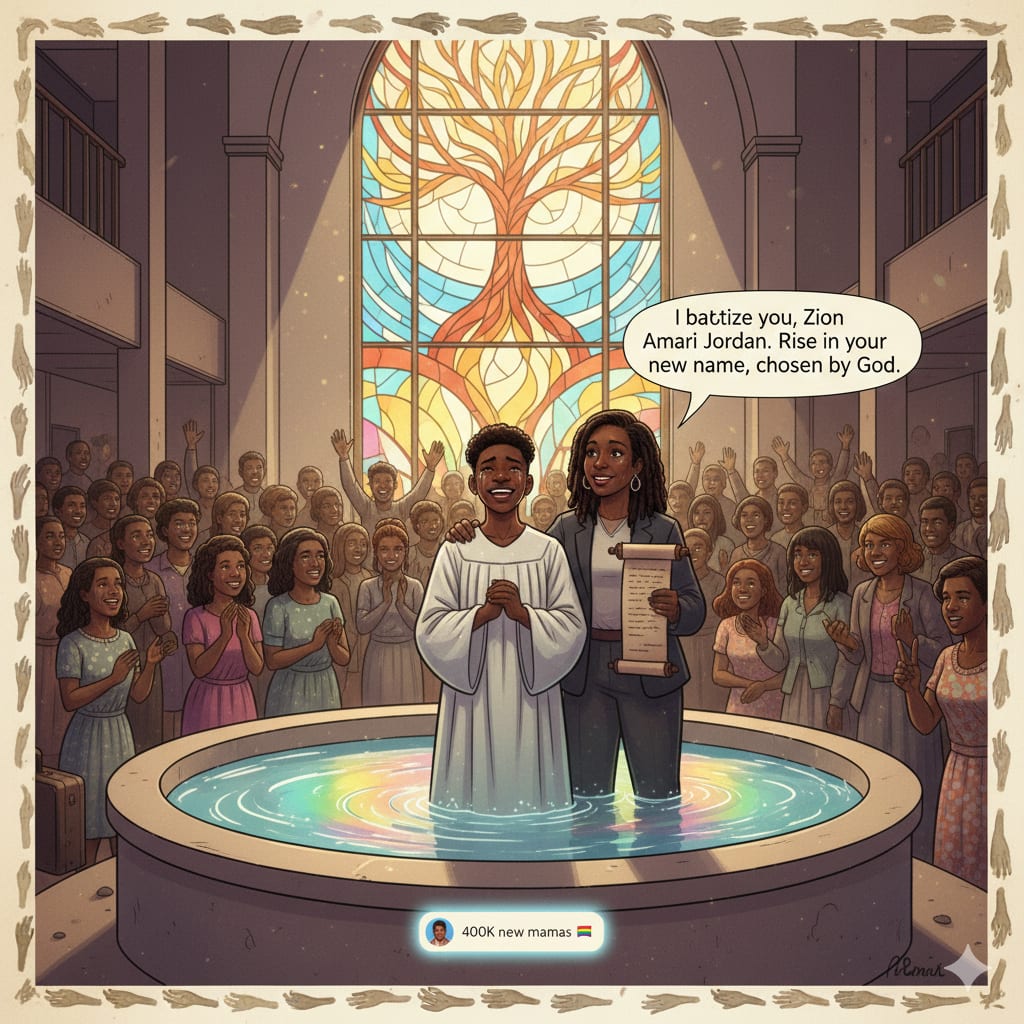
Today, the 400-year tradition of chosen kinship finds its latest evolution in the baptism of trans and non-binary individuals in affirming Black churches. The act of "renaming"—as seen in the baptism of Zion Amari Jordan—is a direct theological successor to Jesus renaming Simon to Peter.
The "Viral Chosen Family" on platforms like TikTok represents a digital hush harbor, where the rejected can find "400,000 new mamas" in the comments. In this context, "dead-naming" is correctly identified as theological violence. It is a refusal to honor the "new name" given by God and a rejection of the individual’s "enacted obedience" to their true call. To refuse a person's chosen name is to attempt to "restrain" them, just as Jesus's biological family tried to restrain him at Capernaum.
Conclusion: The Family Death Couldn’t Kill
The trajectory from the auction block to the digital age reveals a consistent truth: chosen kinship is not a "broken" or "second-tier" alternative to biology. It is a theological superior. It is the enactment of the kinship Jesus first authorized—a family built on commitment rather than chromosomes.
The question for the contemporary Church is whether it will "catch up" to this radical kinship or be left behind by the very people already practicing it. The family Jesus built—the one that survived the slave ship, the Great Migration, the AIDS crisis, and the rejection letter—is still here.
Will the church honor the names spoken at the baptismal pool and the "cousins" found on the street? The movement Phillis started in 1723 remains a body that is undeniable, unbreakable, and unashamed. Which family will you choose?