We live in a culture that is deeply uncomfortable with grief. When faced with a profound loss, we are surrounded by a quiet but immense pressure to find "closure," to heal, and to "move on." These well-intentioned phrases imply that grief is a problem to be solved, a wound that must be neatly stitched up so that life can return to normal. But what if that’s not the point? What if grief isn't a temporary disruption but a permanent transformation?
Examining profound experiences of loss, both from ancient scripture and modern psychological case studies,mreveals that grief can shatter our reality in two primary ways: by compelling us to put the cosmos on trial, or by revealing a hidden connection that transcends death. One is a demand for an answer; the other is the reception of one. Instead of seeking an end to grief, these experiences suggest it can be the beginning of a new way of seeing the world. Here are four surprising takeaways that challenge our conventional ideas about life, death, and what comes after.
1. Sometimes, Healing Isn't the Goal—Protest Is.
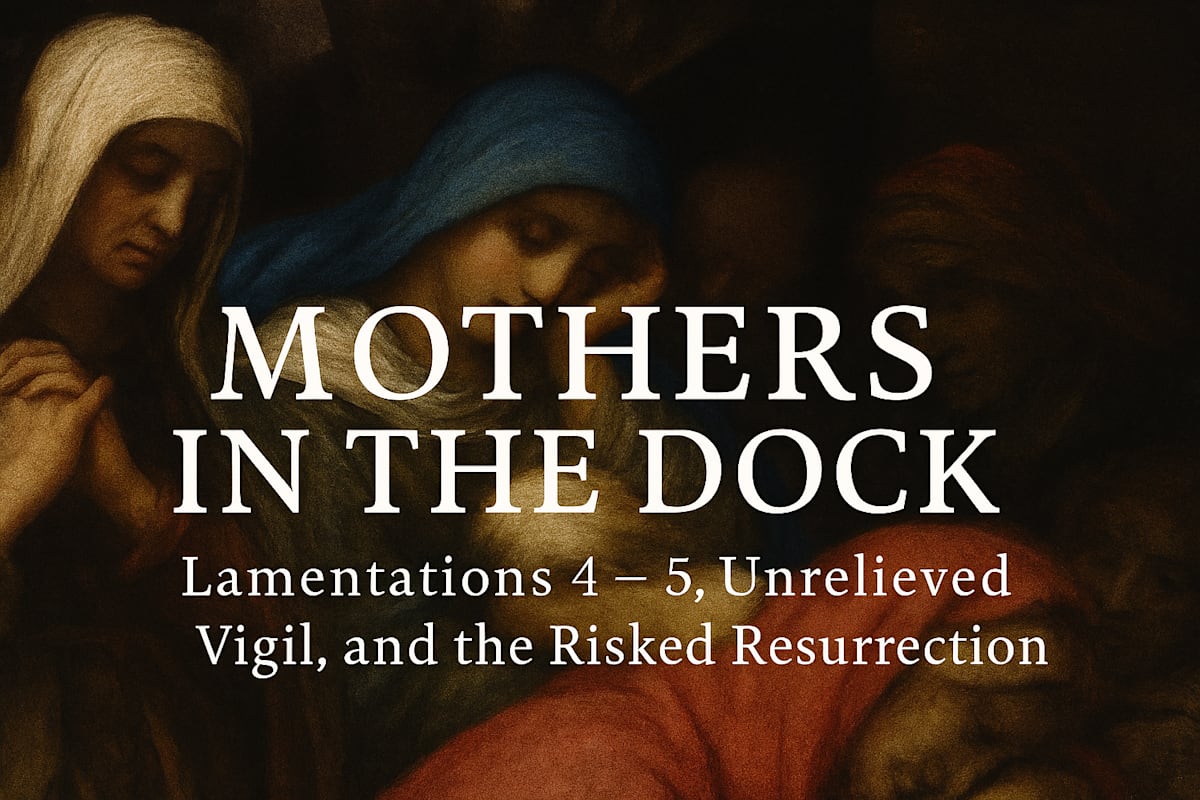
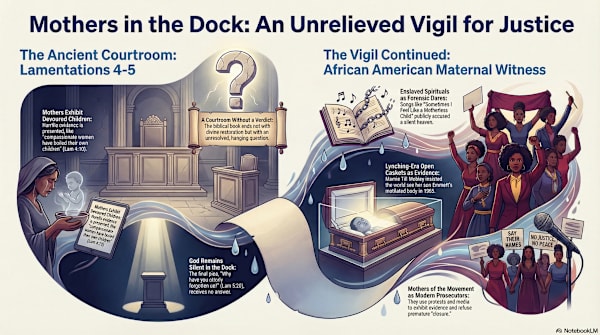
In the biblical Book of Lamentations, the community of Jerusalem grieves its utter destruction. But instead of moving toward healing, the text ends with an unresolved, agonizing plea. This is a deliberate theological strategy known as an “inverted rîb,” or covenant lawsuit. The cosmos itself becomes a suspended courtroom where the suffering community puts God in the dock for failing to act. This posture of “unrelieved vigil” refuses to let the divine off the hook.
This ancient idea finds a powerful modern echo in the “Mothers of the Movement,” Black mothers whose children were killed by police or vigilante violence. Like the figures in Lamentations, they perform a lived exegesis of the text. Mamie Till-Mobley’s decision to hold an open-casket funeral for her mutilated son, Emmett Till, was a direct parallel to Lamentations exhibiting its “devoured children.” These women transform private grief into a public indictment of systemic injustice and divine silence, refusing premature narratives of forgiveness. Gwen Carr, mother of Eric Garner, powerfully articulates this stance:
"There is no closure when your child is murdered and the system protects the killers. God sees this. God knows. And God has not answered yet.”
This reframes grief entirely. It ceases to be a private, psychological process to be overcome and instead becomes a potent, public act of moral and theological protest. It suggests that in the face of profound injustice, the most powerful response isn't to heal, but to bear witness and demand a reckoning.
2. The Boundary Between Life and Death May Be More Permeable Than We Think.
While some forms of grief look outward in protest, others turn inward to experiences that challenge the material world itself. A phenomenological case study from the field of transpersonal psychology, documenting the experiences of Mark Edward Chard after the 2020 death of his identical twin, Darren, offers a compelling modern example of extensive "after-death communication" (ADC).
These weren't vague feelings but a pattern of specific, recurring symbolic phenomena. Mark reported visions of “squares morphing into circles” that evoked profound peace, which sacred geometry interprets as the material world (the square) merging with the spiritual realm (the circle). He also experienced recurring imagery of a wolf totem, a symbol signifying protective guidance in bereavement contexts.
The most striking aspect of the study is the corroboration from professional medium Kenny Corris, whose readings were included as a data source for the study. He validated the persistence of Darren’s consciousness, not as a memory, but as an ongoing presence. In a foreword to a work on the case, Corris stated:
“I have seen Darren… He is an active soul, not an echo from the past.”
This case study challenges a strictly materialist worldview. It suggests, through documented and corroborated experience, that consciousness may persist after physical death and continue to interact with the living in symbolic and deeply meaningful ways, making the boundary between life and death far more porous than we assume.
3. Ancient Texts Can Be a Blueprint for Holding Power Accountable—Even Divine Power.
Beyond simple protest, the theological engine driving Lamentations is a radical legal maneuver known as the “inverted rîb,” or covenant lawsuit. This counter-intuitive reading flips the script on traditional religion. Instead of a story about human sin and divine punishment, the book can be understood as a legal case where the suffering community prosecutes God for failing to uphold the divine end of the covenant.
The evidence presented in this cosmic courtroom is intentionally shocking. The text forces the reader to confront visceral horrors, climaxing in the verse describing how the siege forced “compassionate women” to boil and eat their own children (Lamentations 4:10). This isn't just a description of suffering; it's Exhibit A in the case against divine negligence.
This reading carries profound significance today. It transforms ancient scripture from a source of passive comfort into a radical manual for demanding accountability from the highest conceivable powers. It suggests that an authentic faith may not be about quiet submission, but about engaging with the divine, and with earthly systems of power, with audacity, courage, and an unyielding demand for justice.
4. An Intense Bond in Life Can Create a Powerful Connection After Death.
Returning to the case study of the Chard twins, the research isolates a key factor that may have enabled such vivid post-mortem communication: the power of their unique bond. The study proposes a theme of “Twin Soul Persistence,” finding that the twins’ shared identity amplified experiential intensity, sustaining relational continuity beyond death.
This finding grounds the seemingly abstract phenomenon of ADC in the deeply personal and relatable experience of a powerful human bond. It suggests that the love, identity, and relational energy we share in our most important connections do not simply vanish. Instead, they may form the very medium through which a bond can be sustained beyond the veil of physical death. The strength of the relationship in life may directly translate to the strength of the connection afterward.
Conclusion: Beyond a Verdict, a Vigil
Together, these ancient and modern stories dismantle the simple notion of "closure." They show that profound grief is not a phase to get through, but a force that can permanently alter our reality. Whether grief becomes a courtroom where justice is demanded from a silent God, or a quiet space where the veil thins to allow for continued connection, it refuses to be a simple process of healing. It is a fundamental re-negotiation of the terms of reality.
These paths reveal that grief is not about finding resolution but about sustaining a vigil, a vigil for justice, a vigil for connection, a vigil for a reality larger than the one we thought we knew. It is a transformative force that shatters our old certainties and asks us to live in a world that is more mysterious, more demanding, and ultimately, more profound.
What if the true purpose of grief isn't to find an answer, but to learn to live within a more profound and demanding question?