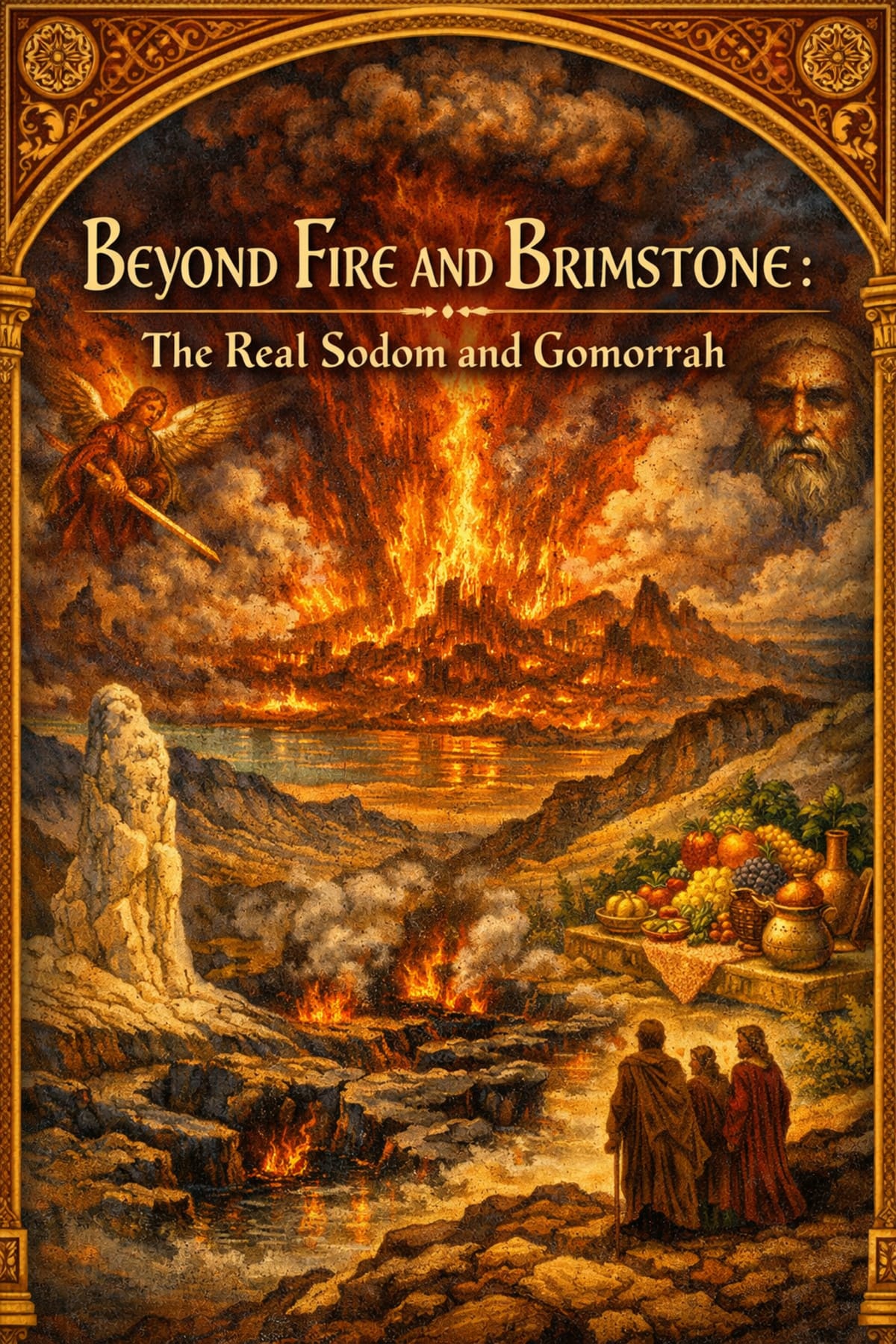
The narrative of Sodom and Gomorrah is perhaps the most enduring entry in our shared cultural encyclopedia of catastrophe. For millennia, the image of smoke rising from the plain has haunted the human imagination, serving as a recurring canonical type that warns of the fragility of civilization. Yet, in our modern rush to either dismiss the story as myth or reduce it to a singular moral transgression, we often miss the sophisticated "theological diagnostic" the biblical authors intended.
By bridging the gap between the volatile geology of the Dead Sea and the rigorous rhetoric of the ancient text, we can uncover a narrative that is less about ancient history and more about the recurring collapse of human hubris. Here are five surprising truths that move the story beyond simple fire and brimstone.
1. The "Furnace" Was a Geological Reality
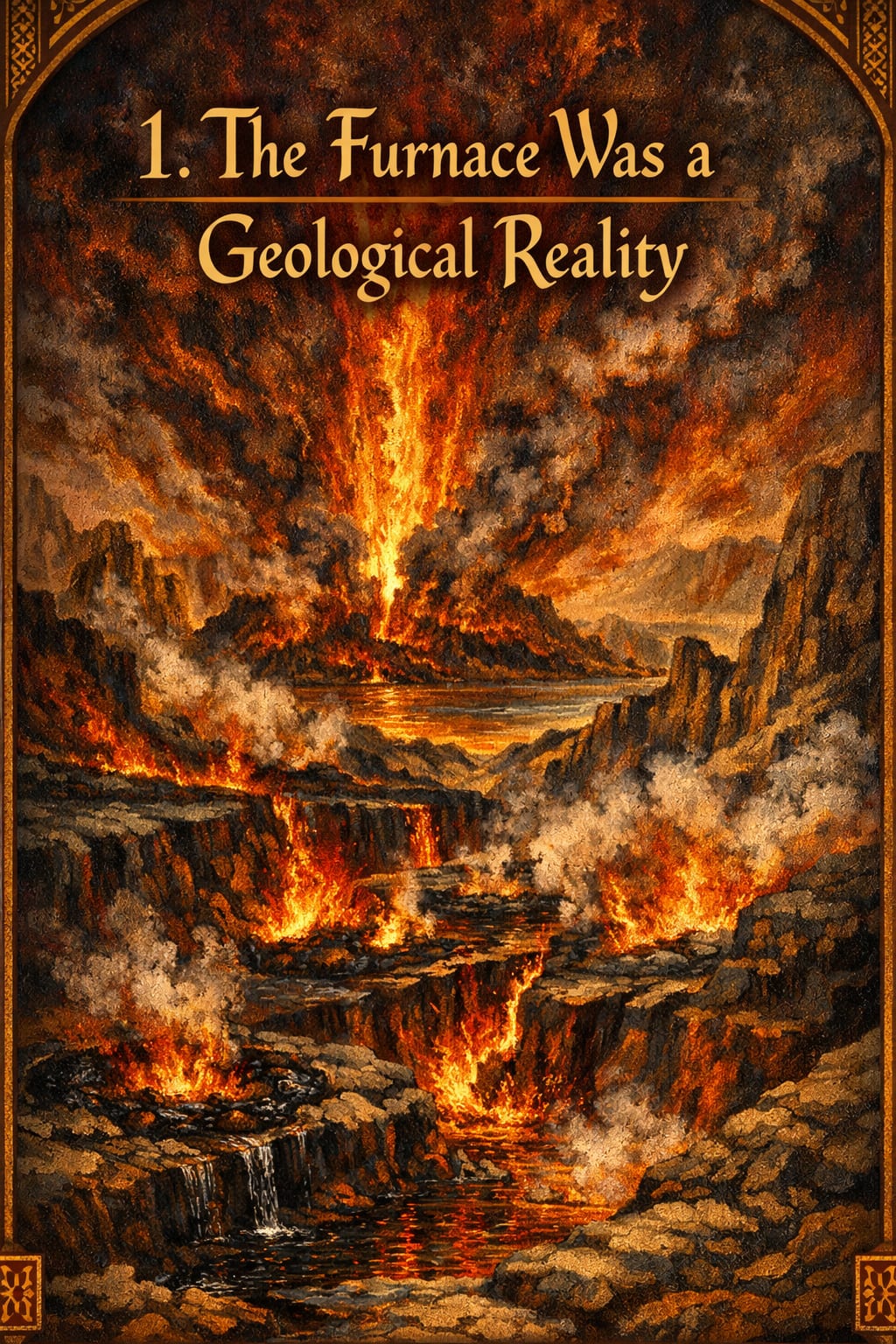
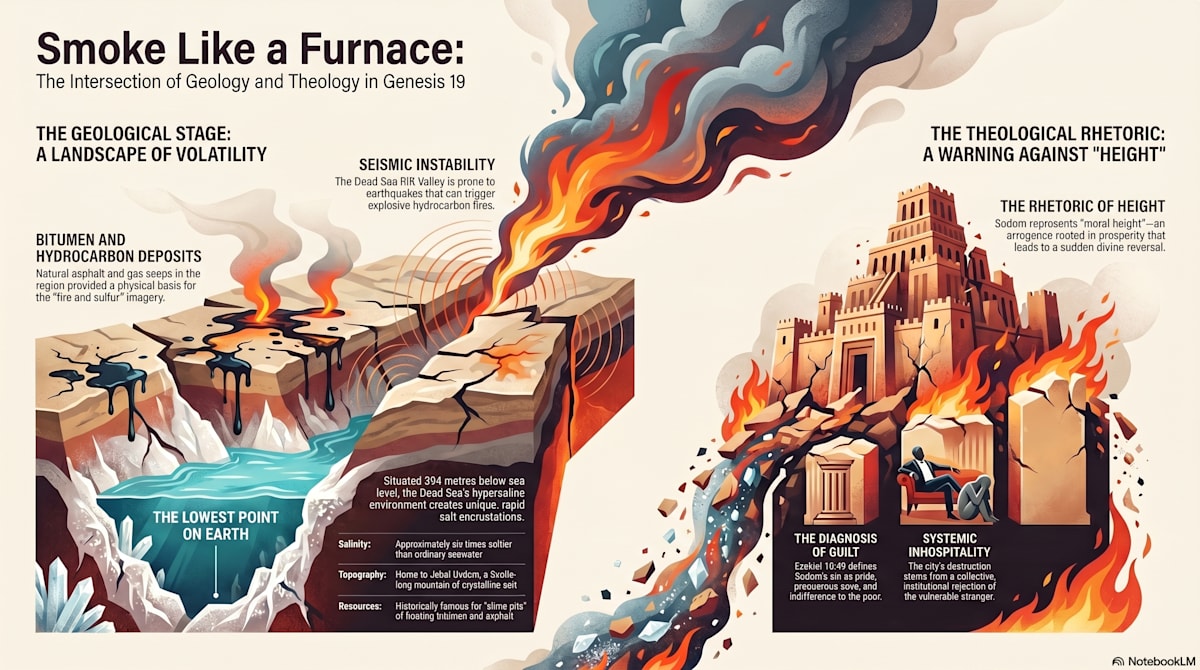
While the biblical narrative emphasizes divine judgment, it anchors this event in a specific, volatile environment. The authors were not writing in a vacuum; they were intimately familiar with the southern Dead Sea Rift Valley, the lowest point on the earth’s surface. This region provided a natural "canvas" for the imagery of a furnace, utilizing the "hydrocarbon resources" that were a known feature of the landscape.
The Valley of Siddim was historically famous for its "slime pits"—extensive deposits of bitumen and asphalt used in the ancient world for everything from waterproofing boats to medicine and construction. In a geologically active zone characterized by seismic instability and natural gas seeps, the potential for catastrophic fires was a lived reality. As the research suggests:
"The combination of tectonic forces, natural gas seeps, petroleum deposits, and bitumen creates conditions in which earthquakes could potentially trigger fires or explosive events involving volatile hydrocarbons... The imagery of fire and sulfur raining from heaven, dense smoke rising like a furnace, and total desolation would have carried particular resonance for people acquainted with the bituminous deposits, salt formations, and seismic instability of the southern Dead Sea area."
The biblical writers transformed these observable environmental realities into a theological stage, where the "smoke like a furnace" became a permanent visual sign of total and irreversible desolation.
2. The Sin of Sodom Wasn't What You Think
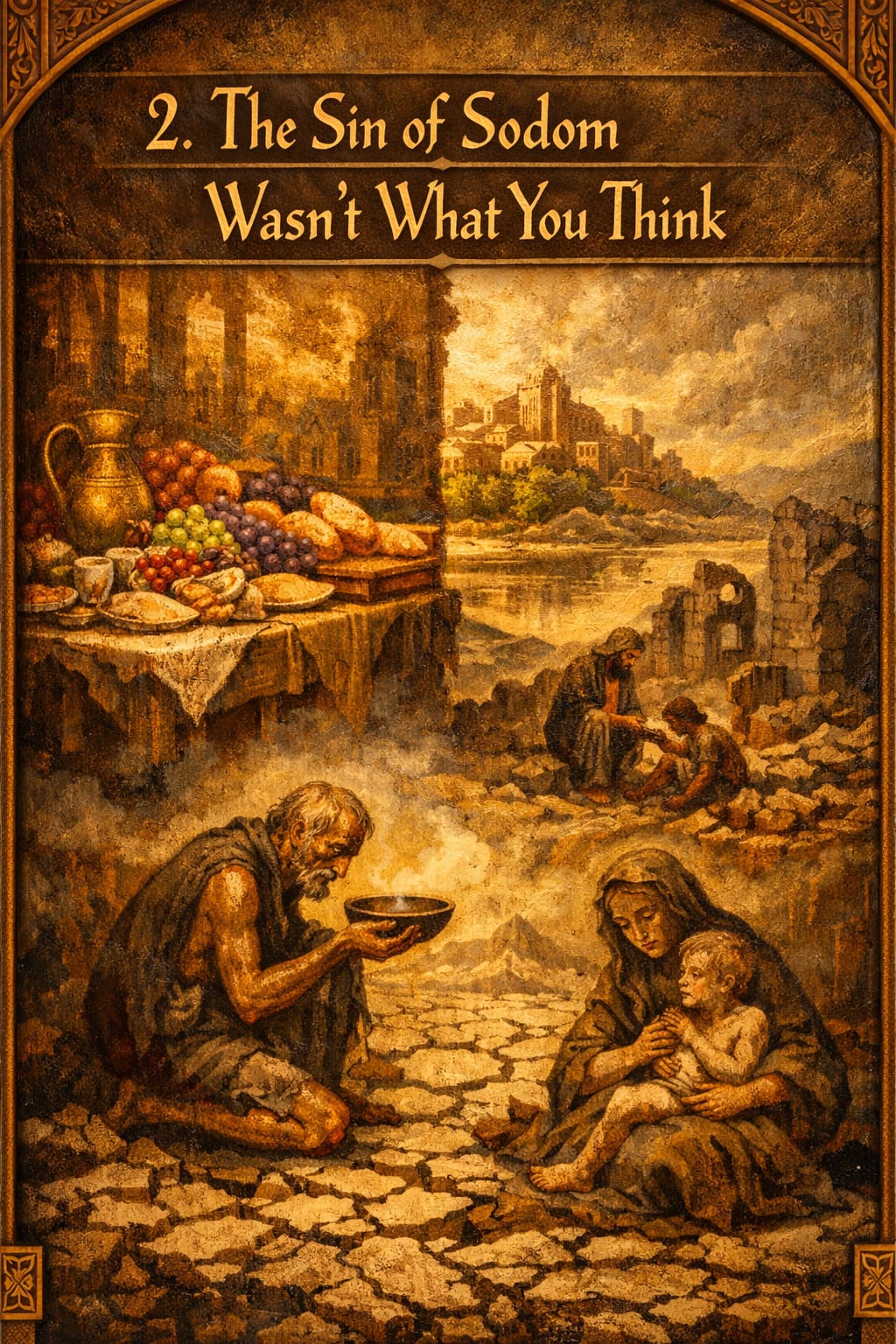
Contemporary interpretations often focus exclusively on sexual transgression, but the biblical canon offers a far more complex—and convicting—diagnosis. If we look to the "intertextuality" of the Bible, specifically Ezekiel 16:49–50, the prophet delivers a devastating autopsy of the city’s soul.
Ezekiel defines the "guilt" of Sodom as gā'ôn (pride), "excess of food," and "prosperous ease." This was not a failure of individual morality so much as a failure of institutional character. Sodom’s sin was the arrogance rooted in abundance—a state of being so comfortable and self-sufficient that the city "did not aid the poor and needy." For the modern reader, this is a far more unsettling diagnostic. It suggests that the "smoke of Sodom" rises whenever economic inequality and institutional arrogance become the normalized backdrop of a society.
3. The Geometry of Pride—The "Rhetoric of Height
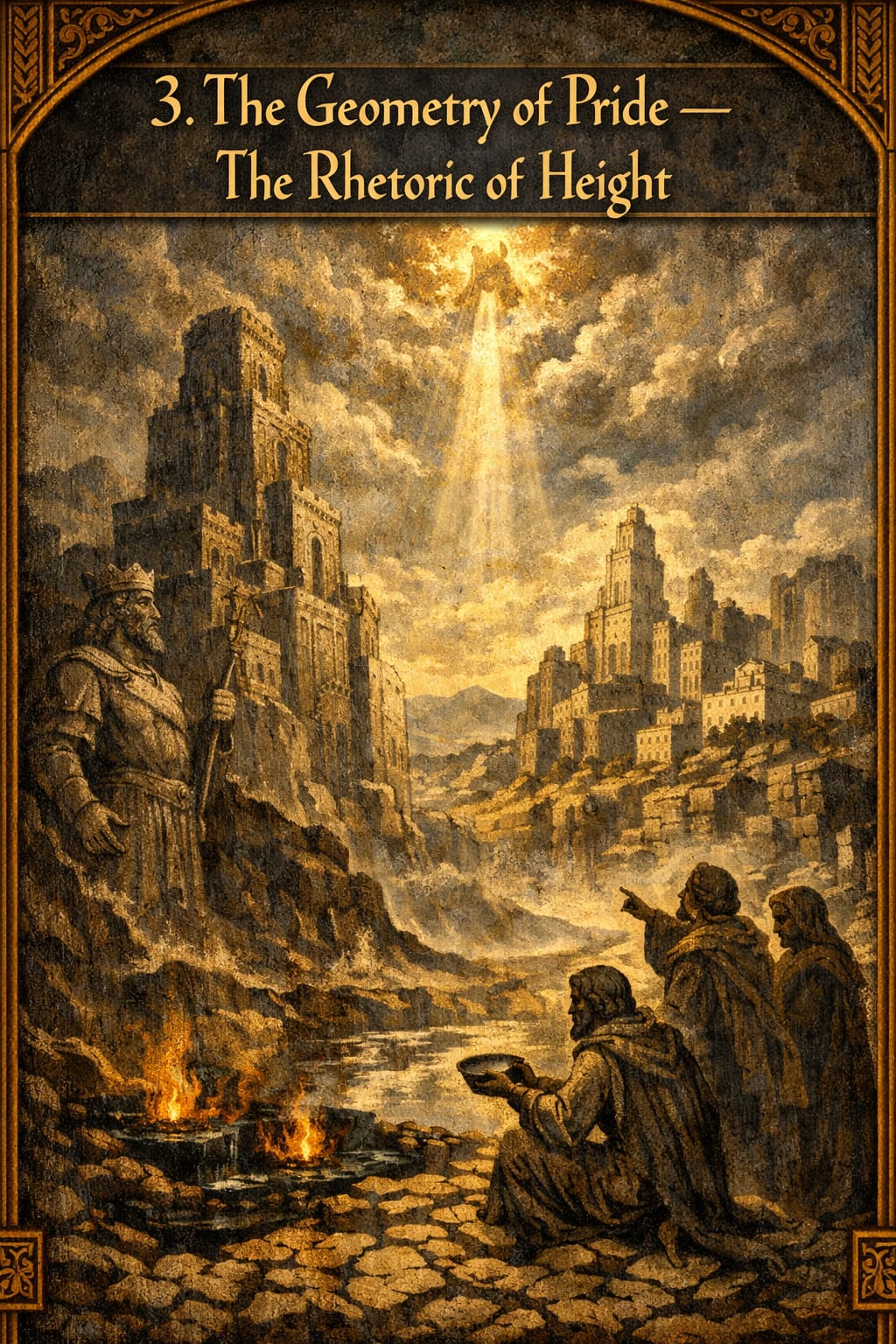
The destruction of Sodom fits into a broader biblical "grammar of height." Throughout the scriptures, human attempts to exalt themselves are met with a divine "coming down" to inspect and reverse that pride. Sodom belongs to a thematic lineage of hubris that includes the Nephilim, the Tower of Babel, and the empire of Babylon.
In this context, the Hebrew terms gā'ôn (pride) and gābah (haughtiness) describe a specific type of "height" that is not measured in cubits, but in social insulation. The source identifies several distinct ways this rhetoric manifests:
- Physical Height: Represented by the giants of ancient tradition.
- Architectural Height: Embodied in the soaring ambitions of the Tower of Babel.
- Imperial Height: Seen in the sweeping power and arrogance of Babylon.
- Moral and Social Height: Defined by Sodom’s self-sufficiency and the belief that its prosperity placed it above the reach of justice or the needs of the vulnerable.
Sodom was a city that had elevated itself so high in its own estimation that it became deaf to the "outcry" of those beneath its walls.
4. A Monument in the Landscape—The Pillar of Salt

The haunting transformation of Lot’s wife into a pillar of salt is more than a miraculous flourish; it is a brilliant piece of literary-rhetorical synthesis. It connects the human drama to the physical geography of Jebel Usdum (the "Mount of Sodom"), a striking landmark composed primarily of crystalline salt.
There is a profound irony in this "warning memorial." When Lot first looked upon the Jordan plain, he chose it because it looked like "the garden of the Lord" (Gen 13:10). He moved toward a vision of paradise and ended in a landscape of salt. His wife, by looking back, became part of that very desolation. This "irony of choice" serves as a permanent reminder: the search for prosperity without a foundation of justice often leads to a landscape that is physically present but spiritually uninhabitable.
5. Judgment as a Reversal of Systemic Inhospitality
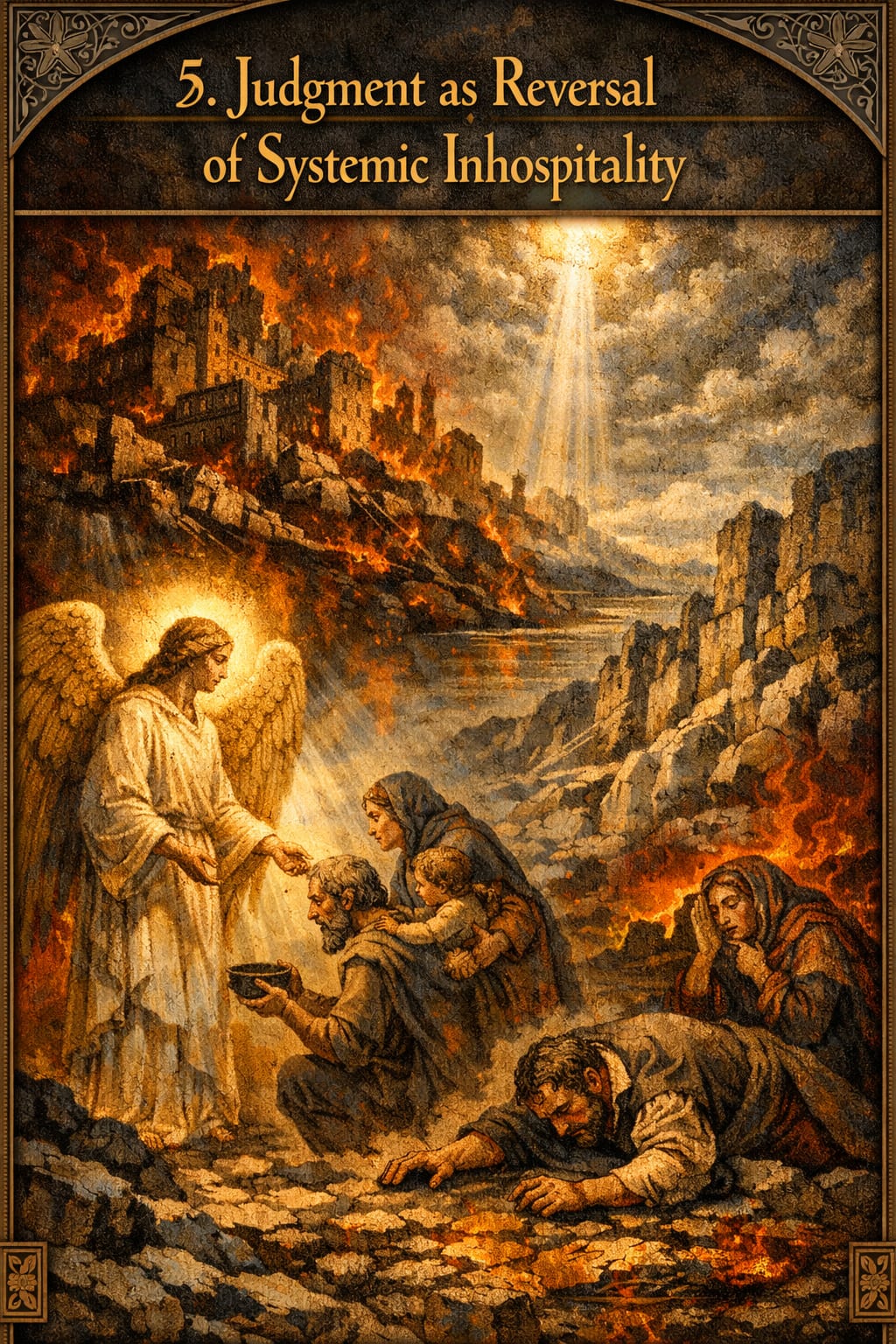
In the biblical account, judgment is rarely a response to a few "bad actors"; it is an investigation of a system. The narrative emphasizes that the "men of the city, both young and old," participated in the assault on Lot’s guests. This highlights a culture where violent inhospitality had become the social norm.
The "God who comes down" is portrayed as a divine investigator responding to an "outcry"—the ze'akah of the oppressed that reaches heaven. This investigative aspect is crucial: the catastrophe is presented as the necessary response to a society that has become closed in upon itself. When a city’s shared culture prioritizes the protection of its own "prosperous ease" over the sacred duty of welcoming the stranger, the text suggests its foundations are already crumbling. Judgment, then, is the divine reversal of a social order that has elevated itself through the exclusion of the vulnerable.
Conclusion: The Lingering Sign
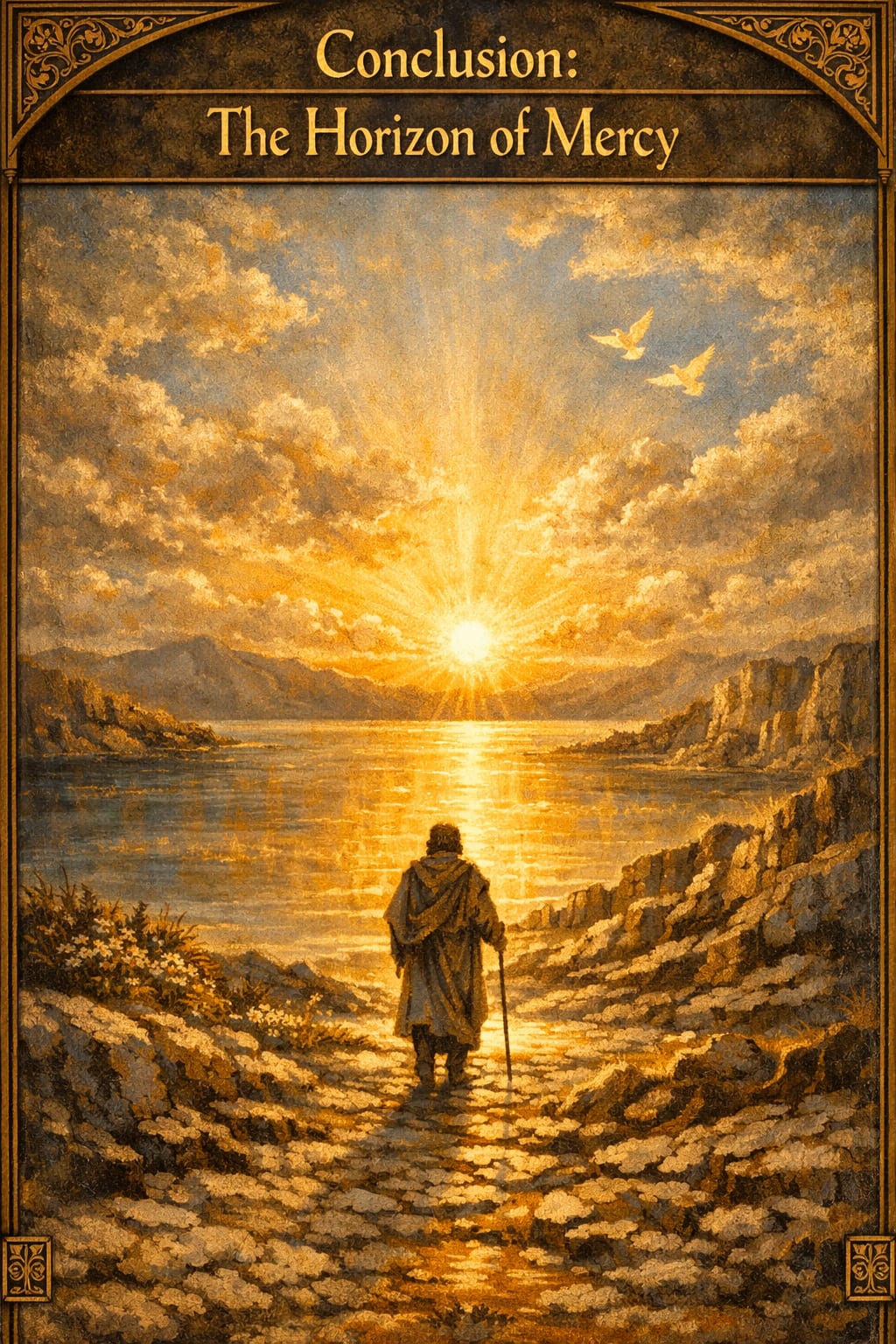
The smoke that Abraham saw rising from the plain was more than the aftermath of a fire; it was a sign that true security is not found in "walls of prosperity" or technological hubris. The Sodom tradition teaches us that the stability of a civilization is ultimately found in its alignment with justice and hospitality.
The geological stage of the Dead Sea remains, but the moral drama it hosted continues to speak to our age of institutional arrogance and economic inequality. Perhaps the most profound lesson of the Cities of the Plain is that a genuine encounter with the divine often occurs precisely at the point where human "height" collapses. It is only when our towers of self-sufficiency fall that we are forced to see the landscape as it truly is.
In an age of "prosperous ease," where do we see the smoke of Sodom rising in our own modern landscape?