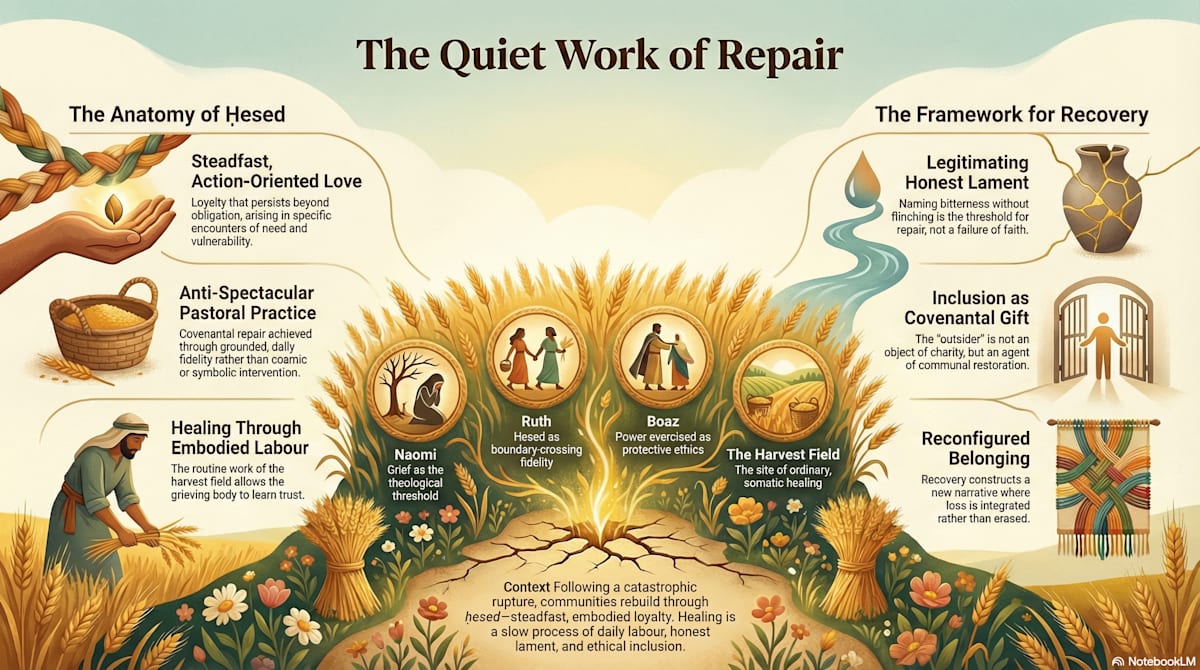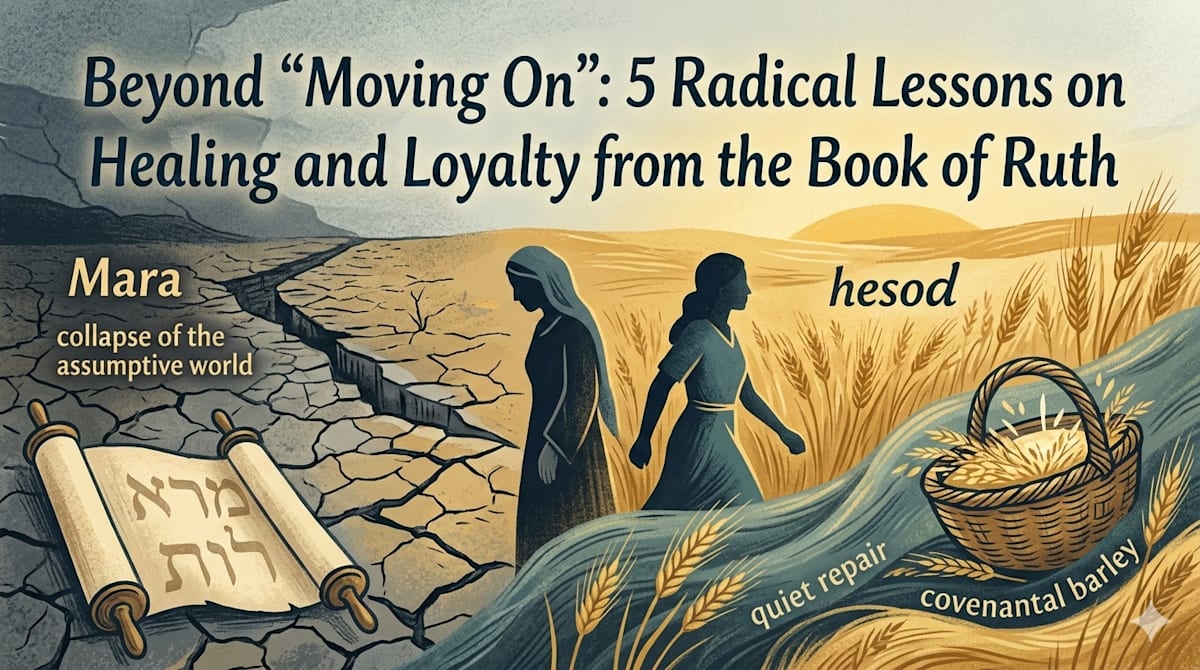
In the quiet wake of catastrophe, there exists a specific, hollow silence where the old world used to be. Psychologists call this the "collapse of the assumptive world"—the moment when a life-altering loss shatters the foundational belief that the world is benevolent, predictable, or meaningful. For those navigating the aftermath of bereavement, displacement, or systemic rupture, the old narrative frameworks do not just feel inadequate; they feel unrecognizable. We often find ourselves scanning the horizon for "apocalyptic thunder"—a spectacular rescue or a cosmic explanation—to justify our pain.
Yet the Book of Ruth offers a different, more resilient "pastoral architecture." It is a text designed for the long, domestic aftermath of trauma, moving us away from the thunder of grand theological visions and toward the "covenantal barley" of grounded repair. It suggests that healing is not an escape from the rubble, but a patient work of reconstruction, performed through the "slow accretion of ordinary faithful acts." This is a theology of remaining, where the world is rebuilt stitch by stitch, day by day.
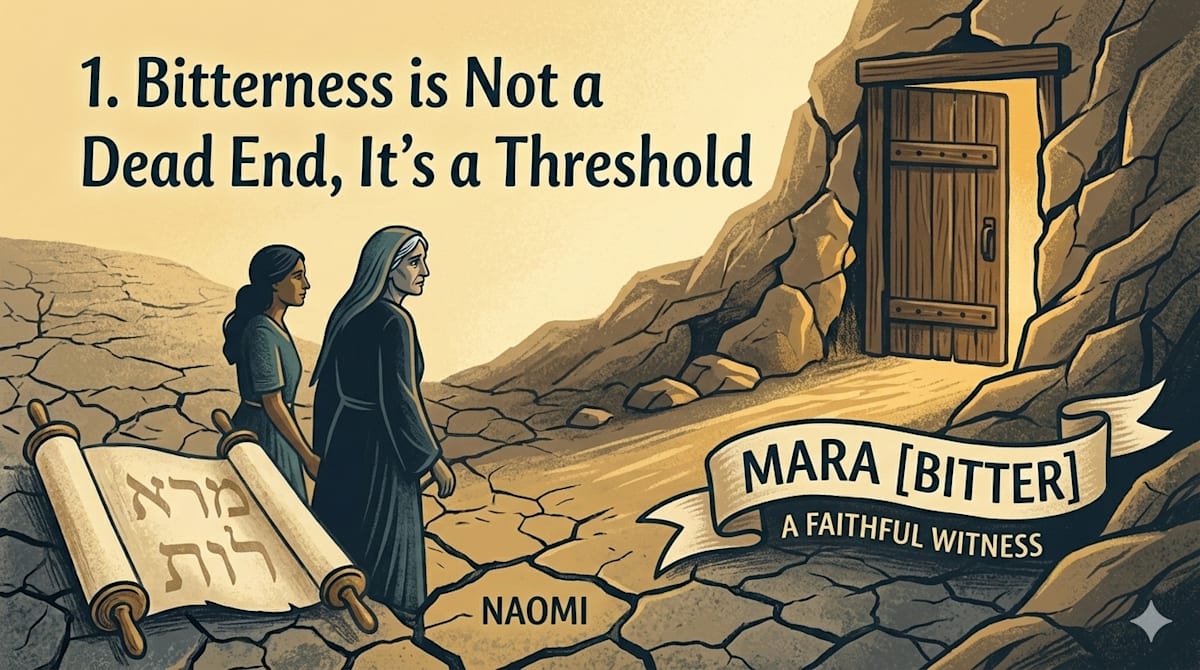
1. Bitterness is Not a Dead End, It’s a Threshold
When Naomi returns to Bethlehem after losing her husband and sons in Moab, she does not offer a pious platitude. Instead, she demands a renaming: "Do not call me Naomi [Pleasant]; call me Mara [Bitter]." This honest lament is what scholars call a "faithful witness." By naming her pain without flinching, Naomi refuses "premature theological closure"—the hollow temptation to wrap a tragedy in easy answers before the wound has even begun to close.
"I went away full, but the Lord has brought me back empty."
Naomi’s "unresolved lament" is a necessary starting point for genuine recovery. Rather than a failure of faith, her bitterness serves as a threshold. It keeps the wound honest and prevents the denial that often stalls true healing. By expressing her emptiness, she creates the dramatic space for new, reconfigured relationships to eventually take root. In the economy of the spirit, the naming of the void is the first step toward filling it.
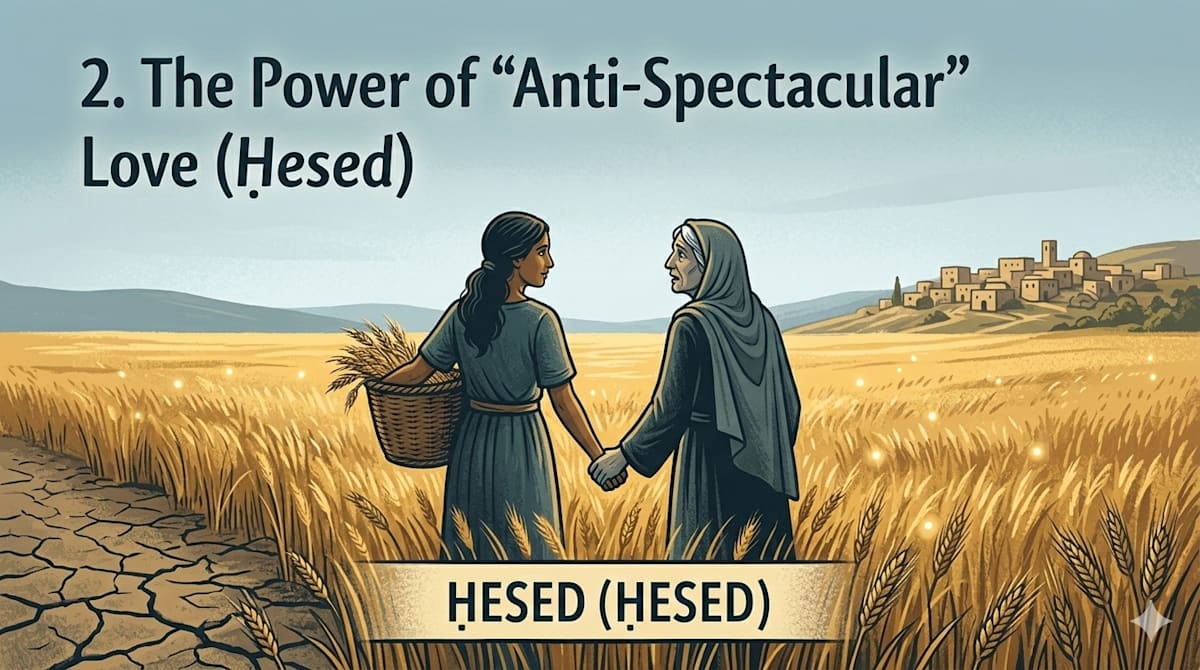
2. The Power of "Anti-Spectacular" Love (Ḥesed)
At the heart of this narrative is the Hebrew concept of ḥesed. Often translated as "steadfast love," it is far more than a sentiment; it is a covenantal loyalty that persists when there is absolutely nothing to gain. Ḥesed is a "boundary-crossing" love that ignores social obligation to provide for the vulnerable.
Critically, Ruth’s vow to Naomi serves as an embodied vehicle for "continuing bonds." Modern grief theory suggests that healthy mourning is not about "letting go" or detachment, but about reconfiguring attachment. Ruth’s loyalty allows Naomi to carry her deceased husband and sons forward into a new narrative of future generativity. Ḥesed is the theological vocabulary for what trauma-informed care looks like in practice:
* Costliness: It requires personal sacrifice and the crossing of ethnic or social boundaries, moving beyond what is "rational" or self-protective.
* Embodiment: It is not expressed through words alone but through physical presence and shared, grueling labor.
* Persistence: It is a disposition enacted repeatedly. It is the quiet discipline of showing up even when the other person is too "bitter" to reciprocate.
3. Healing is an Embodied, Gritty Process
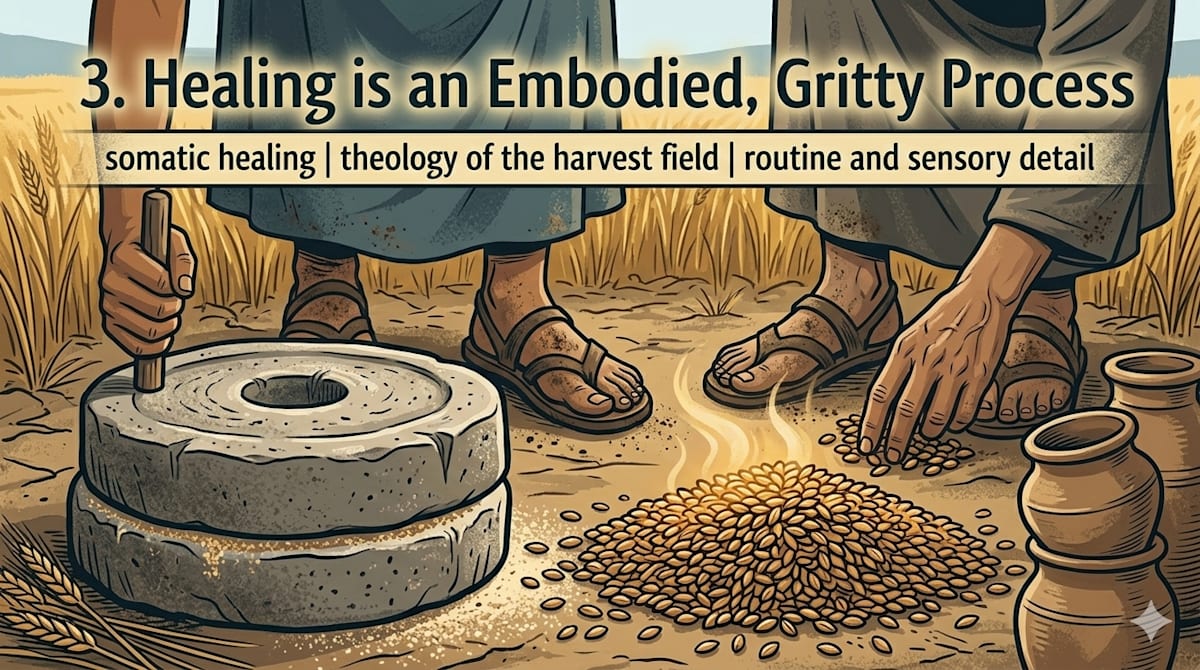
The Book of Ruth provides a "theology of the harvest field," reminding us that recovery is "somatic"—it happens in and through the body. In the aftermath of trauma, the "body keeps the score," and repair is often found not in abstract ideas but in the rhythm of daily work and the restoration of physical safety.
The text is saturated with sensory detail: the smell of the harvest, the clink of water jars, and the tactile reality of roasted grain. For the survivor, this is the process of the "body that has known famine learning to trust abundance again." Repair happens through the slow reconstruction of routine—the simple, gritty acts of gleaning, providing food, and occupying a safe space. This "theology of remaining" suggests that divine presence is discovered not in dramatic rescues, but in the stubborn, ordinary persistence of life in the wake of devastation.
4. The Outsider as the Architect of the Future
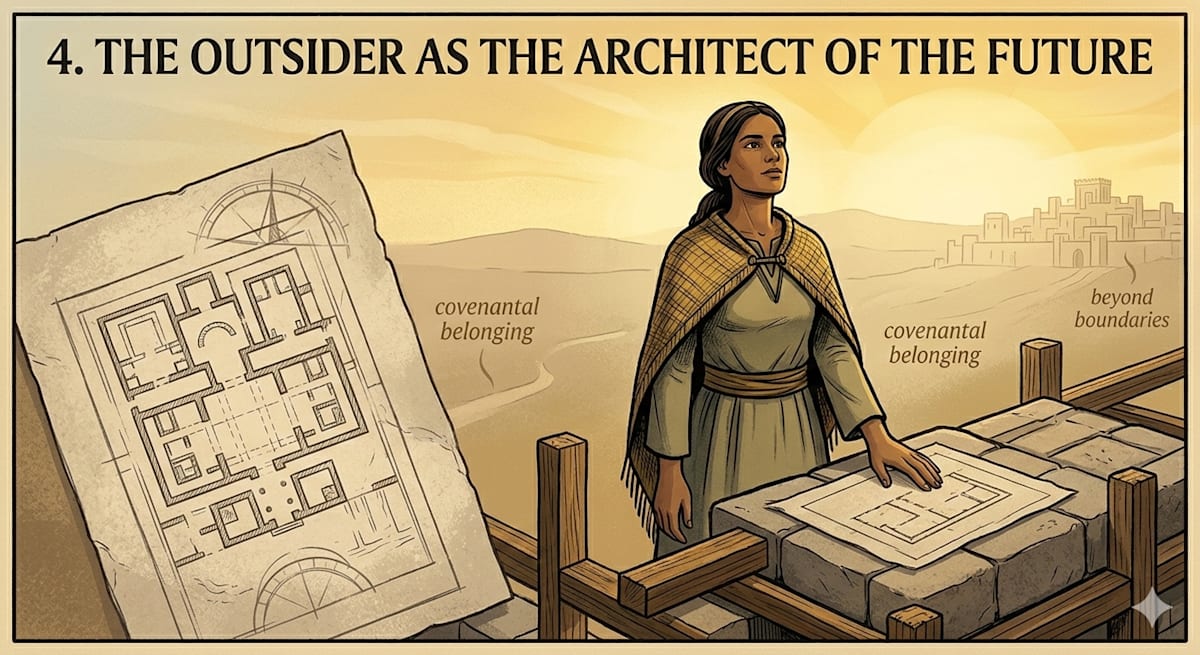
Ruth’s identity as a "Moabite" is a deliberate theological disruption. In a world of "genealogical nationalism," she is a perpetual outsider, yet the story positions her not as an object of charity, but as an "agent of covenantal gift." It is the foreign woman’s fidelity that becomes the very foundation for the Davidic lineage.
This suggests that communities are often "reconstituted" by the very people they might initially view as refugees or "others." Ruth proves that covenant belonging is constructed through ethical practice—how we care for one another—rather than ethnic origin. The "other" is not a problem to be solved, but often the only architect capable of moving a community from famine to fullness, precisely because they are not bound by the old, shattered frameworks.
5. Ethical Power: Creating Safety for Others to Flourish
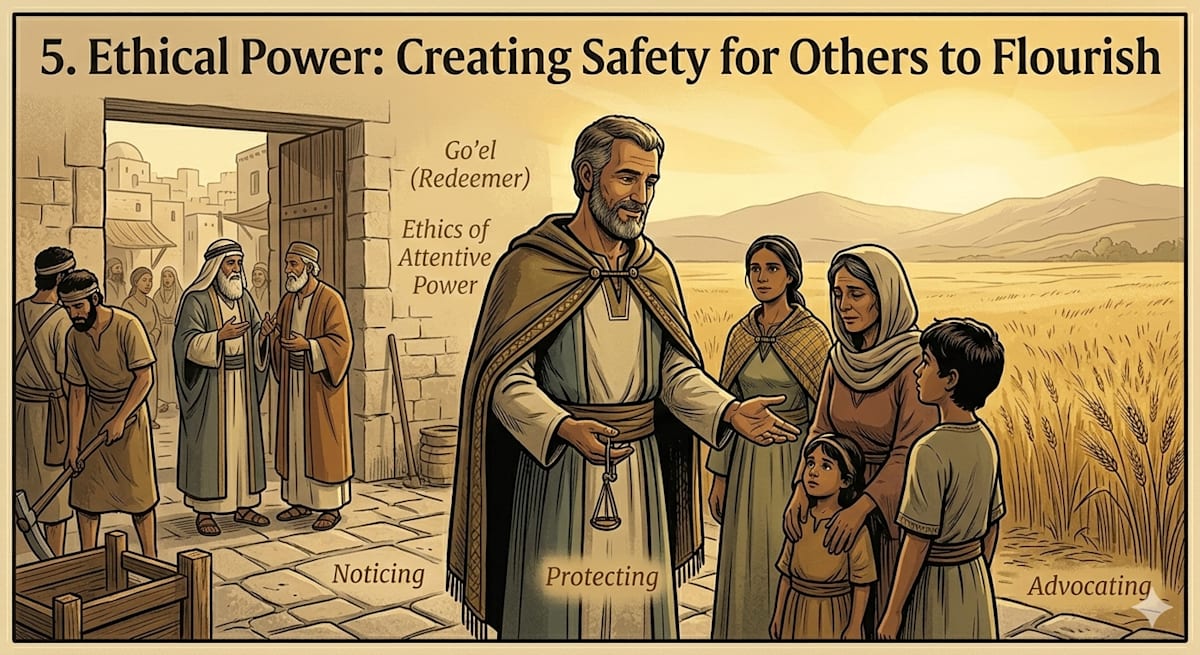
The character of Boaz represents the role of the go'el, or kinsman-redeemer. In the lens of trauma-informed leadership, Boaz practices an "Ethics of Attentive Power." He does not merely comply with the minimum requirements of the law; he restructures the social space of his field so the vulnerable can flourish without fear.
Boaz demonstrates that "redemption" is a structural fix, not just a charitable act, through three specific movements:
1. Noticing: He actively looks for the marginalized person and inquires about her specific story.
2. Protecting: He establishes physical and social safety, shielding Ruth from harassment and ensuring her material stability.
3. Advocating: He uses his social and legal standing (the "gate") to ensure that the rights of the widow and the foreigner are publicly recognized and upheld.
His leadership is the bridge between individual ḥesed and communal restoration. He uses his power to ensure that the "domestic reconstruction" of Naomi's life is supported by the legal and social architecture of the town.
The Quiet Work of Repair
The Book of Ruth offers a "counter-apocalyptic" vision of the world. While the "thunder" of grand visions may sustain us in the heat of a crisis, it is the "barley" of everyday fidelity that repairs the world. If apocalyptic literature like Revelation provides the symbolic architecture to contain our catastrophe, Ruth provides the domestic reconstruction needed to live within it.
The story concludes with "generativity"—the birth of a child and the continuation of a line. This is the fruit of "staying with the trouble," not escaping it. It is the result of a community that sustained ḥesed across boundaries and through seasons of grief. Quiet repair is holy work. It is the slow, steady movement from "Mara" to a new kind of fullness—a fullness that does not erase the past, but integrates it into a future we never could have planned.
Reflection: What does "quiet repair" look like in your own community right now? In a world obsessed with spectacular rescues, where might the simple, costly act of "remaining" be the most radical thing you can do?