Reflections on a New Paper
I am pleased to share that my latest article, “From the Womb of Lament to the Throne of Glory: Maternal Threshold Experience, Revelationary Hope, and the Architecture of Reversal in the Canon”, has now been submitted to Horizons in Biblical Theology.
This paper feels like the emotional and theological heart of everything I have been working on for the last several years. It completes the biblical quartet I began with “The Rhetoric of Height” and brings it into direct conversation with the larger monograph project, Transdiasporic Lament and the Revelationary Spirit. In many ways, this is the piece I have been reaching toward all along.
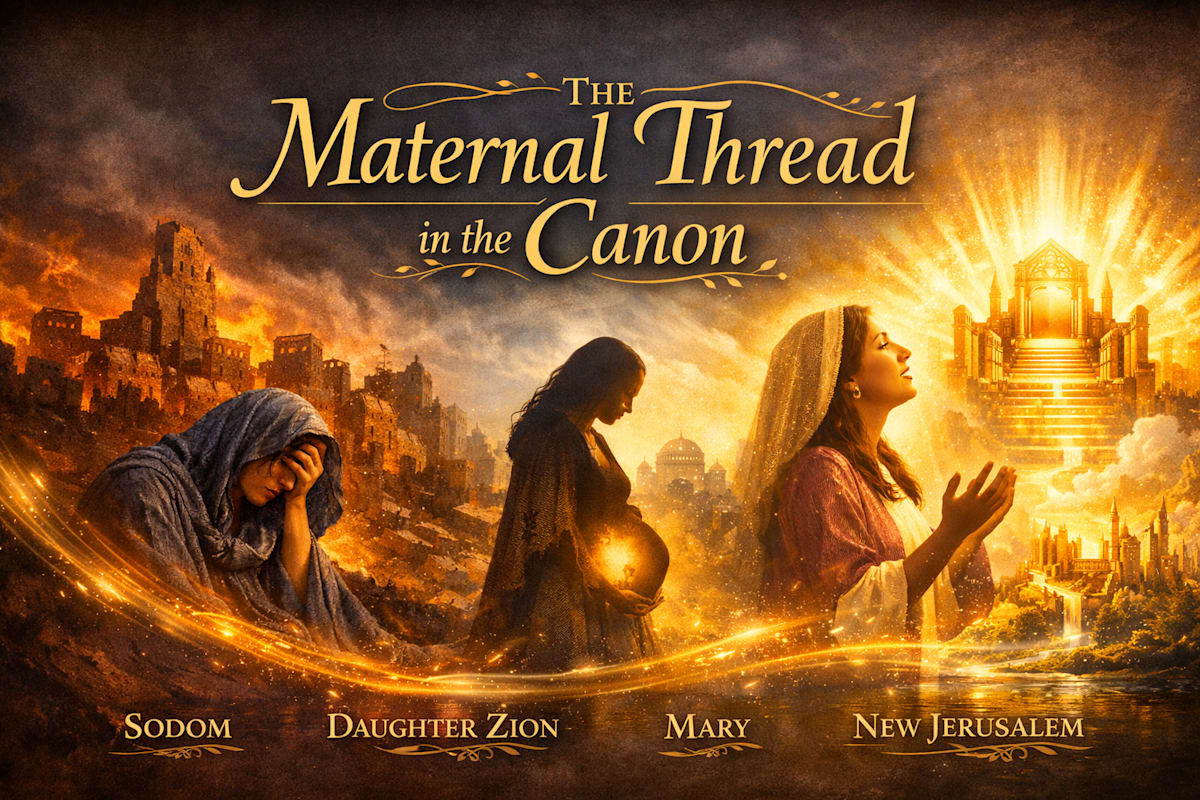
The Maternal Thread in the Canon.
The quartet traced a powerful canonical pattern: the recurring “grammar of height and hubris” — seen in giants, in the tower of Babel, in imperial Babylon, and in the moral elevation of Sodom — and its subversion through divine reversal, culminating in David as the small one who refuses the logic of height. But something was still missing. As I kept reading and praying with these texts, I became convinced that the canon’s theology of reversal is not only Davidic — it is profoundly maternal.
This paper follows that maternal thread through three key moments:
In Ezekiel 16, Sodom and Jerusalem are portrayed as failed mothers — prosperous, arrogant, and inhospitable. Their “height” (gā’ôn and gābah) corrupts the very heart of care and nurture.
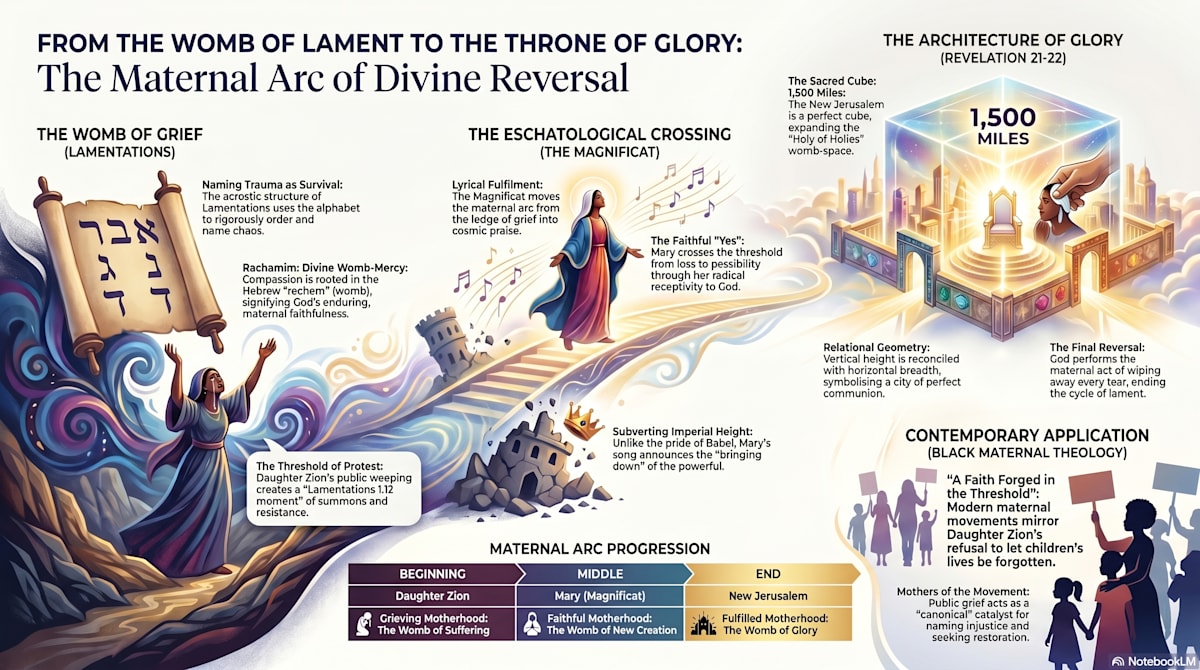
In Lamentations, Daughter Zion becomes the grieving mother par excellence. Her tears, protests, and desperate questions give voice to the cost of height and hubris. She stands at the threshold — the narrow space between total devastation and fragile hope.
In Mary’s Magnificat (Luke 1), that threshold is crossed. A young, marginalised woman sings of the God who brings down the powerful and lifts up the lowly. Her song turns maternal lament into defiant, eschatological praise.
Finally, in Revelation 21–22, the arc reaches its climax in the New Jerusalem — a perfect cubic city where height is reconciled with breadth and length, and where God personally wipes away every tear.
What emerges is a striking claim: the canon consistently shows that divine reversal and revelation are born from the womb of maternal grief. The threshold between devastation and hope is not empty — it is sacred, generative space.
Why This Matters to Me

This research is not abstract for me. As someone who has walked closely with communities carrying deep transdiasporic grief, I have seen again and again how mothers stand at the sharpest edge of suffering and hope. Their lament is never mere sorrow — it is theological labour. It names what empires try to hide. It summons God. It keeps alive the stubborn belief that a new creation is possible.
That is why the voices of Daughter Zion, Mary, and the Mothers of the Movement belong together in this conversation. Mamie Till-Mobley opening the casket of her son Emmett, the Mothers of the Movement saying the names of their children — these are contemporary expressions of the same canonical pattern. Their grief becomes protest, their protest becomes witness, and their witness becomes a seed of hope for the rest of us.
This paper is my attempt to honour that reality theologically. It insists that maternal lament is not peripheral to the gospel — it stands near its centre. And it suggests that the revelationary spirit I explore in Part II of the monograph is not a departure from lament but its deepest fulfilment.
An Invitation

If you have been following the development of these studies, thank you. This paper represents the chorus I hoped we would write — one that sings of a God who does not bypass suffering but enters it, who does not silence lament but honours it, and who consistently works through the small, the grieving, and the faithful to bring down the mighty and lift up the lowly.
The full paper is now under review. I will share more as the process unfolds.
In the meantime, I would be deeply grateful for your thoughts, prayers, and conversation. The canon still has much to teach us about how hope is born in the most unlikely places — often in the womb of tears, often through the voices and bodies of mothers who refuse to let empire have the final word.
Grace and peace,
Mark Edward Chard
Honorary Lecturer, School of Arts (Theology and Religion)
University of KwaZulu-Natal
Recommended Viewing:
A video to accompany this blog, title "Architecture of Renewal' can be viewed by following the 🔗 👇