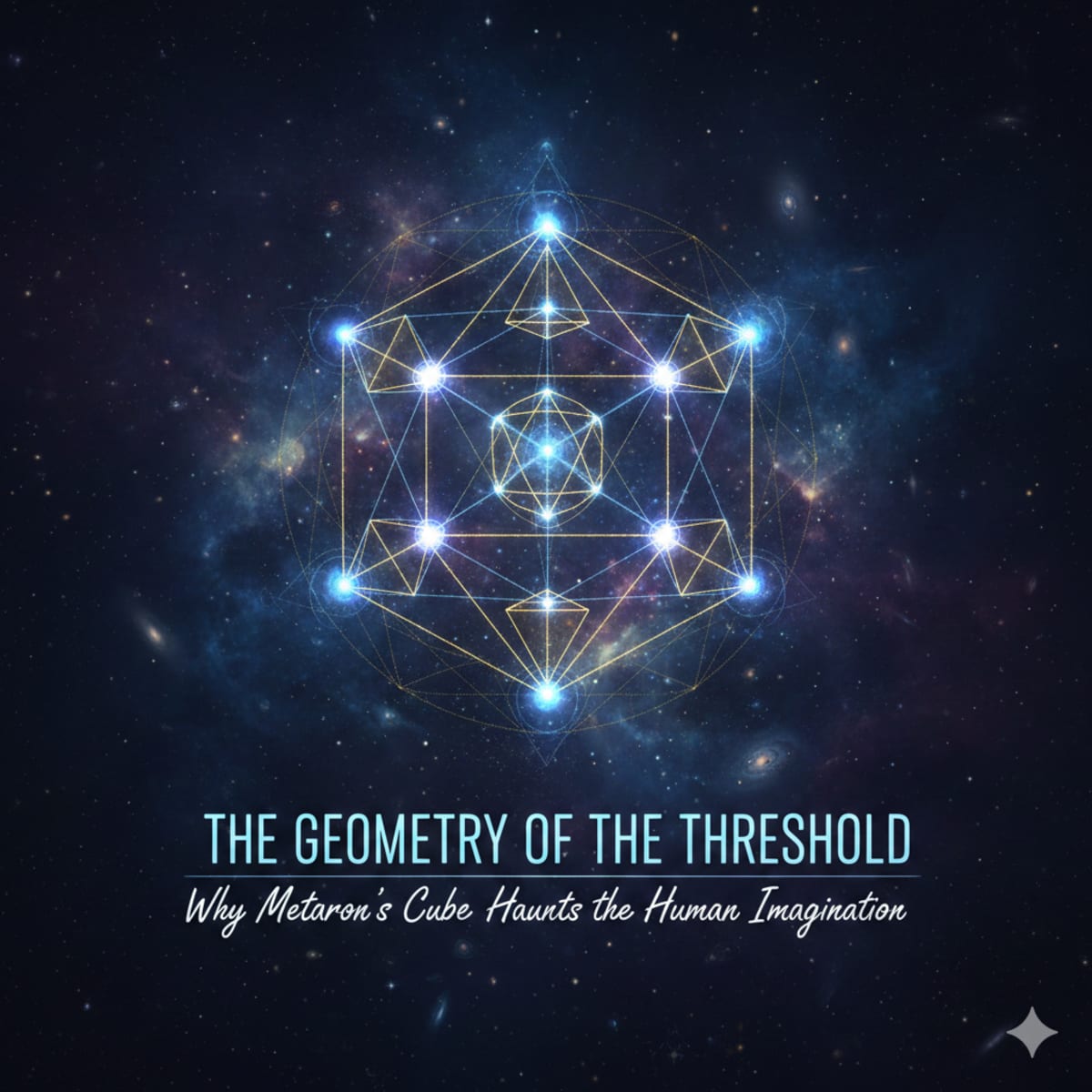
History is haunted by a recurring ghost, but it is not a spirit—it is a shape.
Across the millennia, scholars and psychologists have grappled with what is known as the "Problem of Recurrence": the inexplicable tendency for specific, complex geometric patterns to emerge across vastly different eras and cultures that had no contact with one another.
At the center of this mystery is Metatron’s Cube. This intricate figure, characterized by its hexagonal symmetry and overlapping circles, appears in the oldest mathematical records of ancient Babylonia, the mystical manuscripts of medieval Kabbalah, and the philosophical diagrams of Hellenistic Egypt. Most startlingly, it continues to surface today in the phenomenological reports of individuals undergoing near-death experiences (NDEs) or deep meditation—even among those who have never seen the symbol before. It remains a geometric ghost in the machine of human history, appearing to those who stand at the edge of the unknown.
Geometry as a Bridge to Cosmic Order
For the modern mind, geometry is often reduced to a practical tool for architecture or engineering. However, for ancient civilizations, geometry served as a "semiotic mediator"—a bridge between the human experience and the perceived order of the cosmos.
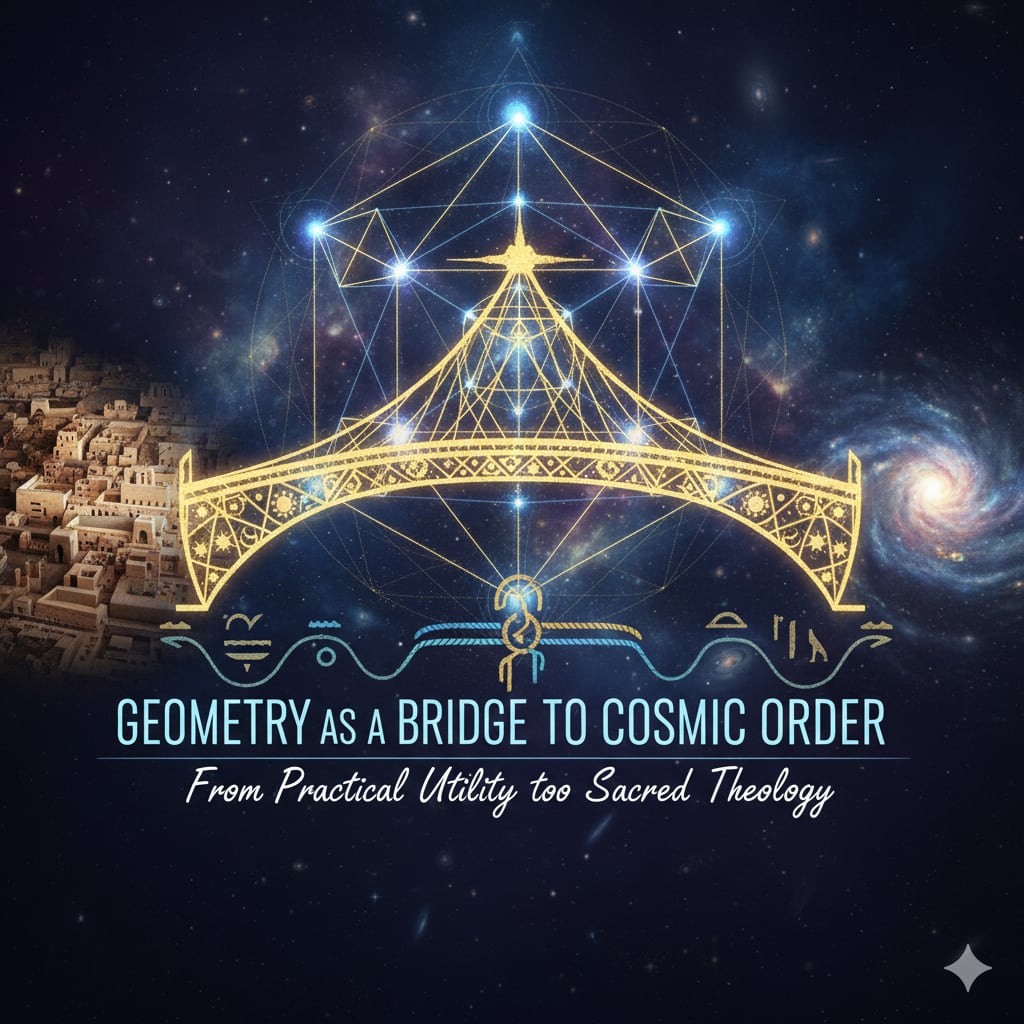
In the Indus Valley, city grids were not merely urban planning; they were diagrams of cosmic balance. In ancient Egypt, the harpedonaptai, or "rope-stretchers," who redrew field boundaries after the Nile’s annual flood, were performing a sacred rite. To re-establish geometric order was to participate in ma'at, the principle of universal harmony. This transition from "practical utility" to "sacred theology" marks a pivot in human culture, suggesting that we do not just use shapes to build houses; we use them to build meaning.
This contemplative tradition reached its apotheosis in Islamic geometric art. Across the great mosques of Persia and North Africa, the exploration of tessellations and star polygons served as a visual meditation on the relationship between unity and multiplicity. For thinkers like Al-Kindi and ibn al-Haytham, geometry was not a tool for measurement, but a mode of access to the structure of reality itself.
The Architecture of the Elemental
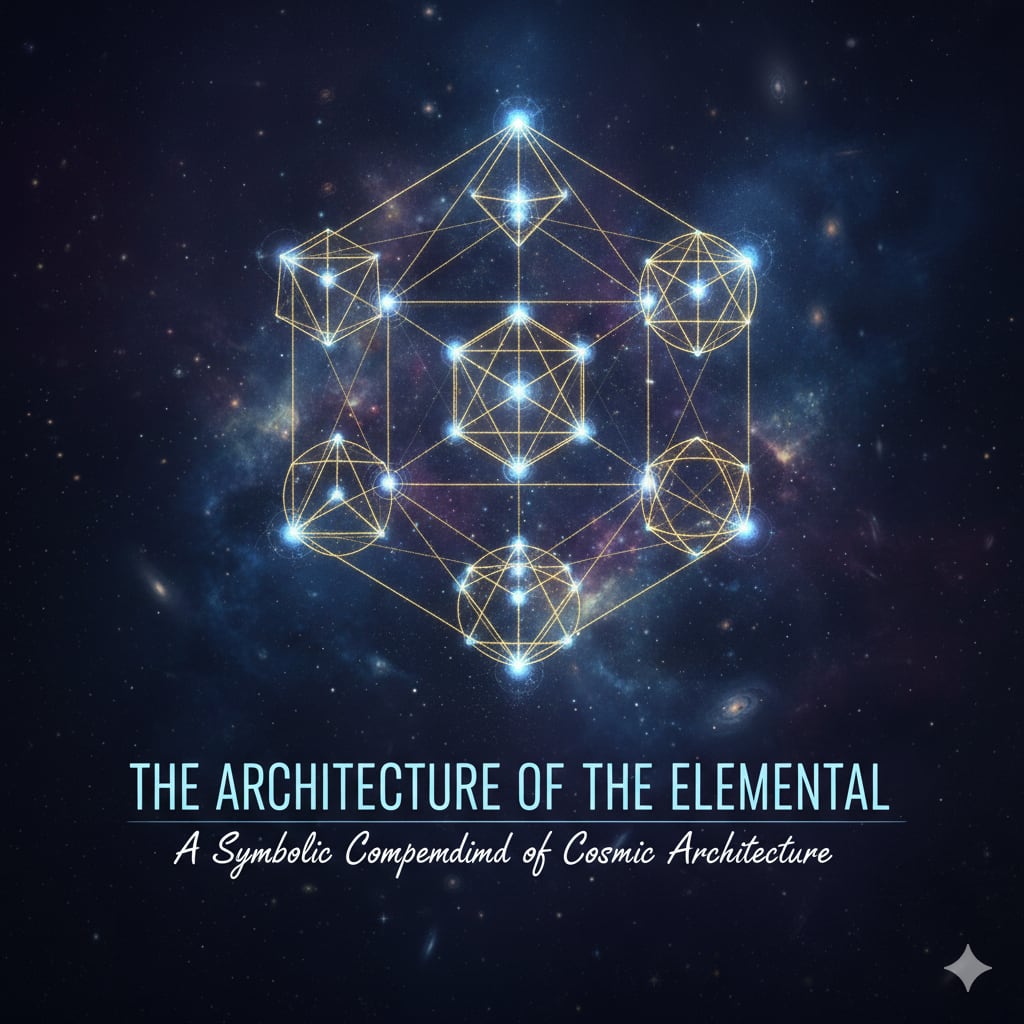
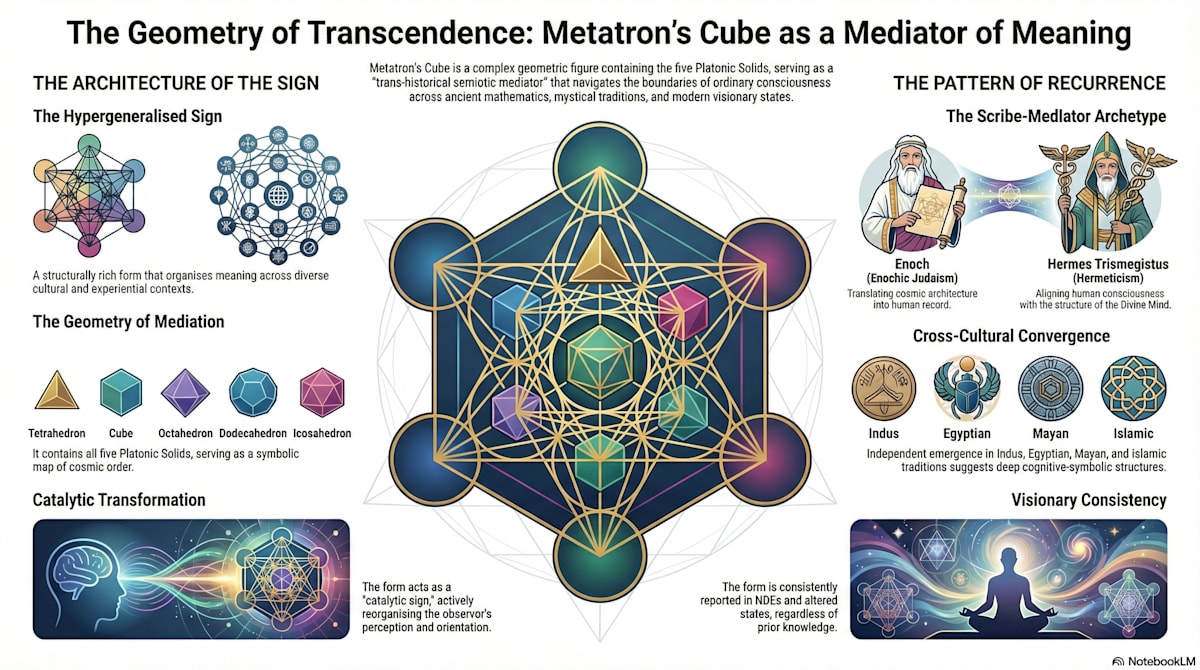
Metatron’s Cube is not merely a decorative pattern; it is a structural "all-in-one." It possesses a rare mathematical richness, containing within its lines all five Platonic Solids: the tetrahedron, cube, octahedron, dodecahedron, and icosahedron. In the Platonic tradition, these shapes were considered the fundamental building blocks of the universe. Because the Cube houses all of them, it functions as a "symbolic compendium of cosmic architecture."
From a psychological perspective, the Cube functions as what Jaan Valsiner calls a "hypergeneralised sign." Its power lies in a productive tension: it is structurally determinate yet interpretively open. It provides enough stable order to be recognizable across cultures, yet it remains generative enough to sustain diverse spiritual and philosophical meanings. As scholars of the Platonic tradition have observed:
"The Platonic Solids were no longer merely mathematical objects; they were cosmological signs—semiotic mediators between the human mind and the structure of reality."
The Scribe and the Geometry of Revelation
The Cube takes its name from Metatron, a figure of profound transformation in Jewish mysticism. Originally the biblical scribe Enoch, he was said to have ascended to heaven, where he was transformed into the celestial mediator Metatron. This was not a simple promotion; it was a "geometry of revelation." The mystical texts describe Enoch’s very body being recomposed into letters, numbers, and fiery geometries.
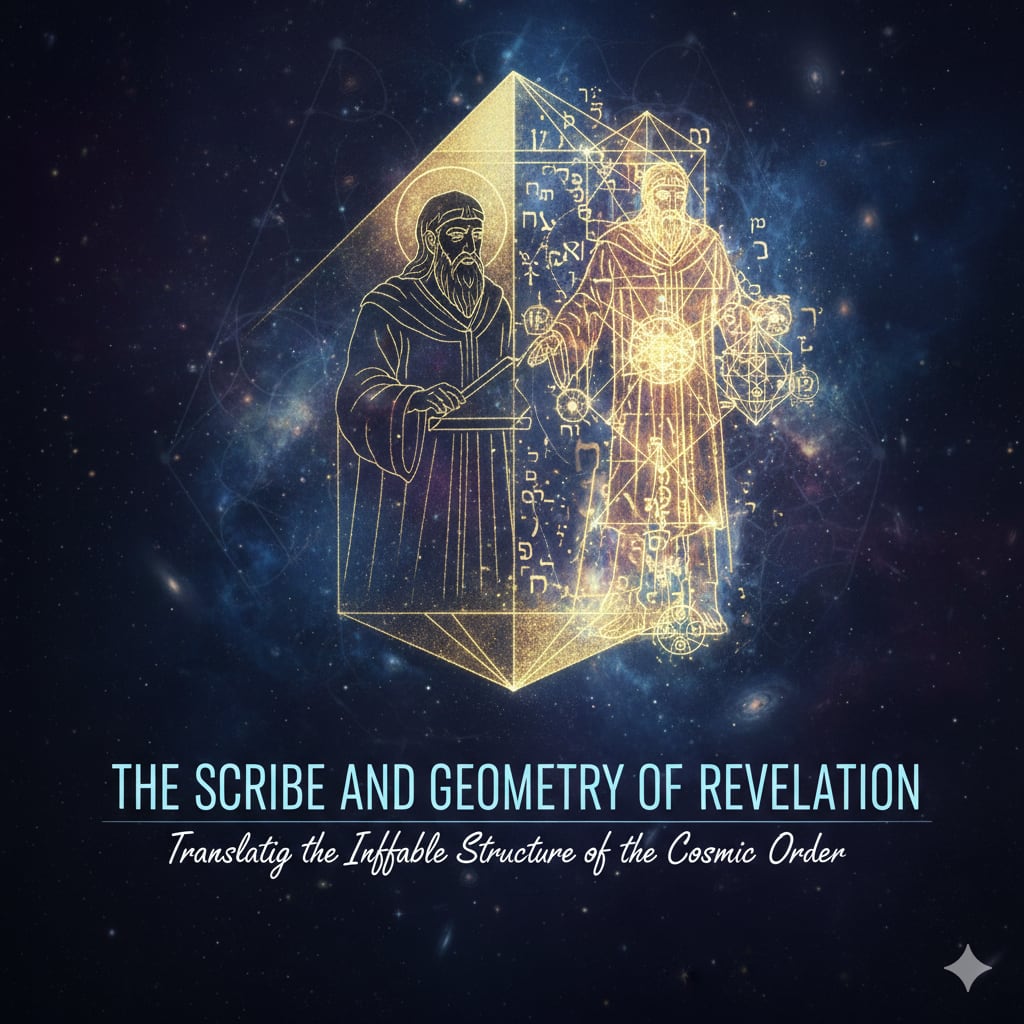
Metatron’s Cube is essentially a diagram of this threshold. It represents the scribe who stands between the human and the divine, translating the "ineffable structure of cosmic order" into a form that a person can actually navigate. Here, we see the crucial distinction between "transcription"—merely preserving content—and "illumination," where the sign transforms the receiver. The Cube does not just provide information about the divine; it reorganizes the consciousness of the one who beholds it.
Scaffolding the Limits of Consciousness
Perhaps the most compelling evidence for the Cube’s significance is that it may be "hardwired" into our biological hardware. Contemporary research into altered states of consciousness—whether through deep meditation or near-death experiences—shows that people consistently report seeing hexagonal lattices identical to Metatron’s Cube, even without prior knowledge of sacred geometry.
There is a neurological bridge here. During these states, the brain often exhibits heightened "gamma wave" activity and "maximally integrated spatial cognition." Under these conditions, the visual system naturally generates patterns of high geometric regularity. However, these are not mere neurological artifacts. Within the framework of cultural psychology, these forms act as a "Zone of Promoted Development" (ZPD). They create a symbolic scaffold that helps the mind reorganize itself during moments of radical disruption or spiritual awe.
In the study of symbols, Metatron’s Cube is classified as a "Catalytic Sign." It is constitutively efficacious; it doesn't just represent an already-existing order but actively organizes the perceiver's encounter with order as such. Encountering the Cube "does something" to the viewer, providing a stable structure for the mind to cling to when ordinary reality falls away. As the source explains:
"Sacred geometric forms like Metatron’s Cube are constitutively efficacious: they do not merely represent an already-existing order but actively organise the perceiver’s encounter with order as such."
A Grammar for the Infinite
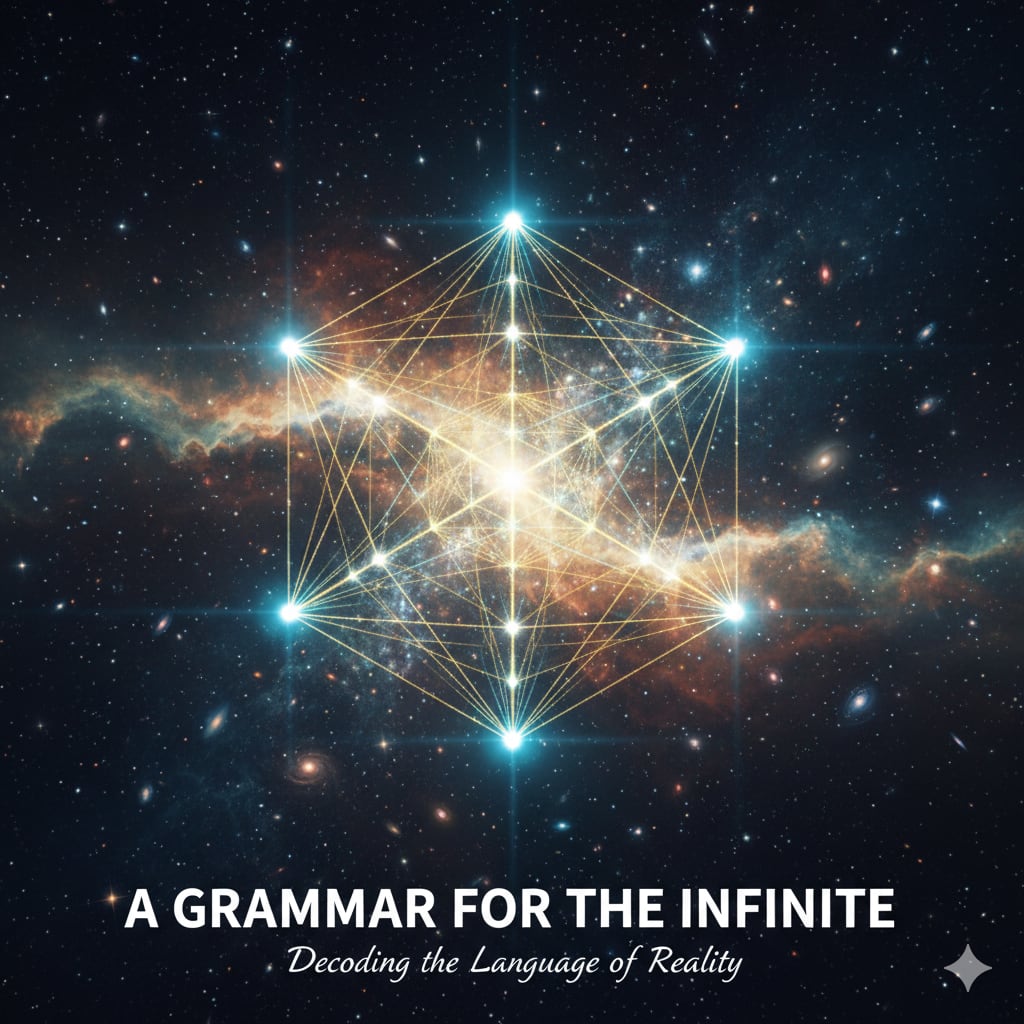
Metatron’s Cube persists across four millennia because it is a "trans-historical semiotic mediator." It is the stable, elegant structure that the human mind uses to navigate the limits of ordinary consciousness. Whether it was used by a Kabbalist in the Middle Ages or is being "seen" by a patient in a modern NDE, it serves the same purpose: providing a grammar for the infinite.
Ultimately, we are left to wonder about the nature of this "geometric ghost." Are these forms merely the accidental byproduct of our brain's internal wiring, or are we tapping into a genuine grammar of the universe—a mathematical language of reality that we are only beginning to decode? Whatever the answer, Metatron's Cube remains a primary map for those who journey to the boundaries of the human experience, a recurring reminder that at the heart of chaos, there is always a pattern waiting to be found.