In the world of ideas, some books are fireworks—brilliant, brief, and dazzling. Others are lighthouses: steady, deep, built to guide people through dark waters for years to come. A monograph belongs to the second kind.
The word “monograph” comes from Greek: monos (single) and grapho (to write). It describes a book-length scholarly work focused on one specific subject, written by a single author (or occasionally a small team) who has spent years immersed in the topic.
Unlike an edited volume that gathers chapters from many contributors, or a textbook that surveys a broad field, a monograph dives deep. It offers sustained, original argument and analysis. It is the place where a scholar lays out their most mature thinking, backed by rigorous research, and invites the academic community (and often the wider world) to engage, challenge, and build upon it.
Monographs are the backbone of advanced scholarship in theology, biblical studies, history, philosophy, and many other humanities disciplines. They allow authors to explore complexity that shorter articles cannot accommodate.
They become reference points, conversation partners, and sometimes paradigm-shifters for generations of readers.
For the author, writing a monograph is a major milestone. It demands expertise, patience, and courage, especially when the subject touches lived pain, contested history, and urgent questions of faith and justice.
This brings me to the heart of why I’m launching this blog, The Longest Lament.
Over the past several years I have been writing a monograph titled The Longest Lament: Black Maternal Theology of the Cross and Relational Resurrection.
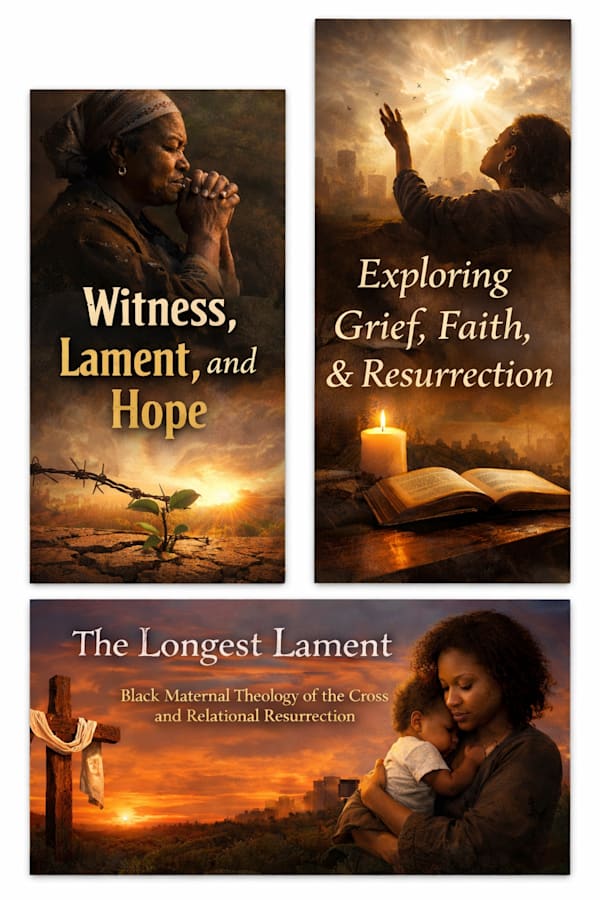
The full manuscript, complete, revised, and polished, was submitted to Open Book Publishers on Christmas Eve 2025 and is now under review for proposed open-access publication.
In the coming weeks and months, while the formal review process unfolds, this blog will serve as a companion space. Here I’ll share some of the core ideas that animate the book: Black maternal witness as a primary source for crucifixion theology; the practice of relational resurrection in African American history and life; “witness as data” as a constructive theological method; and the refusal of premature closure in the face of racialized grief.
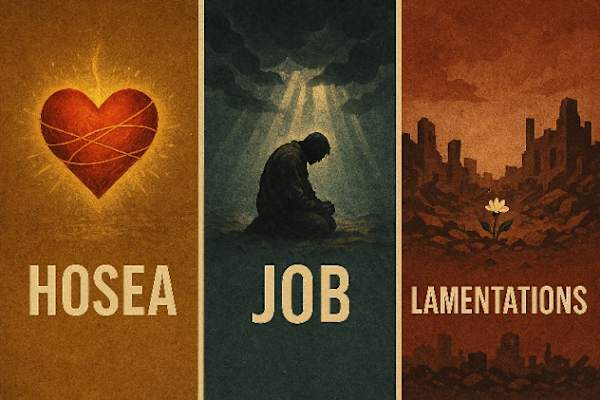
I’ll post short reflections on scripture (Hosea, Job, Lamentations, the passion and resurrection narratives), on historical moments of maternal vigil, on contemporary mourning practices, and on why resurrection, for many Black communities, has never been only a future promise but a present, relational reality.
My hope is that this space becomes useful not only for scholars and students, but for clergy, activists, grieving parents, church study groups, anyone who has ever stood at a grave and insisted that death will not have the final word.
Monographs matter because they keep hard conversations alive across time. I believe The Longest Lament has something urgent to say about suffering, solidarity, and the persistence of love beyond death. While the manuscript makes its way through peer review, I invite you to walk alongside the ideas here.
Thank you for joining me at the beginning.
Mark Edward Chard
26 December 2025