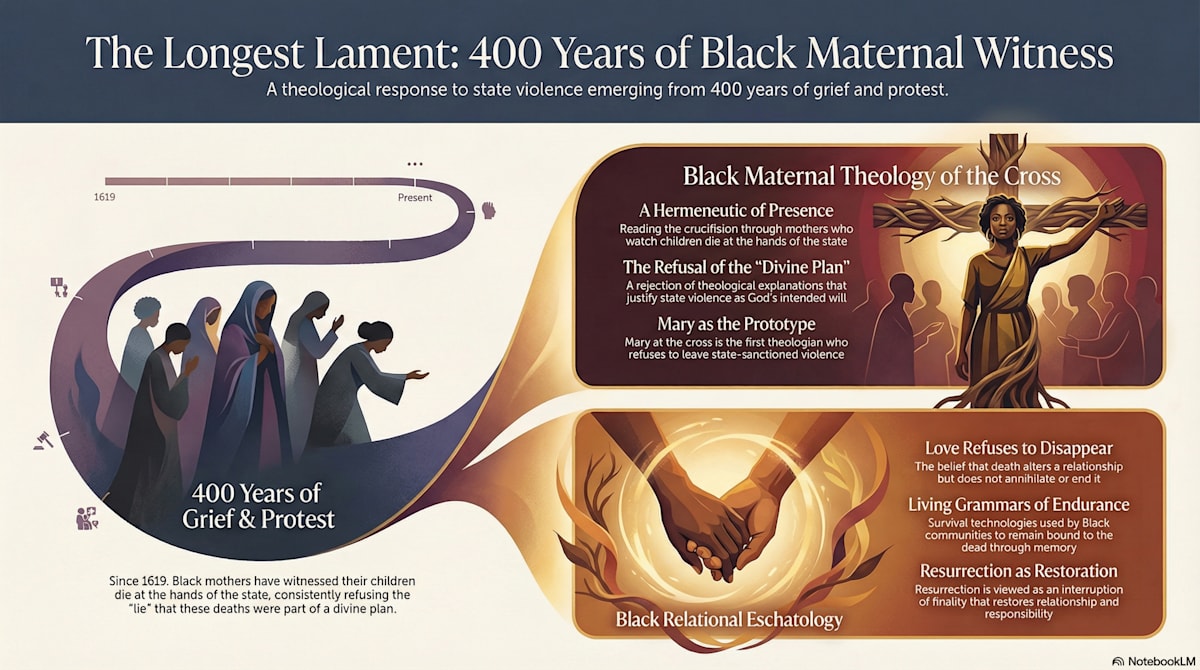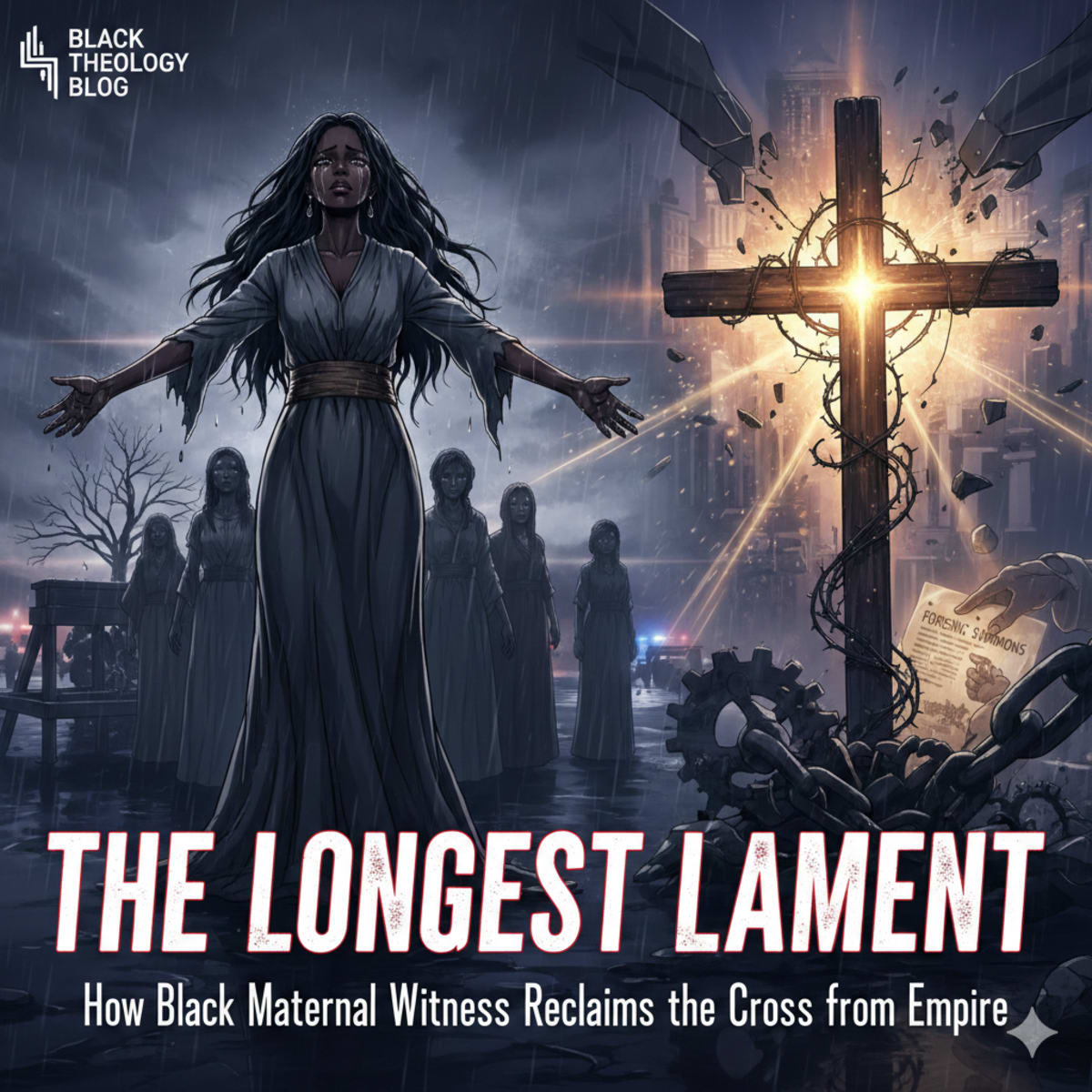
For over four centuries, Black mothers have stood at the foot of every American cross. Theirs is the "Longest Lament," a 400-year vigil that began on the auction blocks where children were priced as livestock and continued beneath lynching trees where sons were displayed as public warnings. Most recently, this vigil was held on the asphalt of Ferguson, Missouri, where Lesley McSpadden stood for four hours beside the uncovered body of her son, Michael Brown. It is held by Sybrina Fulton, carrying the memory of Trayvon Martin, and Gwen Carr, who bears the name of Eric Garner into every room she enters.
These mothers are not merely symbols of grief or figures of "patient suffering." They are practitioners of a primary theological exegesis. By their presence at the site of state-sanctioned execution, they are performing a radical reinterpretation of the Christian faith. They are not waiting for theologians to explain their pain; they are authoring a new understanding of God from the space between a child’s last breath and the first state-sponsored lie told to explain it away. Their witness is constitutive theological data—the absolute ground upon which any responsible talk of God must be built.
The Grammar of Refusal
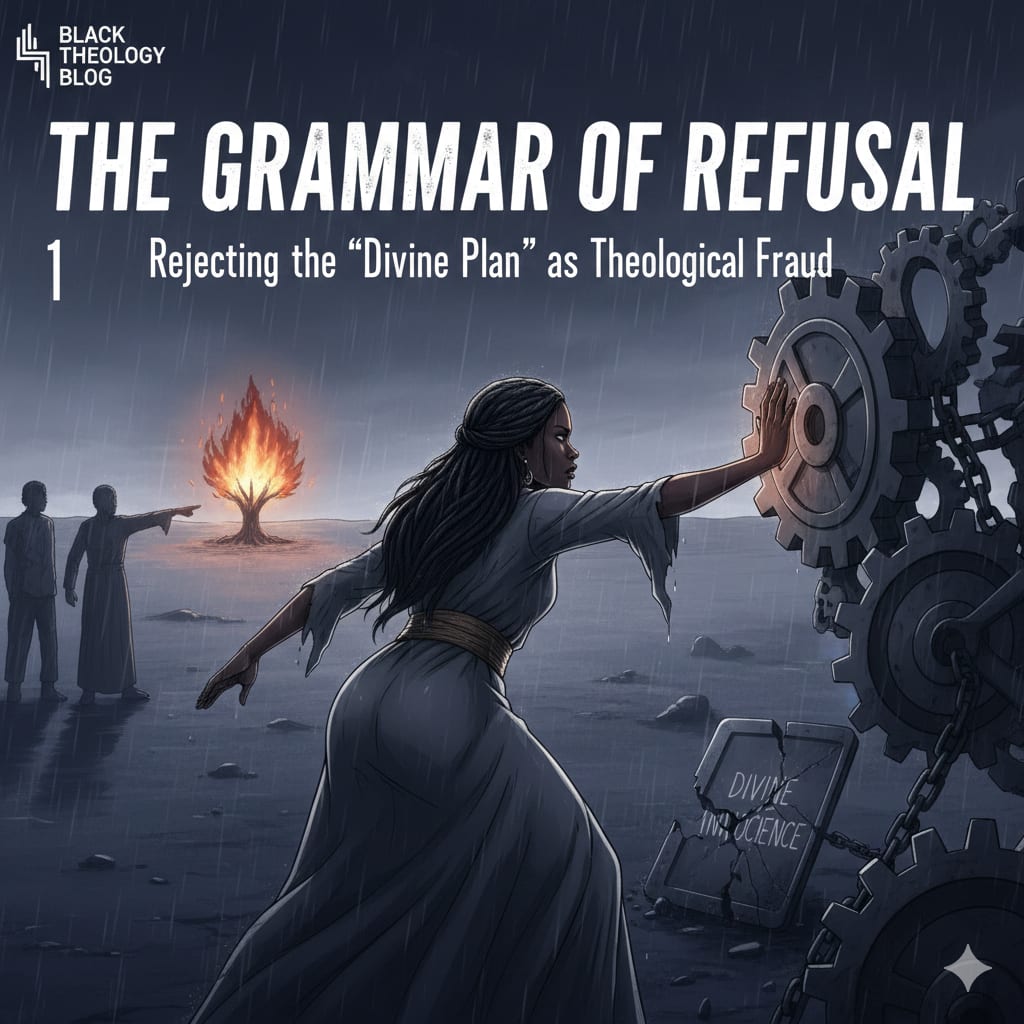
The foundation of Black maternal theology begins with a radical "Grammar of Refusal." For centuries, traditional theodicy has attempted to protect "divine innocence" by suggesting that violent loss is part of a mysterious, holy blueprint. Black maternal witness begins by rejecting this premise as a theological fraud.
This refusal is a sophisticated technology of endurance. It is an intellectual agency that rejects the "divine plan" narrative, recognizing it as a tool used to sanitize state violence. This is where the maternal witness parts ways with the "friends of Job." In the biblical text, Job’s friends offered explanations that protected God’s reputation at the cost of the victim's humanity. Black mothers refuse this bargain. By refusing to be comforted by platitudes that justify the unjustifiable, they maintain the dignity of the dead. As Mark Edward Chard argues, this is a theology that insists divine solidarity is not a doctrine to be affirmed but a presence that must be risked—standing in the ashes and refusing to abandon the dead to the state’s narrative.
Dragging God into the Street: The Forensic Summons
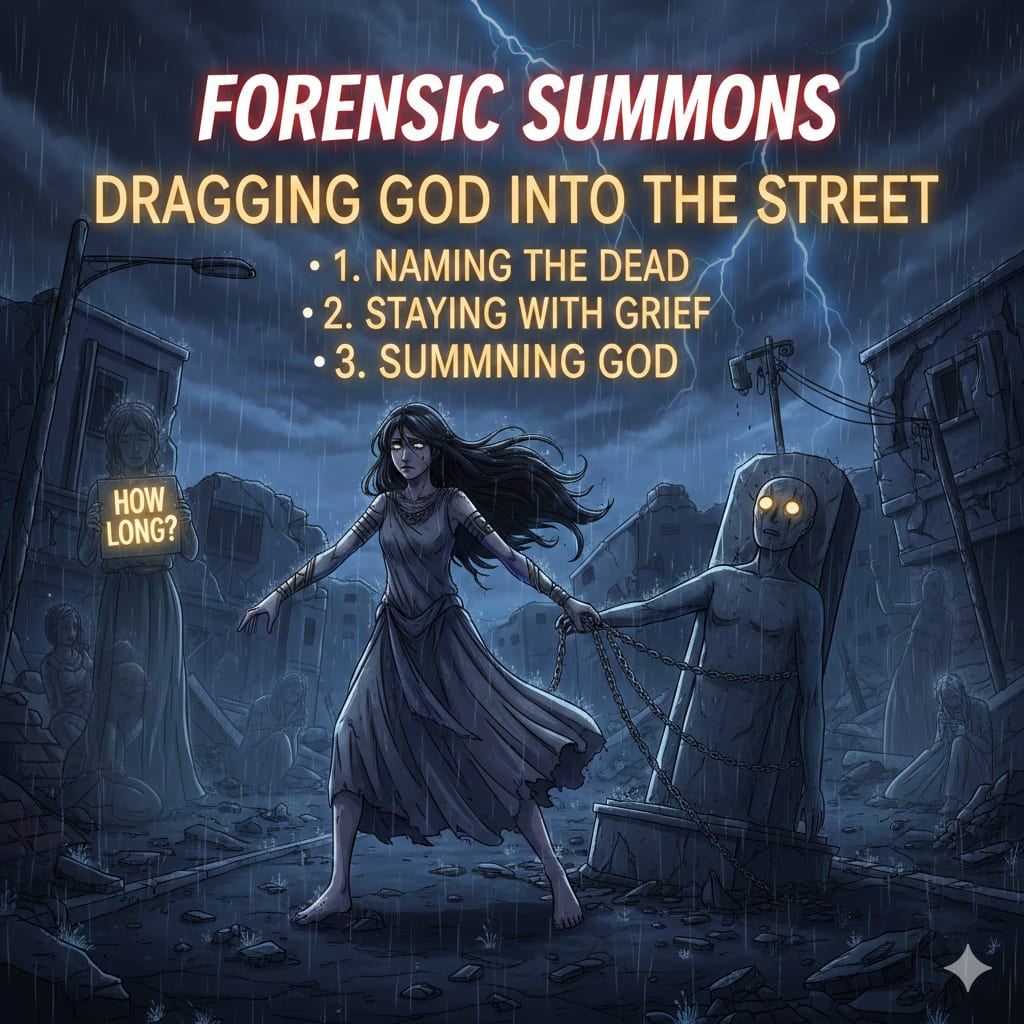
While traditional piety often prioritizes resignation, the Black maternal tradition engages in a "Forensic Summons." Drawing on the biblical figures of Job and the author of Lamentations, this theology does not wait for God to offer an explanation; it summons God to the dock in a "covenant lawsuit."
This is not a lack of faith, but its most radical expression. In the book of Hosea, we see a "Wounded Love" that refuses abandonment; Gomer is reclaimed not as a symbol of sin, but as a survivor of a coerced system. Similarly, in Lamentations, the "Daughter Zion" acts as a maternal plaintiff, dragging God into the street to witness the ruin. This tradition shifts the theological focus from defending God's innocence to demanding God’s presence. Even in the heavenly realm of Revelation, the "martyrs under the altar" cry out, "How long?" (Rev 6:10), proving that this lament is not silenced by death. In this maternal courtroom, the rules of evidence are clear:
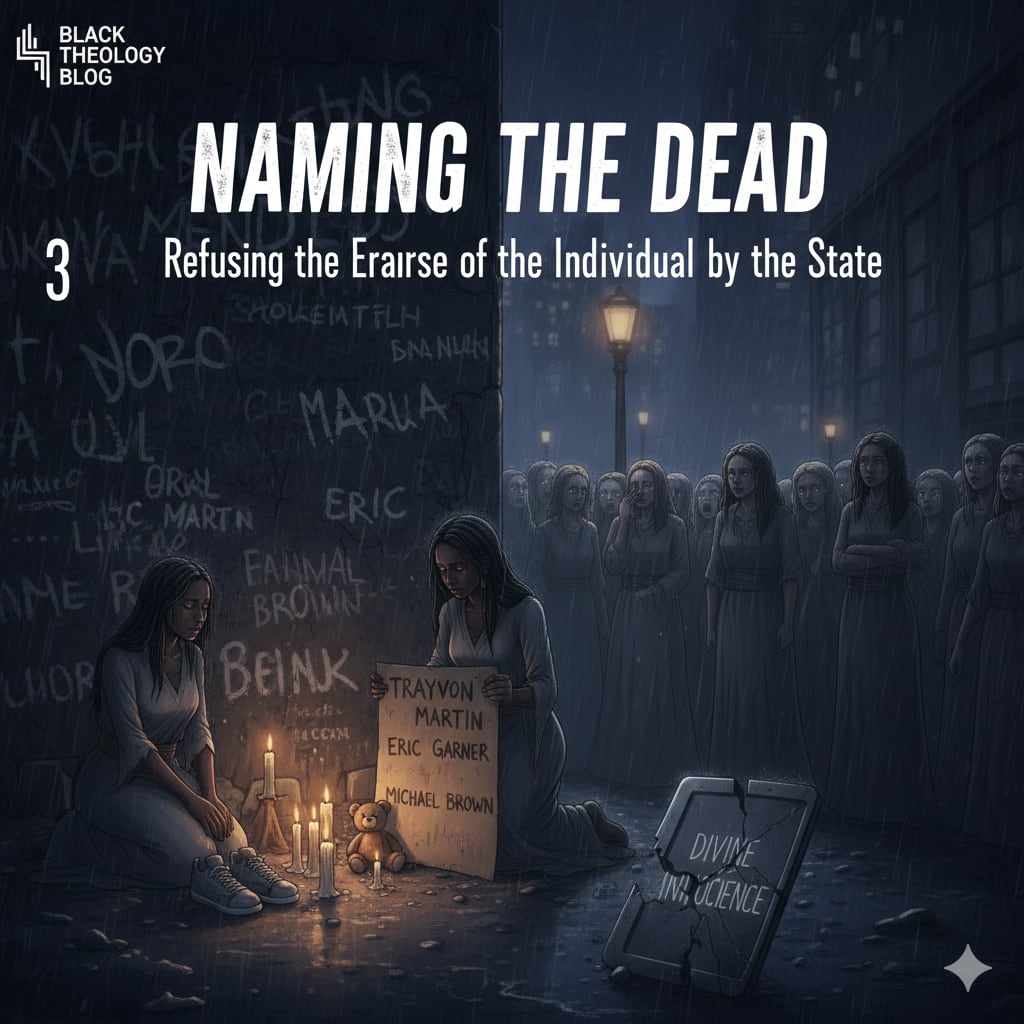
- Naming the Dead: Refusing the erasure of the individual by the state.
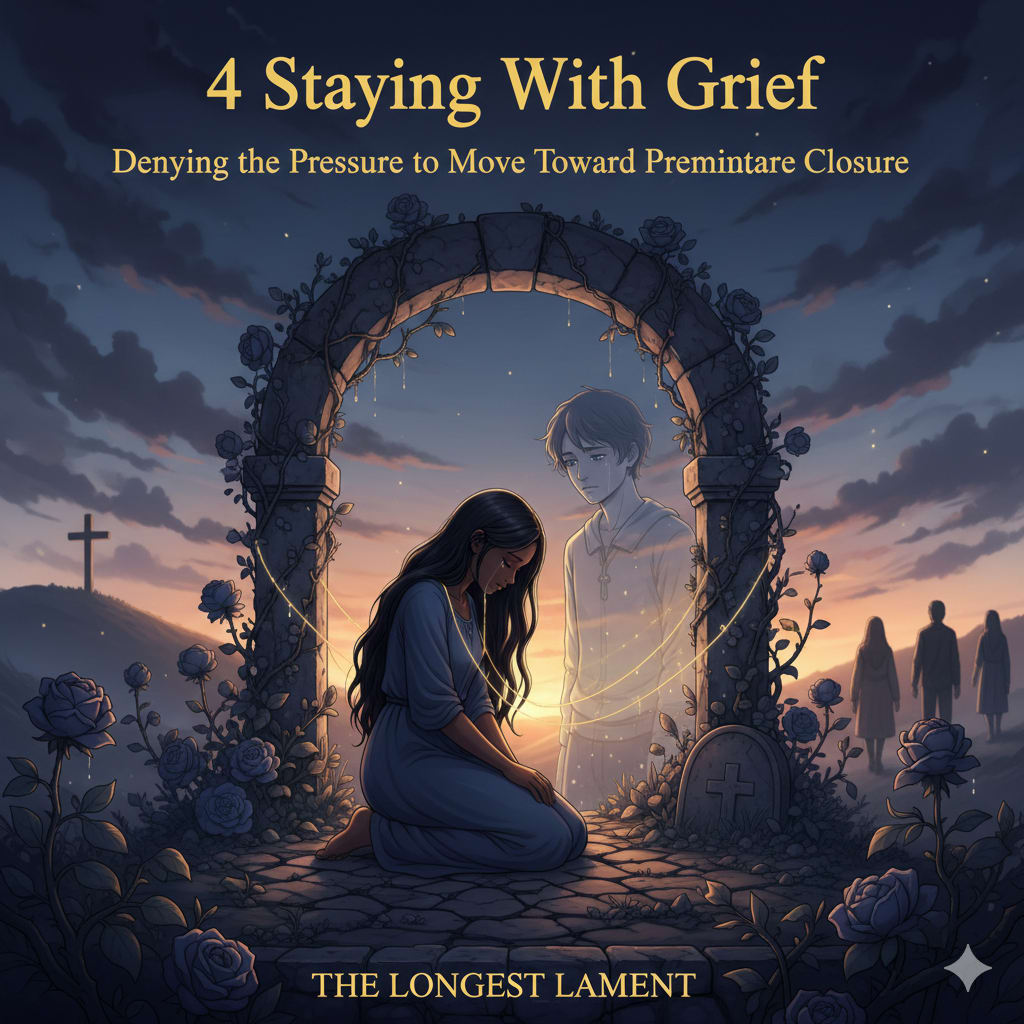
- Staying with Grief: Denying the pressure to move toward premature closure or reconciliation.
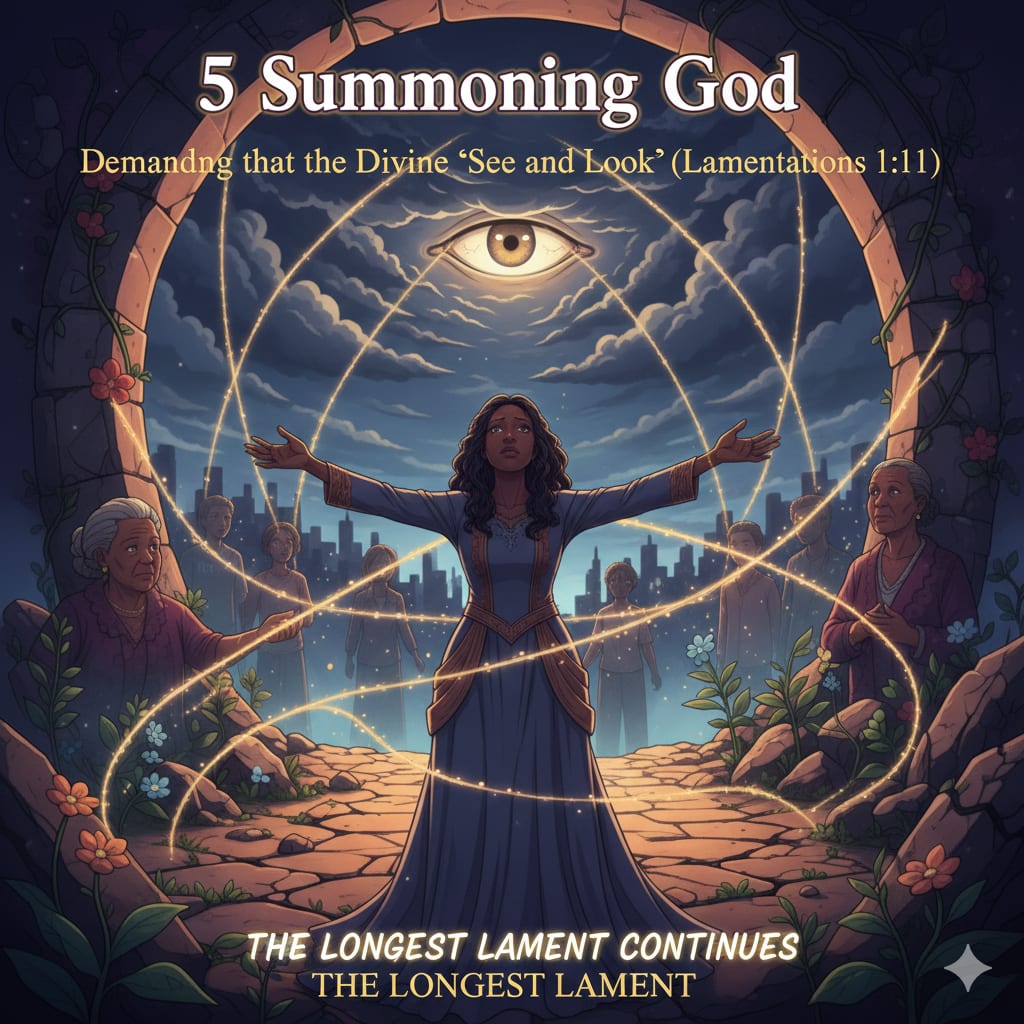
- Summoning God: Demanding that the Divine "See and Look" (Lamentations 1:11) at the wreckage of the street.
The Cross as State Execution, Not Sentiment
Through a maternal lens, the Cross is stripped of its metaphysical abstractions and returned to its visceral reality: it was a calculated technology of terror. To view Jesus as the "executed child of empire" is to see the Cross not as a transaction for sin, but as a public spectacle designed to produce deterrence through violence. It belongs in the same genealogy as the lynching tree and the police knee.
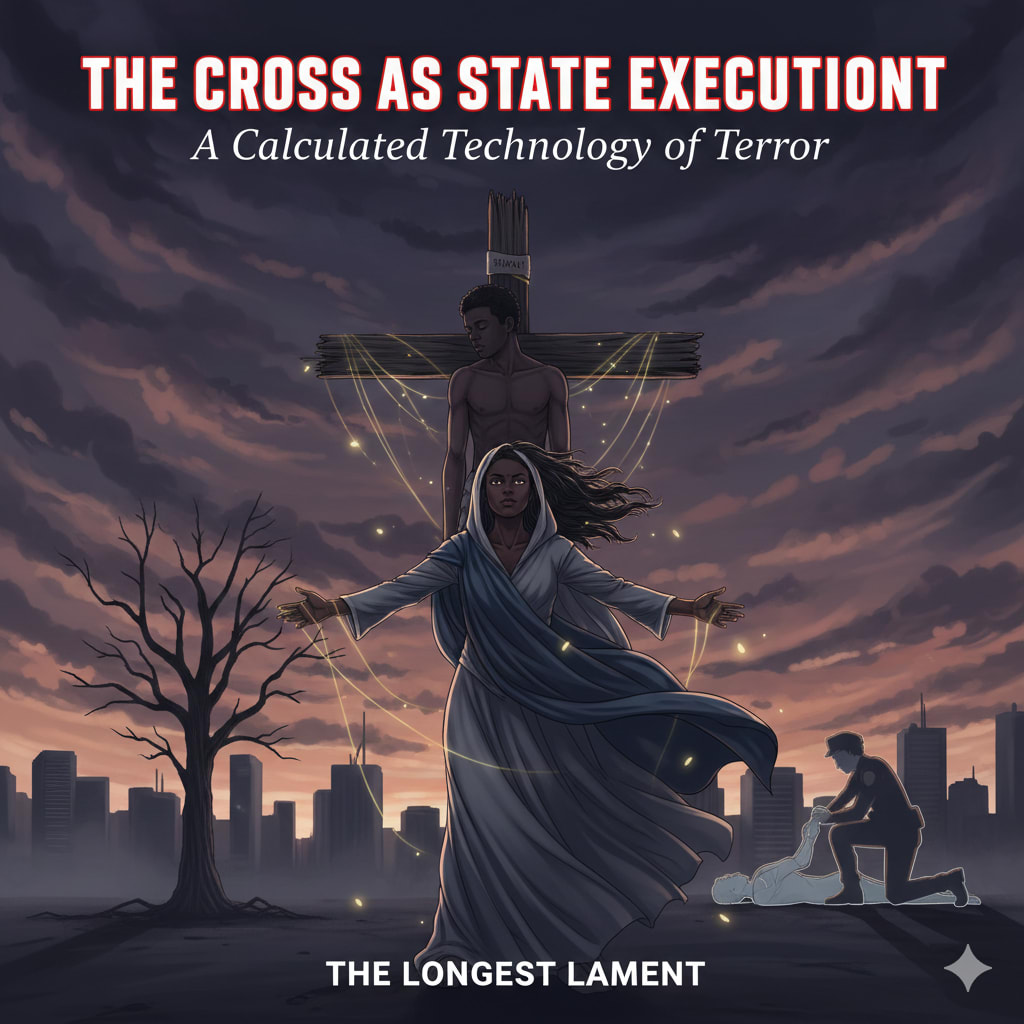
In this context, Mary is redefined. She is not the silent, sentimental icon of Catholic kitsch; she is the first maternal theologian of the Cross. By "staying" at the site of state violence when the male disciples fled, she performed a radical interpretive act. Her presence dictates how the Cross must be understood—not as a holy necessity, but as a site of state crime where God chooses to stand in solidarity with the executed. When Jesus cries out in dereliction, he is speaking the language of Job and Lamentations from inside the violence they named, ensuring that no future resurrection can be used to cancel the reality of the lament.
Relational Eschatology: The Refusal of Erasure
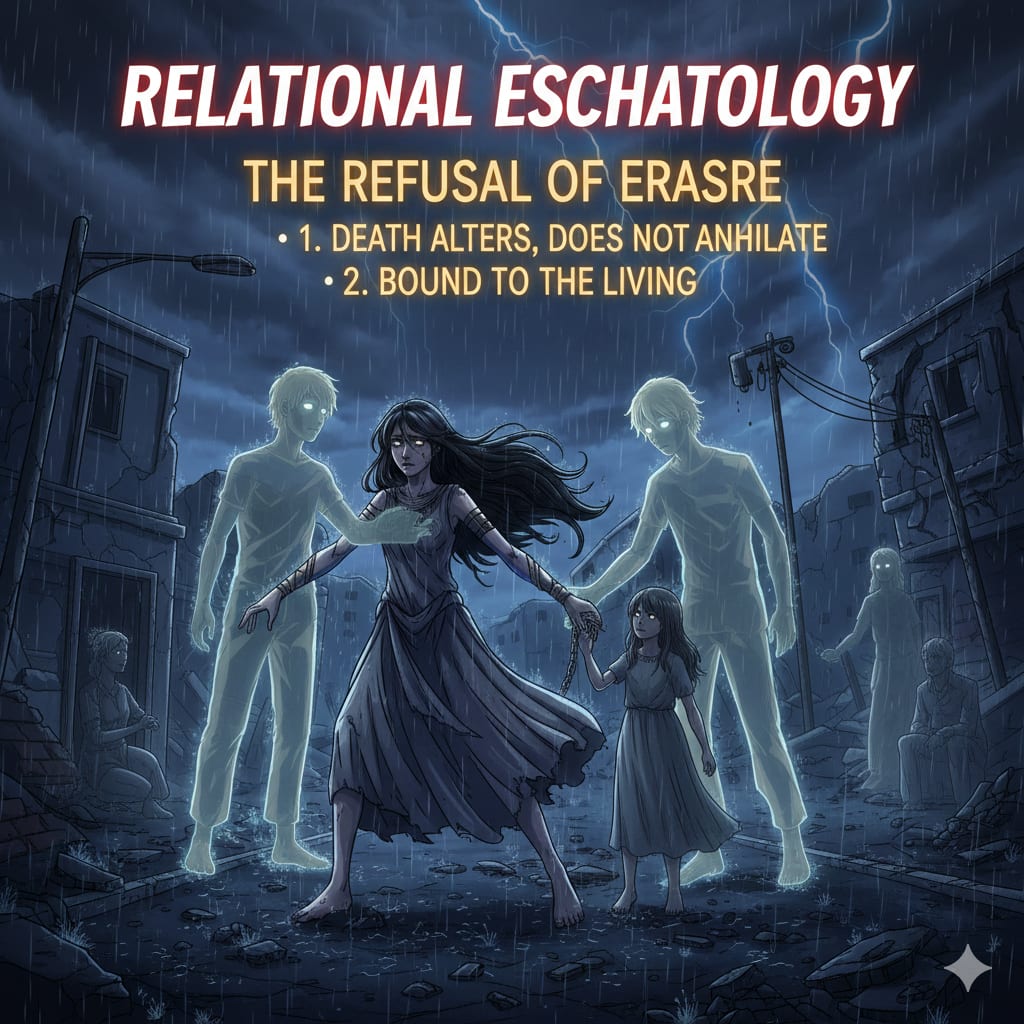
A core insight of this tradition is "Black Relational Eschatology"—the understanding that death alters a relationship but does not annihilate it. In Black maternal witness, the dead are not "gone"; they remain bound to the living as "relational participants" through memory, dreams, and bodily knowing.
This functions as a vital survival strategy against erasure. It rejects the idea that the state has the final word on the existence of the child it has broken. This theology is deeply personal and embodied. Mark Edward Chard connects this tradition to his own "twin loss," where the continuing presence of his brother, Darren, serves as a contemporary articulation of this ancient hope. It is an "Apocalyptic" claim: the dead remain present in God's ongoing work, refusing to be forgotten by a world that moved on while the body was still warm.
Resurrection as an Interruption of Finality
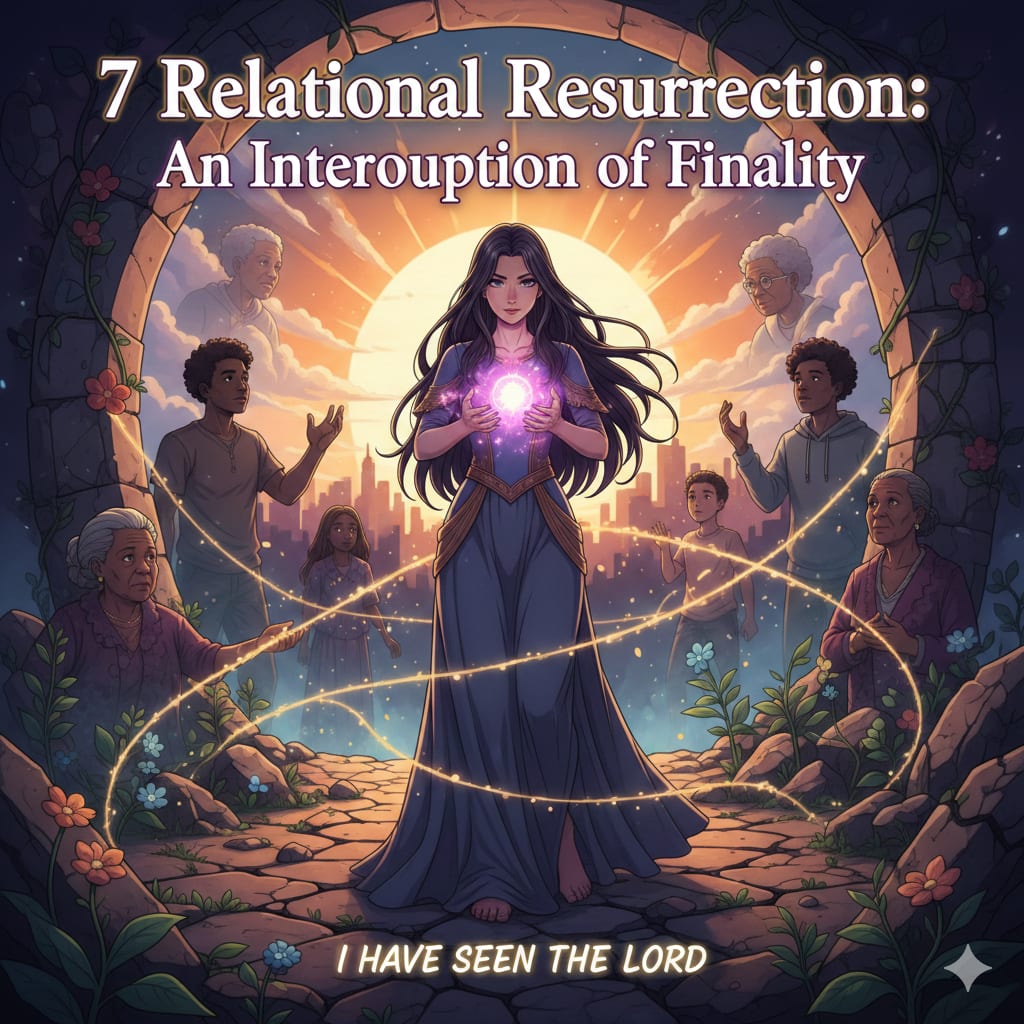
Finally, this perspective reimagines resurrection. It is not an "escape" from the world’s pain or a "soft hope" that masks the reality of the grave. Instead, resurrection is an "interruption of finality."
It is of profound theological significance that the first witness to the resurrection was Mary Magdalene—a woman who stayed "while it was still dark" and who refused to leave the tomb when the men returned home. Her proclamation, "I have seen the Lord," was an announcement of presence when the empire demanded absence. This "Relational Resurrection" does not offer a return to the status quo; it restores the relationship and sends the living back into the world with a "sharper responsibility." It is a call to continue the work of justice in the name of the one who was lost.
Conclusion: A Liturgy for the Unburied
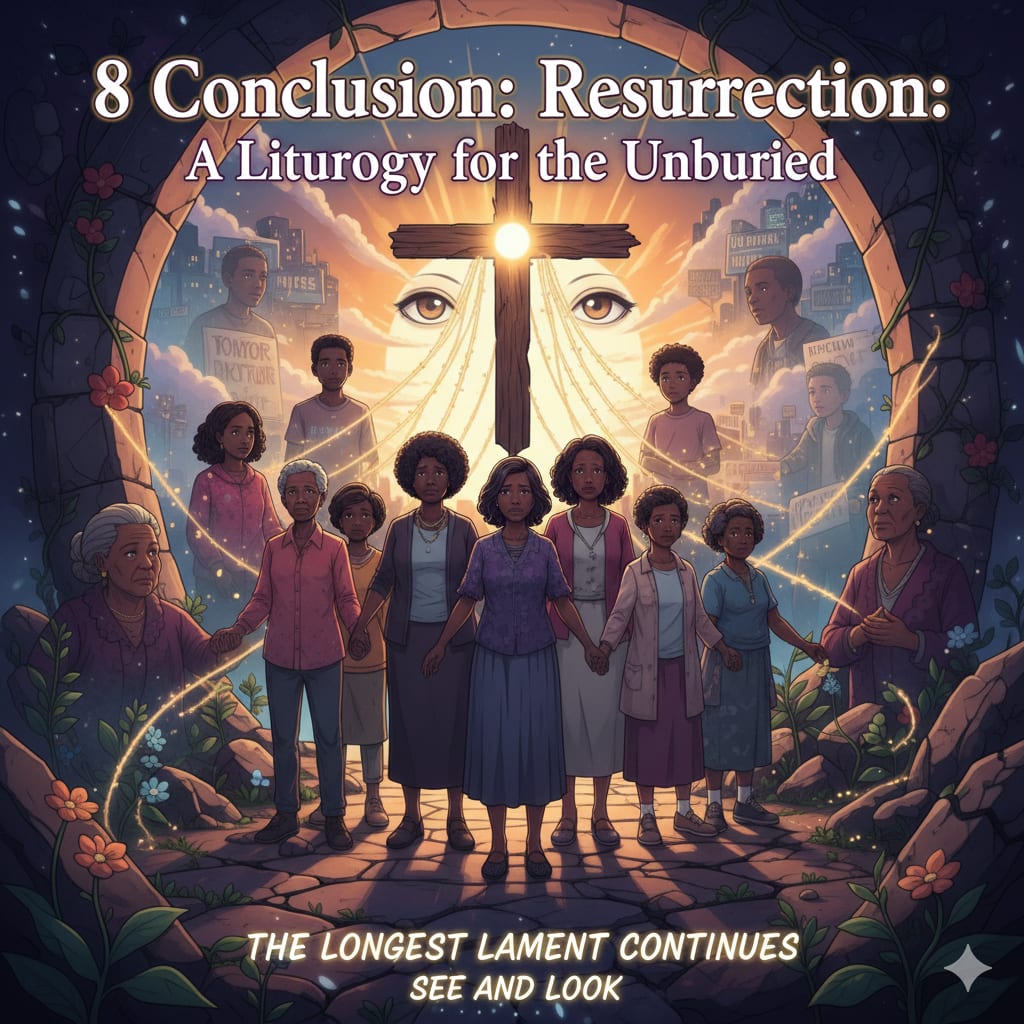
The journey of Black maternal witness moves from the "hush harbors" of the enslaved to the livestreams of Ferguson and Minneapolis. It culminates in a "Liturgy for the Unburied"—a theological framework that refuses to look away from the body or the gathered community’s pain.
What does it mean for our theology to return to the maternal courtroom and the physical reality of the execution site? We must ask ourselves: Is a theology that does not start at the foot of the cross—at the site of state-sanctioned killing—even Christian at all? The city is not yet healed, the children are still at risk, and the "Longest Lament" continues. The mothers are still standing at the foot of the cross, demanding that God "See and Look." The only question remains whether our theology is brave enough to stand there with them.