1. The Vertical Trap
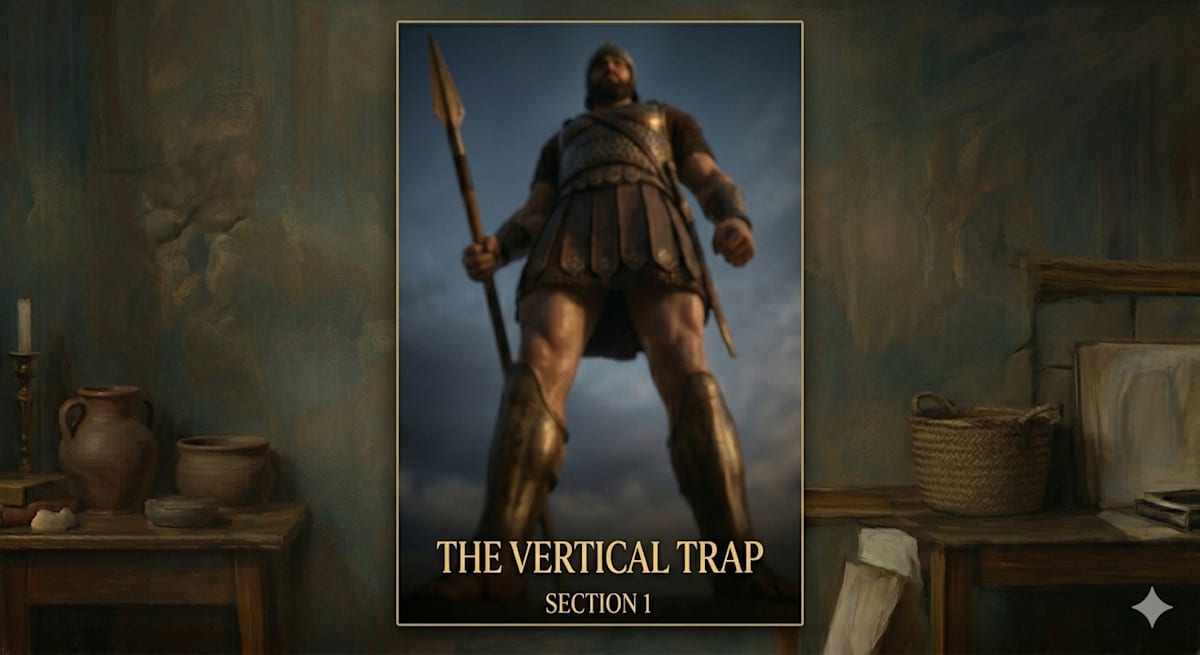
In our modern era, we are possessed by a singular obsession: scaling up. We equate mass with merit and stature with success, measuring our progress by the height of our skyscrapers, the reach of our digital platforms, and the sheer density of our imperial systems. We assume that to dismantle a massive problem, we must become equally massive.
Yet the biblical narrative identifies this impulse not as strength, but as a pathology—a "grammar of height and hubris." From the towering warriors of Gath to the architectural arrogance of Babel, the imperial pride of Babylon, and the moral self-exaltation of Sodom, the canon warns that ascending forms of human self-exaltation are destined for divine reversal. This "rhetoric of height" suggests that what rises in self-sufficiency—whether it be technological hubris or military mass—is fundamentally fragile. In this landscape of monuments, the figure of David emerges as the hermeneutical key. He is the "small one" who does not merely defeat a giant but decodes an entirely different kind of power.
2. Rejecting the Armor: Why Stature is a Liability
The encounter between David and Goliath in 1 Samuel 17 is the paradigmatic enactment of this theology. Goliath of Gath is the literal embodiment of "vertical logic." Standing over nine feet tall and encased in bronze scale armor weighing five thousand shekels, he is a living monument to military technology. He attempts to strip the conflict of its theological depth, reducing it to a purely human contest of champions.
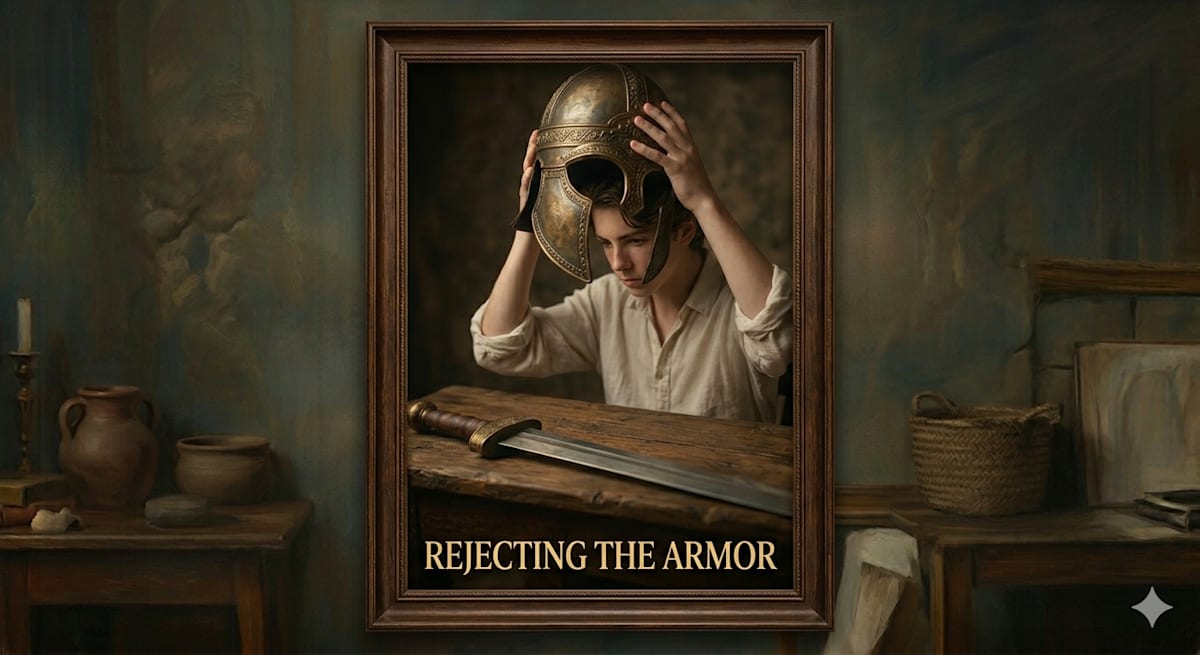
The theological turning point occurs when King Saul—himself a man of impressive physical stature—offers David his own armor. By stripping off the bronze helmet and the coat of mail, David performs a "performative act" of refusal. He recognizes that to put on Saul’s armor is to accept the giant’s terms of engagement. To win, David must refuse to become what he is fighting. His rejection of the "logic of mass" is a confession that true security is not found in the weight of one's defense, but in the name of the Lord.
"You come to me with sword and spear and javelin, but I come to you in the name of the Lord of hosts, the God of the armies of Israel, whom you have defied." (1 Samuel 17:45)
3. From Vertical Mass to Horizontal Agility
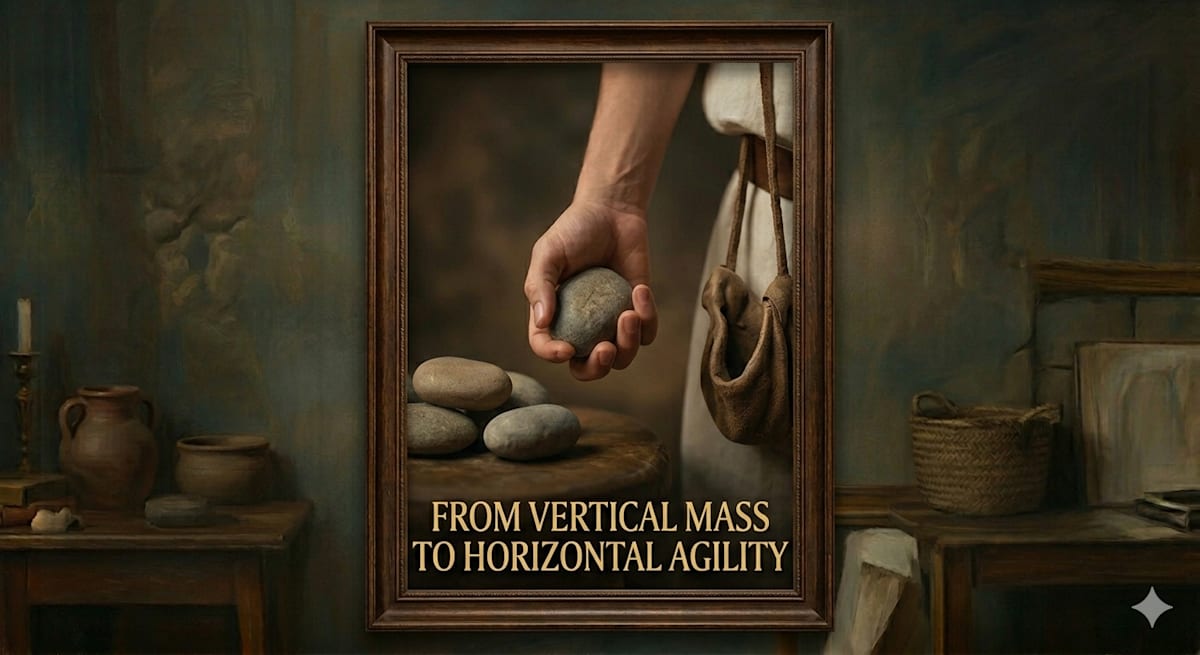
While Goliath relies on vertical mass and intimidation, David pivots to horizontal force: speed, precision, and agility. We often mistake David’s sling for a desperate improvisation, but the text suggests otherwise. This was a practiced, precision instrument; in the biblical tradition, skilled slingers were known for hitting a hair without missing (Judges 20:16). David’s choice of five smooth stones signifies he is not relying on a lucky strike, but is prepared for a systemic, sustained conflict.
The climax of the battle is "liturgical" in its nature. When the stone strikes Goliath’s forehead—the seat of intent and human arrogance—the giant falls face-down. This is the posture of prostration. The towering monument of human pride is forced into a position of worship before the God of Israel. The tall has fallen, and the "Small One" has triumphed through covenantal dependence rather than physical stature.
4. It Takes a Village to Kill a System (The Other Giants)
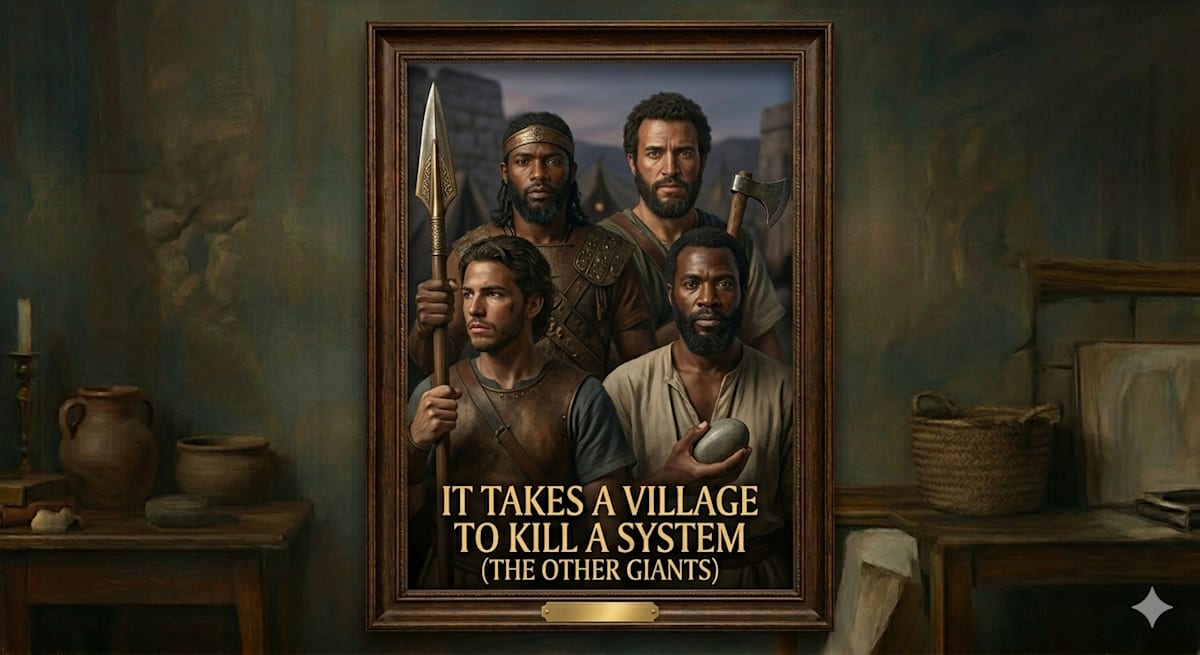
We often treat David and Goliath as a one-off miracle, but 2 Samuel 21 reveals that the "giant threat" was structural and systemic. David eventually faces a recurring lineage of overreach in the form of four more Rephaim giants: Ishbi-benob, Saph, Lahmi, and a nameless polydactyl warrior.
This polydactyl warrior—with six fingers on each hand and six toes on each foot—is a grotesque mimicry of covenant completeness. By sporting the number twelve, he attempts to "fake" sacred legitimacy, parodying the twelve tribes of Israel. Notably, David does not dismantle this system alone. His "mighty men"—Abishai, Sibbecai, Elhanan, and Shimei—step into the fray to finish the work. This signifies that victory over the "logic of height" evolved from a personal triumph into a communal vocation. Individual faithfulness must become corporate resistance; the Small One eventually becomes a "thousand" through the coordinated action of a faithful community.
5. The "Shoot from the Stump": Strength in Weakness
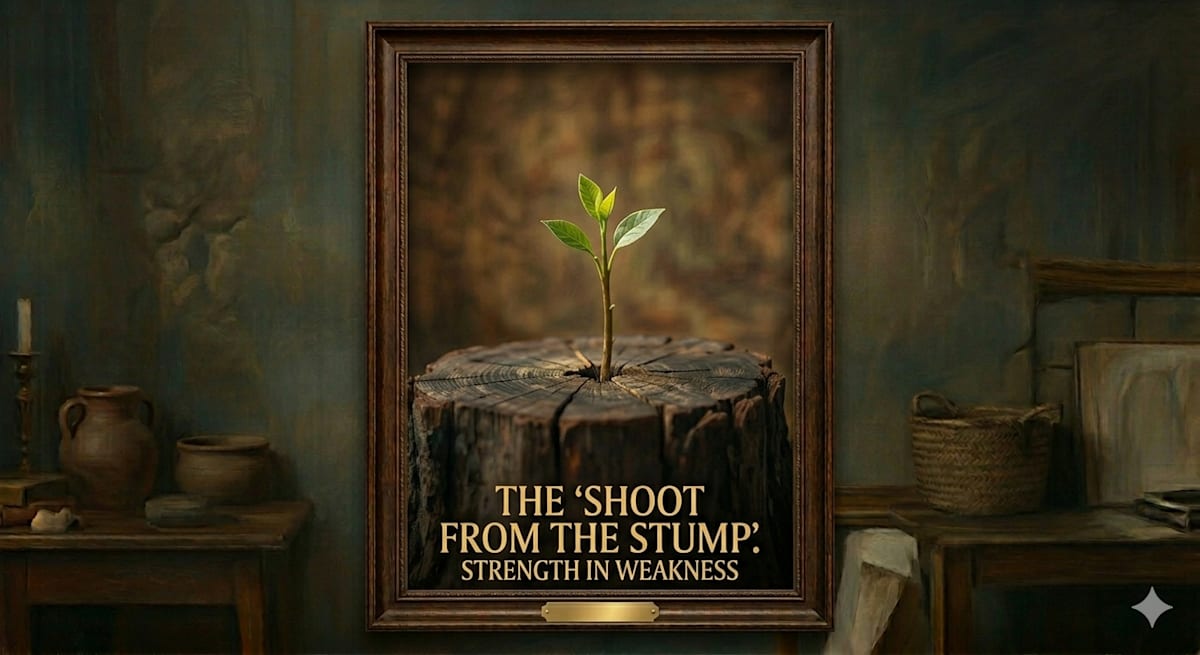
The Davidic pattern of reversal moves from the battlefield into the heart of prophetic hope. Isaiah 11 describes the future Davidic king not as a towering cedar, but as a "shoot from the stump of Jesse." It is a vulnerable, fragile beginning emerging from a royal line that has been cut down to the dirt.
This Davidic anti-logic reaches its peak in the "Suffering Servant" of Isaiah 53. This figure has "no form or majesty that we should look at him." While the world looks for the visible majesty of a monument, God works through the hidden majesty of the servant. True greatness belongs to the vulnerable one through whom God enacts a cosmic reversal of power.
6. The Magnificat: A Revolution Set to Music

The lyrical climax of this theology appears in Mary’s song, the Magnificat (Luke 1:46–55). Mary, a young woman of no social standing living under the shadow of the Roman Empire, provides the "canonical echo" to Hannah’s Song—the threshold of the Davidic story.
Mary connects her own experience directly to the grammar of reversal. Her song resonates with the "Black Maternal Theology" of those who refuse to let empire have the final word over their children. We see this witness in the hush harbors of enslaved America, in the "Mothers of the Movement" who turned grief into a public indictment of power, and in the vigils held outside hospitals and courtrooms. Mary celebrates a God who prioritizes the lowly over the enthroned, declaring that the Davidic hope is fulfilled not through military conquest, but through the scandal of humble obedience.
"He has shown strength with his arm; he has scattered the proud in the thoughts of their hearts. He has brought down the powerful from their thrones, and lifted up the lowly; he has filled the hungry with good things, and sent the rich away empty." (Luke 1:51–53)
7. Conclusion: The Strategy of the Small
The biblical witness is a relentless critique of "height." Whether political, technological, or moral, human self-sufficiency eventually collapses under the weight of its own hubris. Covenantal dependence, however, offers a different kind of power—the strategy of the small.
We must ask ourselves: In our own lives and systems, where are we currently trusting in "armor"—in status, in mass, or in defensive strength—rather than the "agility" of humble faith? The strategy of the small is not an absence of power; it is the presence of a power that turns the world upside down. The promise remains as firm today as it was in the sheepfolds of Bethlehem: the small one shall become a thousand.